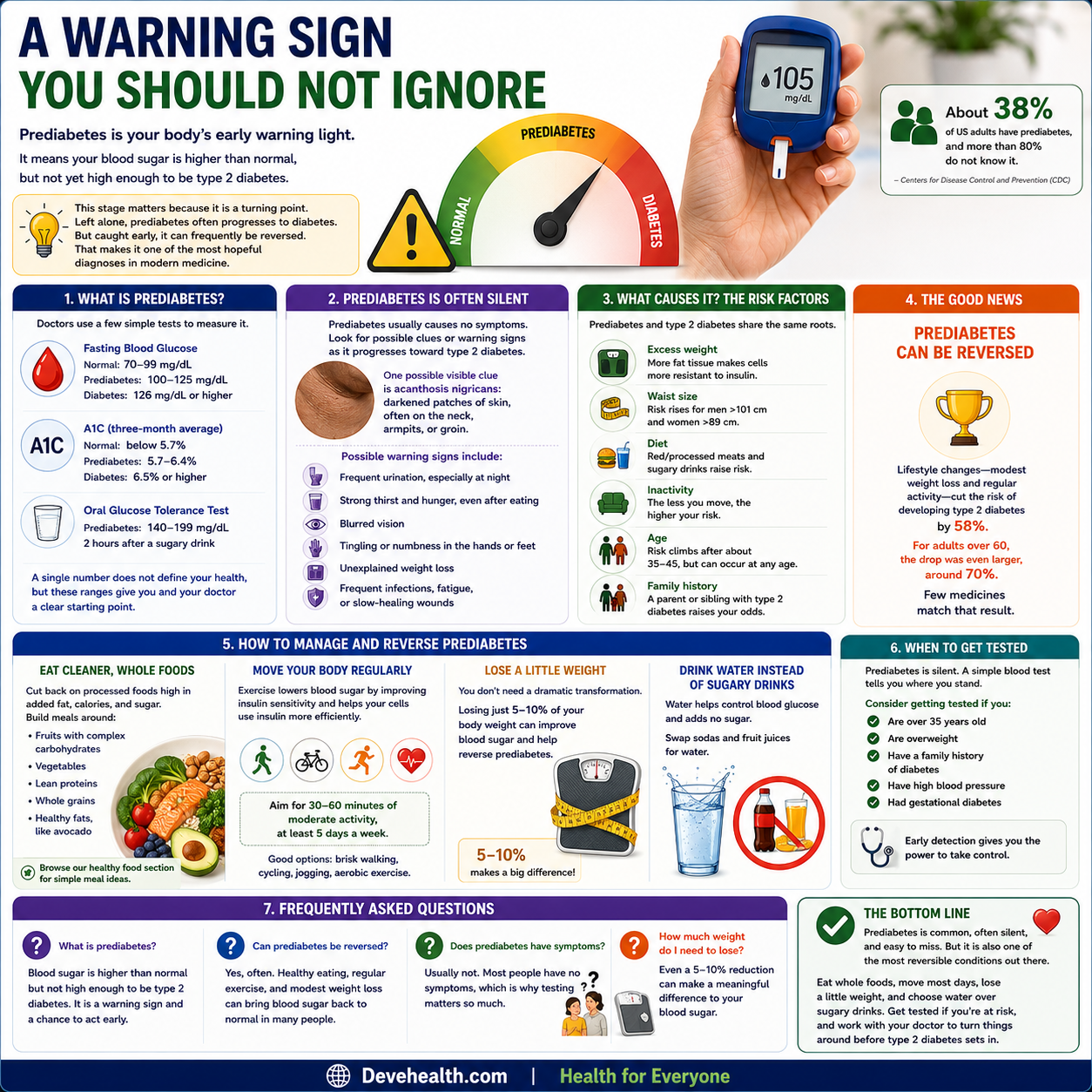
A Warning Sign You Should Not Ignore
Prediabetes is your body’s early warning light. It means your blood sugar is higher than normal, but not yet high enough to be type 2 diabetes.
This stage matters because it is a turning point. Left alone, prediabetes often progresses to diabetes. But caught early, it can frequently be reversed. That makes it one of the most hopeful diagnoses in modern medicine.
What Is Prediabetes?
Prediabetes is defined by your blood sugar levels. Doctors use a few simple tests to measure it.
Here are the standard ranges:
- Fasting blood glucose: normal is 70 to 99 mg/dL. Prediabetes is 100 to 125 mg/dL. Diabetes is 126 mg/dL or higher.
- A1C, a three-month average: normal is below 5.7 percent. Prediabetes is 5.7 to 6.4 percent. Diabetes is 6.5 percent or higher.
- Oral glucose tolerance test: prediabetes falls between 140 and 199 mg/dL two hours after a sugary drink.
A single number does not define your health. But these ranges give you and your doctor a clear starting point.
Prediabetes Is Often Silent
Here is the tricky part. Prediabetes usually causes no symptoms at all.
In fact, the condition is far more common than people realize. According to the CDC, about 38 percent of US adults have prediabetes, and more than 80 percent do not know it. That is roughly one in three adults walking around unaware.
One possible visible clue is acanthosis nigricans. This shows up as darkened patches of skin, often on the neck, armpits, or groin.
If prediabetes starts moving toward type 2 diabetes, warning signs may appear, such as:
- Frequent urination, especially at night
- Strong thirst and hunger, even after eating
- Blurred vision
- Tingling or numbness in the hands or feet
- Unexplained weight loss
- Frequent infections, fatigue, or slow-healing wounds
What Causes It, the Risk Factors
Prediabetes and type 2 diabetes share the same roots. Several factors raise your risk.
The main ones include:
- Excess weight. More fat tissue makes cells more resistant to insulin.
- Waist size. Risk rises for men with a waist over 101 cm and women over 89 cm.
- Diet. Red and processed meats and sugary drinks are linked to higher risk.
- Inactivity. The less you move, the higher your risk.
- Age. Risk climbs after about age 35 to 45, though it can occur at any age.
- Family history. A parent or sibling with type 2 diabetes raises your odds.
Lifestyle is a big reason doctors now see these conditions in younger people. Fast food, low activity, and high stress all push the risk up earlier in life.
The Good News, Prediabetes Can Be Reversed
This is the most important message. Prediabetes is often reversible.
The proof is strong. A landmark prevention program found that lifestyle changes, such as modest weight loss and regular activity, cut the risk of developing type 2 diabetes by 58 percent. For adults over 60, the drop was even larger, around 70 percent. Few medicines match that result.
How to Manage and Reverse Prediabetes
You do not need drastic measures. Small, steady changes work best. Here are the core steps.
Eat cleaner, whole foods
Cut back on processed foods high in added fat, calories, and sugar. Build meals around nutritious, whole options instead, such as:
- Fruits with complex carbohydrates
- Vegetables
- Lean proteins
- Whole grains
- Healthy fats, like avocado
For simple meal ideas, browse our healthy food section to get started.
Move your body regularly
Exercise lowers blood sugar by improving insulin sensitivity. That helps your cells use insulin more efficiently.
Aim for 30 to 60 minutes of moderate activity, at least five days a week. Good options include:
- Brisk walking
- Cycling
- Jogging
- Aerobic exercise
Lose a little weight
You do not need a dramatic transformation. Losing just 5 to 10 percent of your body weight can improve blood sugar and help reverse prediabetes. For many people, that is only a few kilograms.
Drink water instead of sugary drinks
Water helps control blood glucose and adds no sugar. Swap sodas and fruit juices for water, since those drinks are often loaded with sugar. You can read more in our guide on preventing diabetes.
When to Get Tested
Because prediabetes is silent, testing is the only way to know. A simple blood test tells you where you stand.
Consider asking your doctor for a test if you are over 35, are overweight, or have a family history of diabetes. People with high blood pressure or a history of gestational diabetes should also be checked.
Frequently Asked Questions
What is prediabetes? It is a condition where blood sugar is higher than normal but not high enough to be type 2 diabetes. It is a warning sign and a chance to act early.
Can prediabetes be reversed? Yes, often. Healthy eating, regular exercise, and modest weight loss can bring blood sugar back to normal in many people.
Does prediabetes have symptoms? Usually not. Most people have no symptoms, which is why testing matters so much.
How much weight do I need to lose? Even a 5 to 10 percent reduction can make a meaningful difference to your blood sugar.
The Bottom Line
Prediabetes is common, often silent, and easy to miss. But it is also one of the most reversible conditions out there.
The path forward is clear. Eat whole foods, move most days, lose a little weight, and choose water over sugary drinks. Get tested if you are at risk, and work with your doctor to turn things around before type 2 diabetes sets in.