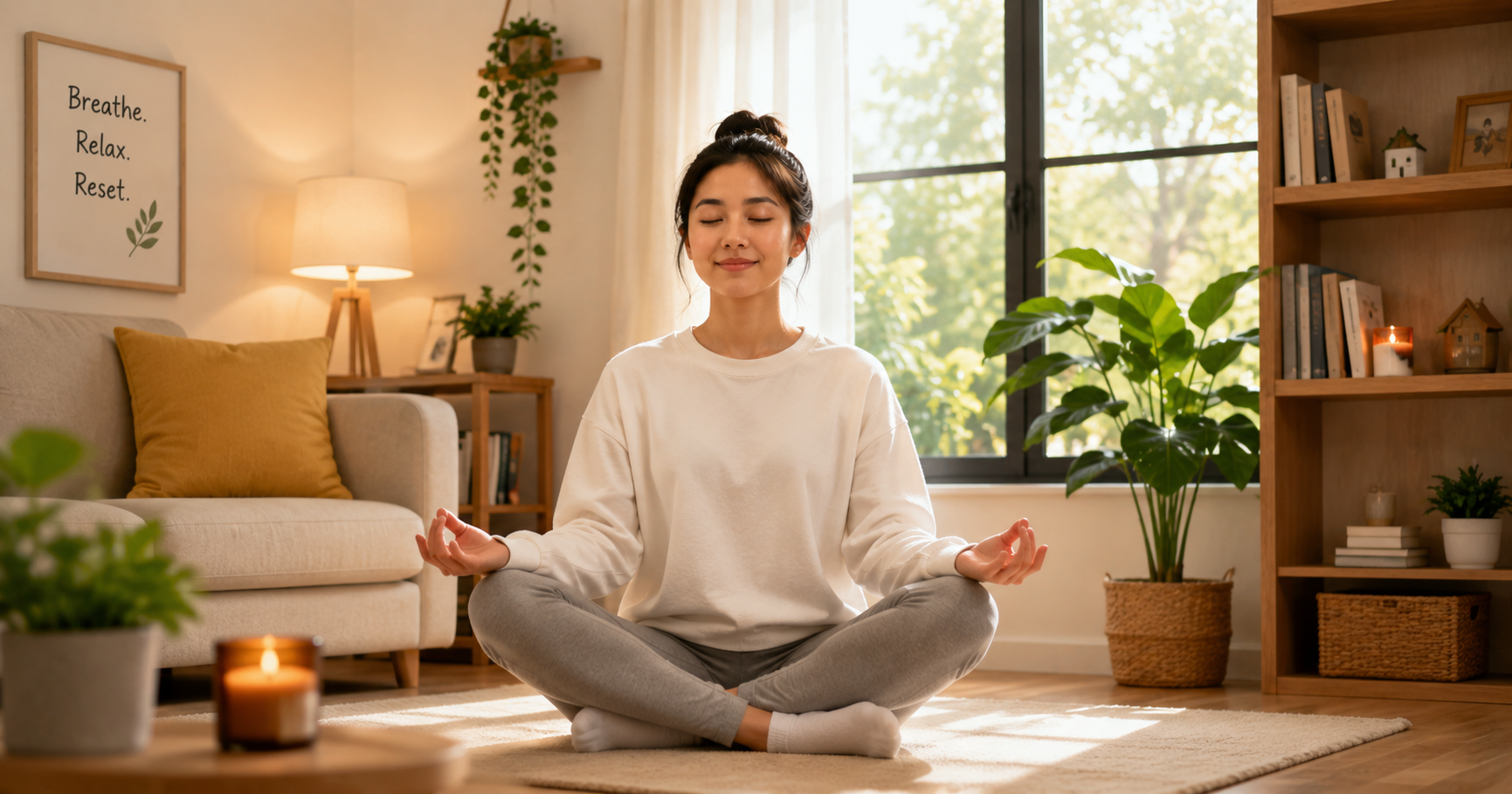
You Do Not Need a Vacation to Feel Better
A good mood does not only come from holidays, intense workouts, or long stretches of rest. Those things help, of course. But they are not always within reach on a busy weekday.
The encouraging news is that small actions matter too. Research shows that quick, simple habits can lift your mood, ease stress, and help you feel more connected to yourself and others. And they cost almost nothing.
The best part is the time they take. Each of these 1-minute habits fits into even the most packed schedule. You can do them between meetings, while the kettle boils, or right after you wake up. Below are seven worth trying, along with why they work and how to do them well.
Why Small Habits Beat Big Goals
It is easy to dismiss tiny actions as too small to matter. We tend to admire big resolutions instead, like an hour at the gym or a month of daily journaling. Yet big goals are exactly the ones we abandon first.
The reason is simple. Large changes demand a lot of time, energy, and willpower, and all three run out fast. When life gets hectic, the ambitious plan is the first thing to go.
Small habits work differently. They ask for so little that you can do them even on your worst days. That makes them easy to repeat, and repetition is what turns an action into a habit. So a one-minute practice you actually keep beats a one-hour plan you quietly drop.
There is also a psychological bonus. Each small win sends a quiet signal that you can take care of yourself. Over time, those signals build momentum and a sense of control, which lifts mood on their own.
How Your Mood Actually Works
To see why these habits help, it is worth understanding how mood operates. Mood is not a fixed setting you are stuck with each day. It shifts constantly in response to small inputs, both inside and outside your body.
Your attention plays a huge role. Where you point your focus shapes how you feel, which is why dwelling on problems drags mood down. Your body matters too. Breathing, posture, light, and movement all send signals to your brain about whether you are safe and calm or stressed and on edge.
This is good news. It means you have more levers than you think. By nudging your attention, your breath, or your body for just a minute, you can gently steer your mood in a better direction.
1. Name One Thing You Are Grateful For
Before you start your day, pause and think of one thing you are thankful for. It could be your health, your family, a warm cup of coffee, or simply a quiet morning. One item is enough.
This tiny shift has real backing. In a classic study, researchers found that a regular grateful outlook was linked to higher well-being and more positive emotions. People who counted their blessings felt more optimistic and even reported sleeping better.
Why does it work? Our brains carry a built-in negativity bias, a habit of scanning for threats and problems. Gratitude gently counters that. It pulls your focus away from what is wrong and toward what is good, even briefly.
To deepen the effect, get specific. Instead of “my family,” try “the way my sister called to check on me yesterday.” The more concrete the thought, the stronger the feeling. You can do this in your head, say it out loud, or jot it in a notes app.
2. Take One Minute of Slow Breathing
When you feel anxious or rushed, stop and focus on your breath. Inhale slowly through your nose, pause for a moment, then exhale gently and a little longer than you breathed in.
Breathwork is surprisingly powerful. Stanford researchers found that a brief daily breathing practice, especially slow exhale-focused breathing, improved mood and lowered stress more than meditation. Their study used five minutes a day, but even one mindful minute can calm you in a tense moment.
The science points to your nervous system. A long, slow exhale activates the parasympathetic branch, the part that handles rest and relaxation. This slows your heart rate and tells your brain that the danger has passed.
One easy technique is the physiological sigh. Take a normal breath in through your nose, then add a second small sip of air to top off your lungs. Now release one long, slow exhale through your mouth. Repeat this two or three times. Many people feel calmer within thirty seconds.
3. Open a Window and Catch the Morning Light
Morning light helps set your body clock, also known as your circadian rhythm. This internal clock governs your sleep, energy, and mood across the day. You do not need a long walk to benefit from it.
Simply open a window, step onto a balcony, or look toward the morning sky for a minute. Natural light in the early hours helps regulate the hormones tied to alertness and mood. As a result, you may feel fresher and more awake.
Timing helps. Light within the first hour or two after waking has the biggest effect on your body clock. Outdoor light is far brighter than indoor light, even on a cloudy day, so getting closer to a window or stepping outside makes a real difference. Skip the sunglasses for this minute so your eyes receive the signal.
A bonus is better sleep that night. By anchoring your clock in the morning, you make it easier to feel sleepy at a healthy hour. Good sleep and good mood reinforce each other.
4. Send a Quick Message to Someone You Love
Reaching out to a friend, partner, or family member might feel trivial. But social connection has a large effect on emotional health. Humans are wired to feel better when they feel close to others.
A short note like “Have a great day” or “Thanks for your help yesterday” can strengthen your bond with someone. These small acts of connection tend to boost happiness and ease loneliness, often for both people involved.
You do not need a deep conversation. A quick check-in, a funny memory, or a simple thank-you is enough. The point is to remind yourself, and the other person, that you are not alone.
If you want to go one step further, make it specific and warm. Naming why you appreciate someone lands harder than a generic hello. And do not be surprised if their reply lifts your mood even more.
5. Smile, Even for a Moment
We usually think of smiling as a result of feeling happy. Yet research suggests the link can run both ways. Your face may influence your feelings, not only reflect them.
A large analysis found that facial expressions can influence our emotions, though the effect is small. In other words, a brief smile may nudge you toward a more positive feeling, but it is not a magic switch.
So treat this as a gentle helper, not a cure. You will not smile your way out of a hard day. Still, a light, relaxed smile can take the edge off a small slump.
It does not need to be forced or fake. A soft smile in the mirror, or as you start a task, is plenty. Pairing it with one of the other habits, like gratitude, makes it feel more natural.
6. Move or Stretch for Sixty Seconds
Your body and mood are deeply linked, and movement is one of the fastest ways to shift how you feel. You do not need a workout to tap into this.
Stand up and stretch your arms overhead. Roll your shoulders, twist gently side to side, or march in place for a minute. If you have been hunched over a screen, simply straightening your posture can help you feel more alert and confident.
Even brief movement increases blood flow and releases a small wave of feel-good chemicals. It also breaks the physical pattern of stress, where we tense up and go still. A quick stretch resets that pattern and signals ease to your brain.
7. Do One Small Act of Kindness
Helping someone else is one of the most reliable ways to help yourself. Kindness creates a quiet sense of meaning and connection that plain self-care sometimes misses.
The evidence supports it. A systematic review found that performing acts of kindness has a small but consistent positive effect on the helper’s own well-being. The act does not have to be grand.
Hold a door, leave a kind comment, share a useful link, or thank someone sincerely. Informal, spontaneous kindness often feels better than rigid, scheduled good deeds. Best of all, it usually takes less than a minute and lifts two moods at once.
Why Tiny Habits Actually Stick
Knowing these habits is easy. The real challenge is remembering to do them. This is where a simple strategy called habit stacking helps.
The idea is to attach a new habit to something you already do every day. Your existing routine becomes the reminder. For example, breathe slowly while your coffee brews, feel grateful as you brush your teeth, or catch the light while you wait for the kettle.
It also helps to design your environment. Leave your curtains ready to open, or keep a sticky note on your mirror. Small cues remove the need to rely on memory or willpower.
Finally, think about identity, not just action. Instead of “I am trying to feel better,” tell yourself “I am someone who takes a minute for my wellbeing.” When a habit becomes part of who you are, it sticks far more easily.
A Simple One-Minute Routine to Try
You do not need all seven habits at once. Stacking just a few into your day is plenty. Here is one easy way to begin.
In the morning, try this short sequence:
- Open a window and take in the light.
- Name one thing you are grateful for.
- Take three slow breaths before you reach for your phone.
In the evening, wind down with these:
- Send one warm message to someone you care about.
- Do a gentle minute of stretching.
- Note one small kindness you gave or received today.
That is two short routines, each only a few minutes long. Done consistently, they create gentle anchors at the start and end of your day.
A Gentle Note on Mental Health
These habits are helpers for everyday ups and downs. They are not a cure for ongoing low mood, and that distinction matters.
If you feel persistently sad, anxious, numb, or overwhelmed, please be kind to yourself. These small habits can sit alongside real support, but they should not replace it.
Reach out to a trusted friend, a family member, or a mental health professional. Asking for help is a sign of strength, not weakness, and effective support is available.
Frequently Asked Questions
Can a 1-minute habit really improve my mood? Yes, in small but meaningful ways. Quick habits like gratitude, slow breathing, or a kind gesture are backed by research and can give your mood a gentle lift, especially when repeated daily.
Which habit works fastest? Slow breathing is often the quickest in-the-moment reset, since it can calm your nervous system within a minute. Movement is a close second.
How long until I notice a difference? Some habits help right away, while others build over weeks. The key is consistency, since small actions compound over time.
Do I have to do all seven every day? No. Pick one or two that appeal to you and start there. Adding more later is easy once the first habit feels automatic.
Do these replace therapy or treatment? No. They support daily wellbeing but are not a substitute for professional care if you are genuinely struggling.
The Bottom Line
Feeling better does not always require big changes or large blocks of time. A handful of 1-minute habits, repeated daily, can quietly brighten your mood and lower your stress.
The power lies in their simplicity. Because they are easy, you actually keep them, and consistency is what creates lasting change. Gratitude, breath, light, connection, a smile, movement, and kindness each take a moment, yet together they build a steadier, calmer day.
So pick one to start with today. Pair these small wins with good sleep, regular movement, and nourishing food, and you create a strong foundation for feeling well. For simple meal ideas, browse our healthy food section.