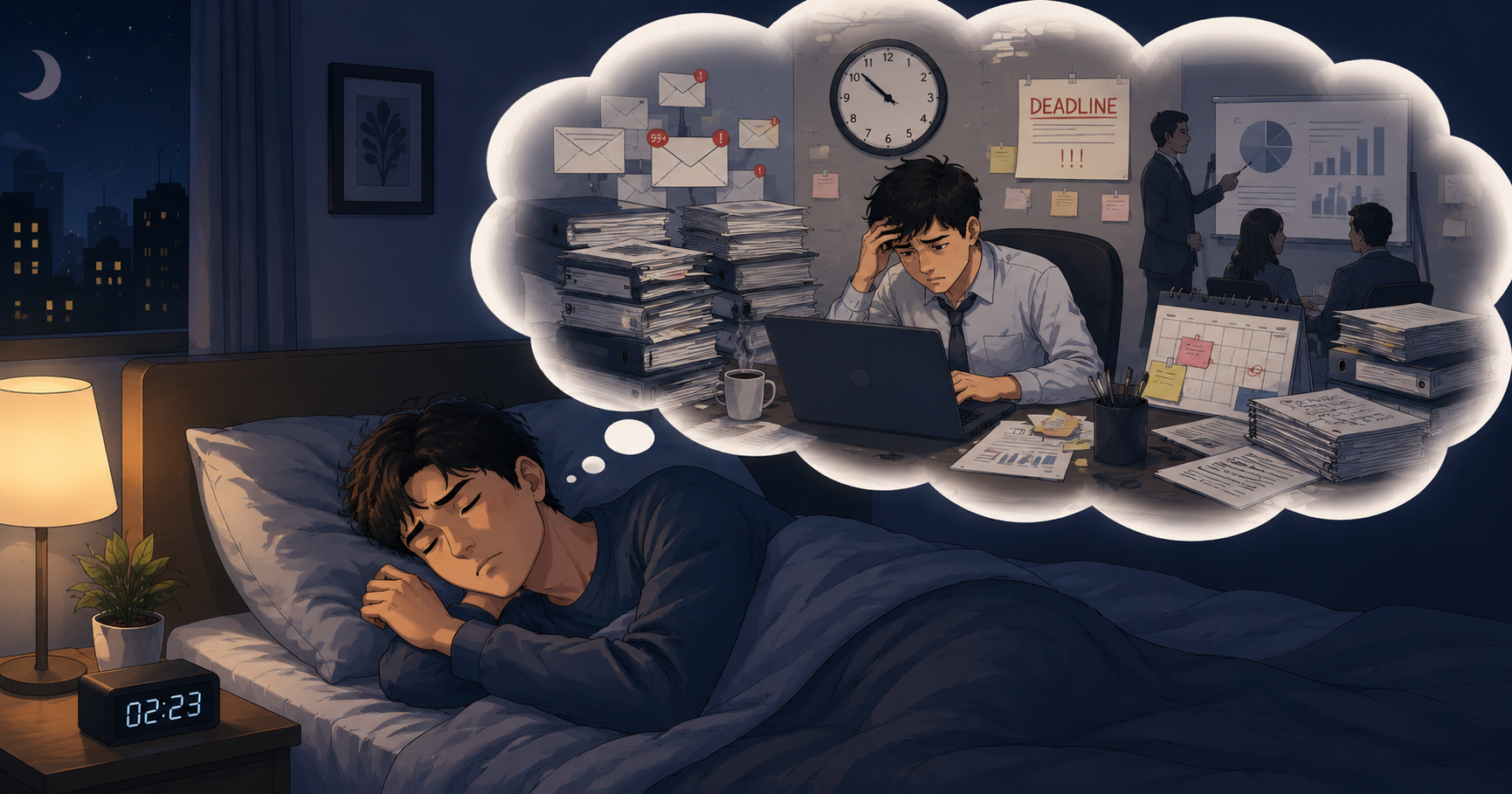
When the Office Follows You to Bed
You finally clock out, fall asleep, and then it happens. You are back at work, chasing a deadline or stuck in an endless meeting. If this sounds familiar, you are far from alone.
Dreaming about work is one of the most common dream themes adults report. It can feel frustrating, but it is rarely random. In fact, science offers a clear explanation for why your job shows up at night.
Why You Keep Dreaming About Work
The leading explanation is called the continuity hypothesis. In simple terms, dreams tend to continue the thoughts and emotions of your waking life.
So if work fills your day, it often fills your dreams too. Research supports this directly. People who work more hours, and who feel more work stress, report more work-related dreams. Your sleeping brain is simply picking up where your day left off.
Dreams Help Your Brain Process Emotions
Dreams are not just noise. They appear to serve a purpose, especially with emotions.
During sleep, your brain sorts through the day’s experiences. Studies suggest dreaming plays an active role in processing emotional memories. This may help you wake up feeling a little less reactive to yesterday’s stress.
Stress, however, can tip this balance. When pressure is high, dreams often turn more negative, and nightmares become more likely. The famous early theorist Sigmund Freud saw dreams as a way to face what we avoid while awake. Modern science frames it more as emotional housekeeping than hidden wishes.
What Work Dreams Might Be Telling You
Work dreams can act like a gentle mirror. They often reflect pressure, uncertainty, or needs that are not being met.
These unmet needs may include feeling competent, having freedom over your choices, or feeling accepted at work. You do not need to over-analyze every dream. But noticing a pattern can be useful. For example:
- If you dream of drowning in tasks, look at how organized your workdays really are.
- If you dream of not fitting in, think about small steps to feel more connected at work.
Treat these as soft signals, not strict messages. The goal is insight, not worry.
How to Calm Your Mind Before Bed
A calmer mind at bedtime often means calmer sleep. These simple habits can help.
Try a short meditation
Mindfulness meditation can ease the anxiety that follows you into sleep. Even a few quiet minutes before bed can settle your thoughts. A meditation app can guide you if you are new to it.
Do a worry dump
Writing in a journal helps clear a busy mind. Try a brain dump, where you write down every worry without analyzing it. Getting those thoughts onto paper can make your mind feel lighter and readier for rest.
Cut the blue light
Screens from phones, tablets, and laptops can keep your brain alert. So avoid them as bedtime approaches. Aim to switch off devices at least 45 minutes before sleep, and read a book instead.
Mind your evening habits
What you consume at night matters too. Limit caffeine in the afternoon and avoid heavy meals close to bedtime, since both can disrupt sleep. For lighter evening meal ideas, browse our healthy food section.
When to Seek Help
Occasional work dreams are normal. But persistent ones can signal deeper stress.
If anxiety or nightmares regularly wreck your sleep or affect your daily life, consider reaching out. A doctor or mental health professional can help you find practical support.
Frequently Asked Questions
Why do I keep dreaming about work? Most likely because of the continuity hypothesis. Dreams tend to reflect your waking thoughts and emotions, so a busy or stressful job often appears at night.
Are work dreams a sign of a problem? Not usually. They are common and often just reflect daily pressure. But frequent stressful dreams can be a cue to manage your stress.
How can I stop dreaming about work? Lowering work stress and improving your wind-down routine can help. Try meditation, journaling, and cutting screen time before bed.
Do dreams really help process emotions? Research suggests they do. Dreaming appears to help the brain sort through emotional experiences during sleep.
The Bottom Line
Dreaming about work is common, and it usually reflects a busy, stressful day rather than anything alarming. Your brain is simply processing what matters to you.
The fix is rarely about the dreams themselves. Instead, focus on lowering stress and building a calm bedtime routine. Better days and better wind-downs tend to lead to better nights.