A Common Cancer With a Detection Problem
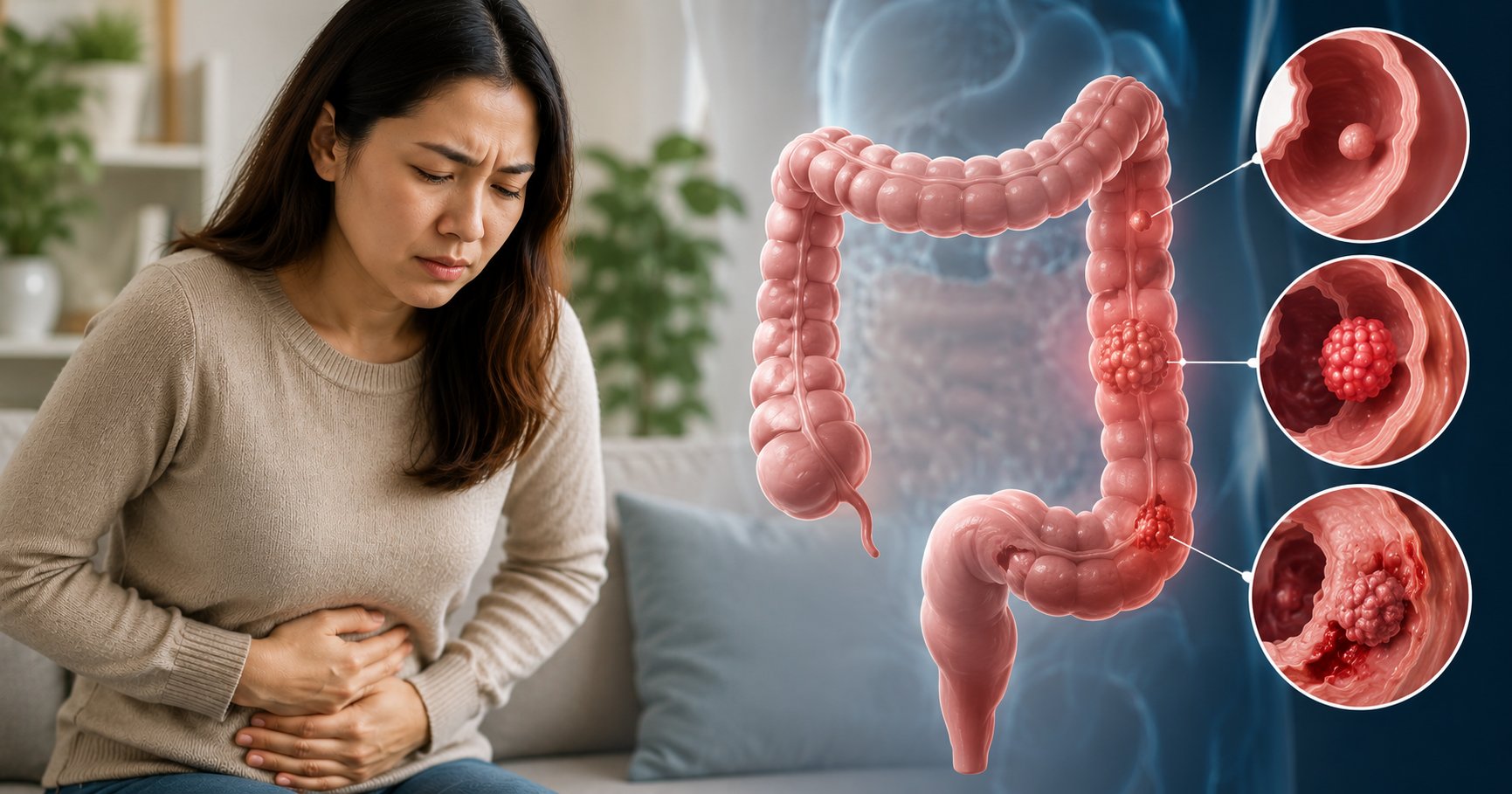
Colon cancer, also called colorectal cancer, is one of the most common cancers in the world. Globally, it ranks third for new cases, with around 1.9 million diagnoses each year. In Indonesia, it sits fourth for case numbers and is a leading cause of cancer death.
The biggest challenge is not that the disease is untreatable. It is that it is so often caught late. Health officials note that more than 7 in 10 patients arrive at the clinic already at an advanced stage. This is usually not because of carelessness, but because early colon cancer can be silent. Understanding how colon cancer symptoms change from stage to stage, and getting screened on time, can make all the difference.
Why Early Detection Matters So Much
The stage at which colon cancer is found has a huge impact on outcomes. This is the heart of the issue.
When the cancer is caught early, while it is still confined to its original site, it is highly treatable. Once it spreads to other organs, treatment becomes much harder and survival drops sharply. The trouble is that the earliest stages often produce no obvious symptoms at all. That is exactly why screening, which can catch the disease before symptoms appear, is so powerful. It finds trouble while it is still easy to treat.
The numbers make this vivid. When colon cancer is found at an early, localized stage, the five-year survival rate is very high, around 90 percent. But when it is discovered after it has spread to distant parts of the body, that figure falls dramatically. Sadly, only a minority of cases are caught at the earliest, most treatable stage, largely because of low screening rates. Closing that gap is the single biggest opportunity to save lives from this disease.
Colon Cancer Symptoms by Stage
Symptoms tend to become more noticeable as the disease advances. Here is a general picture of how they progress. Keep in mind that everyone is different, and these signs are not a substitute for medical testing.
Stage 0 and Stage 1
In the earliest stages, the tumor is still small and has not spread beyond the colon. Most people will not notice any change at all.
There may be a tiny amount of blood in the stool, but it is often too small to see with the naked eye. This is precisely why early disease so often goes unnoticed, and why screening matters more than waiting for symptoms.
Stage 2
By stage 2, the cancer has grown into the outer layers of the colon and may reach nearby tissue. Some changes can start to appear, including:
- Visible blood in the stool
- Stools that begin to look thinner than usual
- More frequent bowel movements, or a feeling that you have not fully emptied your bowels
Stage 3
At stage 3, the cancer is larger and has spread to nearby lymph nodes. The signs tend to become more pronounced, such as:
- Very thin, pencil-like stools occurring more often
- Diarrhea or constipation that does not get better
- More blood and mucus in the stool
Stage 4
In stage 4, the cancer has spread to other parts of the body. This is known as metastatic or advanced colon cancer, and the colon itself may become blocked or stop working properly. Possible symptoms include:
- Very thin or small, pellet-like stools, or being unable to pass stool at all
- More frequent blood in the stool, which may look very dark or black
- Severe abdominal pain and a swollen abdomen
Other Conditions That Can Mimic Colon Cancer
Here is some important reassurance. Many changes in your stool are caused by far more common and far less serious conditions. A symptom does not mean you have cancer.
Several other issues can cause similar changes, including:
- Hemorrhoids, swollen blood vessels in the anus and lower rectum
- Anal fissures, small tears in the lining of the anus
- Inflammatory bowel disease, such as Crohn’s disease or ulcerative colitis
- Digestive infections
- Certain foods or medications
The point is not to panic over a single symptom. It is to pay attention to persistent changes and let a doctor sort out the cause.
Who Is at Higher Risk?
Some people face a higher risk of colon cancer than others. Knowing your risk helps you decide when to start screening.
Risk factors include being over 45, having a family history of the disease, and having inflammatory bowel disease. Lifestyle plays a role too. A diet high in red and processed meat and low in fiber, along with obesity, physical inactivity, smoking, and heavy alcohol use, can all raise risk. One worrying modern trend is that colon cancer is rising among younger adults, even those under 50, which makes awareness important at every age.
How to Lower Your Risk
While not every case is preventable, healthy habits can meaningfully reduce your risk. The same choices protect your whole body. To lower your risk:
- Eat more fiber, with plenty of vegetables, fruits, and whole grains. Our healthy food section has practical ideas.
- Cut back on red and processed meat.
- Stay physically active, since regular exercise is linked to lower cancer risk, as we cover in our guide on strength training and why it matters.
- Maintain a healthy weight.
- Limit alcohol and avoid smoking.
When to See a Doctor and Get Screened
This is the most important takeaway. Do not wait for severe symptoms to act.
Health experts recommend that everyone begin colon cancer screening at age 45. People with a family history of the disease may need to start earlier, so ask your doctor what is right for you. Colonoscopy is the most widely used and most accurate screening method, though it is invasive and usually requires sedation. Other options, like stool-based tests, are also available.
Outside of routine screening, see a doctor promptly if you notice persistent changes. These include ongoing blood in the stool, a lasting change in bowel habits, unexplained weight loss, continued abdominal pain, or unusual fatigue. Most of the time the cause will be harmless, but it is always worth checking.
Understanding the Screening Options
If screening sounds intimidating, it helps to know what the options actually involve. There is more than one way to check.
Colonoscopy is the most thorough method. A doctor uses a thin, flexible camera to examine the entire colon, and can remove small growths called polyps during the same procedure, before they ever turn into cancer. It usually requires preparation and sedation, but it is highly accurate and not done often, typically every several years if results are normal.
There are also less invasive stool-based tests. These check a stool sample for hidden blood or for DNA changes linked to cancer, and they can be done at home. They are simpler, but if a result is positive, a follow-up colonoscopy is still needed. The best test is ultimately the one you will actually do, so talk with your doctor about which option fits you.
Frequently Asked Questions
What are the early symptoms of colon cancer? Early colon cancer often causes no symptoms at all. When present, the earliest sign may be a small amount of blood in the stool that is hard to see. This is why screening is so important.
Does blood in the stool always mean cancer? No. Blood in the stool is far more often caused by common conditions like hemorrhoids or anal fissures. Still, you should have any bleeding evaluated by a doctor.
At what age should I get screened for colon cancer? Experts recommend starting at age 45 for people at average risk. Those with a family history or other risk factors may need to begin earlier.
Is colon cancer curable? When caught early, colon cancer is highly treatable. Survival is much higher when it is found before it spreads, which is why timely screening saves lives.
Why is colon cancer rising in young people? Researchers are still studying the causes, but rising rates in younger adults are linked to factors like diet, obesity, and inactivity. It means awareness matters at every age.
The Bottom Line
Colon cancer is common, but it is also one of the most preventable and treatable cancers when caught early. The hard truth is that its early signs are often silent, which is why so many cases are found late.
You do not have to leave it to chance. Watch for persistent changes like blood in the stool or shifting bowel habits, adopt protective habits, and most importantly, get screened starting at age 45, or earlier if you are at higher risk. Early detection truly is the difference that saves lives.