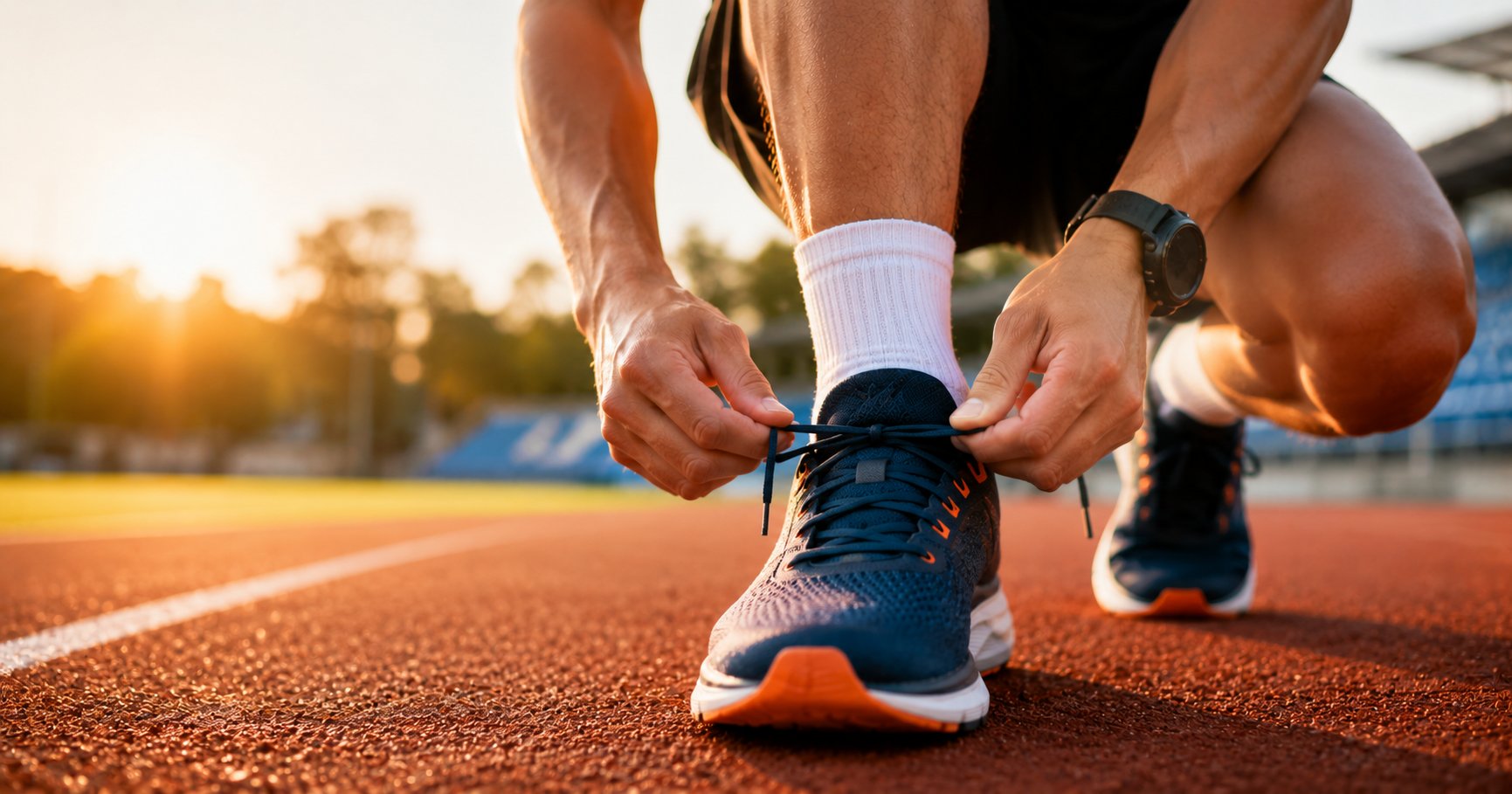
The Most Overlooked Piece of Sports Gear
We pour a lot of attention into sport. We plan our training, track our progress, and buy the latest gear. Yet many of us overlook the one piece of equipment that touches the ground with every move, our shoes.
More specifically, we overlook whether they actually fit. The right shoe size is one of the simplest and most powerful ways to protect your feet and improve your performance. Get it wrong, and even the most expensive shoe can work against you. This guide explains why fit matters so much in sport, what goes wrong when it is off, and how to find your perfect size.
Your Feet Take a Real Pounding
It is easy to forget how much work your feet do during exercise. Every stride sends force up through your body.
When you run, the ground pushes back on your feet with a force of about 2.5 to 3 times your body weight on each step. Multiply that by thousands of steps, and the load is enormous. Your shoes are the cushion and the foundation that manage all of it.
This is why footwear is not just an accessory in sport. It is core safety equipment. And like any equipment, it only works properly when it fits.
Why the Right Shoe Size Is So Important
A well-fitted shoe does three big things. It helps prevent injury, supports better performance, and simply makes movement more comfortable.
The injury angle is the most important. Poorly fitting shoes are linked to blisters, calluses, plantar fasciitis, stress fractures, and other painful conditions. A good fit reduces those risks and lets you move efficiently.
There is also a money lesson here. Many people assume the priciest shoe is the best choice. But podiatrists point out that a properly fitted affordable shoe will outperform an ill-fitted expensive one. Fit beats price tag every time.
What Goes Wrong When Shoes Do Not Fit
Both extremes cause problems. A shoe that is too small and one that is too big each create their own trouble.
When shoes are too small
Tight shoes crush your toes and leave no room to move. During exercise, this leads to painful problems. You may get black or bruised toenails as your toes jam into the front. Over time, cramped shoes are also linked to bunions, hammertoes, and a painful nerve condition called Morton’s neuroma. Blisters and calluses are common too, from constant rubbing.
When shoes are too big
Loose shoes seem safer, but they bring their own risks. When your foot slides around inside the shoe, you lose stability and control. That extra movement creates friction, which causes blisters. It also makes your foot less secure during quick changes of direction, which can raise the risk of slips and ankle injuries.
Common Injuries From Poorly Fitting Shoes
The list of problems linked to bad fit is long. Podiatrists regularly treat issues that trace back to footwear, including:
- Blisters and calluses
- Plantar fasciitis, a common cause of heel pain
- Stress fractures from repeated impact
- Morton’s neuroma, a pinched nerve between the toes
- Bunions and hammertoes, worsened by tight, narrow shoes
- Achilles and tendon pain
The damage may not stop at your feet either. Because your feet form the base of your posture, poor footwear can trigger a chain reaction of discomfort in your knees, hips, and back. One bad fit can ripple through your whole body.
It Is Not Just Size, It Is Fit
Here is a key point many people miss. The number on the box is only part of the story.
Shoe sizes vary from brand to brand, so the same size can fit very differently. Width matters as much as length, since a narrow shoe can pinch even in the right length. Your arch type counts too. People with flat feet often overpronate, meaning the foot rolls inward, and may need extra support. People with high arches usually need more cushioning. So the goal is not just the right number, but the right shape and support for your foot.
Match the Shoe to Your Sport
Different sports place different demands on your feet. A shoe built for one can be wrong for another.
Running shoes, for example, are designed for forward motion and impact, with cushioning to absorb shock. For that reason, experts advise that running shoes should not be used for sports with side-to-side movement. Court sports like basketball and volleyball involve constant lateral movement and quick stops, so they need shoes with more lateral support and ankle stability. If you play a sport two to three times a week or more, a sport-specific shoe is worth it.
How to Get the Right Shoe Size
Finding your true fit is not complicated. A few smart habits make all the difference. Follow these steps when buying sports shoes:
- Measure both feet. They are often slightly different sizes, so fit to the larger one.
- Re-measure over time. Feet can change shape and size as you age, so do not assume your size is fixed.
- Shop later in the day. Your feet swell during the day and during exercise, so afternoon fitting gives a more realistic size.
- Wear your sport socks. Try shoes on with the socks you will actually use, since they affect fit.
- Leave room at the toe. Aim for about a thumb’s width, roughly one centimeter, between your longest toe and the front of the shoe.
- Test them. Walk or jog in the store. A good shoe should feel comfortable right away.
That last point is crucial. Despite the popular myth, good shoes do not need to be “broken in.” Podiatry experts note that a well-fitting shoe should feel comfortable from the start. Discomfort on day one is a warning sign, not something to push through.
Do Not Forget to Replace Worn-Out Shoes
Even the perfect pair does not last forever. As shoes age, their cushioning and support break down, even if they still look fine.
Worn-out shoes lose their ability to absorb impact, which is one of the most common causes of overuse injuries. As a general guide, replace regular sport shoes every 6 to 12 months, or running shoes after a few hundred kilometers of use. Tracking your mileage with an app can help you know when it is time. Rotating between two pairs also gives the cushioning time to recover and extends their life.
Keeping Your Feet Healthy and Active
The right footwear is part of a bigger picture of staying active and healthy. Comfortable, well-fitted shoes make it far easier to keep exercising consistently.
That consistency pays off across your whole body. Regular physical activity supports a healthy weight, heart, and metabolism, and is a key part of preventing chronic conditions, as we discuss in our guide on preventing diabetes. In other words, taking care of your feet helps you keep moving, and moving keeps you well.
When to See a Podiatrist
Sometimes the right shoes are not enough on their own. Certain signs call for professional help.
See a podiatrist if you have ongoing foot or heel pain, recurring sports injuries, or visible changes like bunions or hammertoes. A specialist can assess your foot structure and gait, and may recommend custom orthotics or specific footwear. People with flat feet or very high arches in particular can benefit from expert guidance.
Frequently Asked Questions
Why is the right shoe size so important for sports? Because your feet absorb huge forces during exercise. The right size protects against injuries like blisters, black toenails, and stress fractures, and helps you perform better.
How much room should there be at the toe? About a thumb’s width, roughly one centimeter, between your longest toe and the end of the shoe. This leaves room for your feet to swell and move.
Should I size up for running shoes? Many people benefit from a little extra room for running, since feet swell and toes need space. The key is enough room at the front without your heel slipping.
How often should I replace my sports shoes? Roughly every 6 to 12 months with regular use, or after a few hundred kilometers for running shoes, since worn cushioning raises injury risk.
Do new shoes need to be broken in? No. A well-fitting shoe should feel comfortable from the first wear. Pain at the start usually means the fit is wrong.
The Bottom Line
The right shoe size is one of the most underrated keys to safe, enjoyable sport. Your feet handle enormous forces, and the wrong fit can lead to everything from blisters to stress fractures, and even pain in your knees, hips, and back.
So treat fit as essential gear, not an afterthought. Measure your feet, shop in the afternoon, leave room at the toe, match the shoe to your sport, and replace worn pairs. Get the fit right, and your feet will carry you further, more comfortably, and with far less risk.