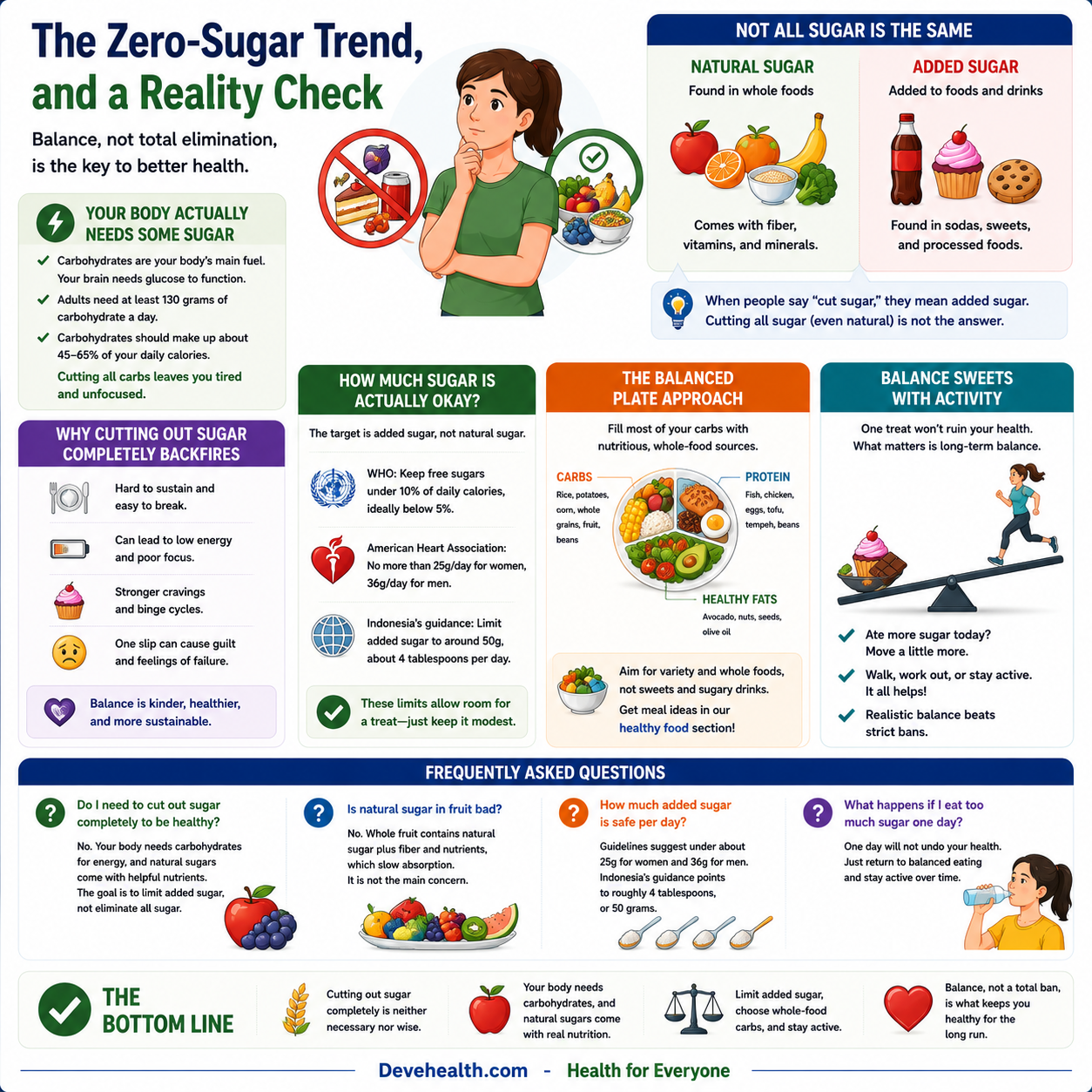
The Zero-Sugar Trend, and a Reality Check
Sugar-free diets are everywhere right now. Many people try to quit sugar entirely, hoping for fast results. It sounds healthy, even heroic.
But is cutting out sugar completely actually the right move? Nutrition experts say no. The smarter goal is balance, not total elimination. Here is what the science really says.
Your Body Actually Needs Some Sugar
This surprises many people. Sugar is a type of carbohydrate, and carbohydrates are a main fuel for your body.
Your cells break carbs down into glucose for energy. Your brain depends on it too. In fact, experts say adults need at least 130 grams of carbohydrate a day, the minimum amount of glucose the brain uses to function.
That is why health guidelines do not tell you to drop carbs. Instead, they recommend that carbohydrates make up about 45 to 65 percent of your daily calories. Cutting all of that out would leave you tired and unfocused.
Not All Sugar Is the Same
Here is the key distinction most diets miss. There are two broad types of sugar.
The first is natural sugar, found inside whole fruit, milk, and vegetables. It comes bundled with fiber, vitamins, and minerals. The second is added sugar, the kind put into sodas, sweets, and processed foods.
So when people say “cut sugar,” they usually mean added sugar. That is a smart move. But cutting out every carbohydrate and natural sugar is a different, less healthy idea.
Why Cutting Out Sugar Completely Backfires
Total elimination rarely works in real life. It is hard to sustain and easy to break.
When you ban a whole food group, your meals shrink to a few options. That makes balanced nutrition harder, not easier. Many people also feel low on energy and end up with stronger cravings. Then one slip can feel like total failure, which fuels a cycle of guilt.
A balanced approach is kinder and more effective. It lets you enjoy food while still protecting your health.
How Much Sugar Is Actually Okay
The real target is added sugar, not natural sugar. And the guidance here is clear.
The World Health Organization advises keeping free sugars under 10 percent of your daily calories, and ideally below 5 percent. The American Heart Association suggests no more than 25 grams a day for women and 36 grams for men. Many national guidelines, including Indonesia’s, suggest a limit of around 50 grams, or about four tablespoons, of added sugar per day.
These numbers leave room for a treat. They simply ask you to keep it modest.
The Balanced Plate Approach
Instead of banning sugar, build a balanced plate. This is far easier to follow.
Fill most of your carbohydrate quota with nutritious sources. Think rice, potatoes, corn, whole grains, fruit, and beans. Then add protein and healthy fats to round out the meal.
Variety is the goal here. Your carbs should come from many whole foods, not mainly from sweets and sugary drinks. For simple, balanced meal ideas, browse our healthy food section to get started.
Balance Sweets With Activity
One sweet treat will not ruin your health. What matters is the long-term balance between energy in and energy out.
So if you eat more sugar than usual one day, do not panic. You can simply move a little more to balance it out. A walk, a workout, or an active day all help. This realistic approach beats strict bans that never last.
Frequently Asked Questions
Do I need to cut out sugar completely to be healthy? No. Your body needs carbohydrates for energy, and natural sugars come with helpful nutrients. The goal is to limit added sugar, not eliminate all sugar.
Is natural sugar in fruit bad? No. Whole fruit contains natural sugar plus fiber and nutrients, which slow absorption. It is not the main concern.
How much added sugar is safe per day? Guidelines suggest under about 25 grams for women and 36 grams for men. Indonesia’s guidance points to roughly four tablespoons, or 50 grams.
What happens if I eat too much sugar one day? One day will not undo your health. Just return to balanced eating and stay active over time.
The Bottom Line
Cutting out sugar completely is neither necessary nor wise. Your body needs carbohydrates, and natural sugars come packaged with real nutrition.
The smart move is to limit added sugar, choose varied whole-food carbs, and stay active. Balance, not a total ban, is what keeps you healthy for the long run.