Gray Strands Before Your Time
Gray hair feels like a problem for later life. So spotting your first silver strand in your 20s can come as a shock. You may wonder what you did wrong, or whether something is off with your health.
The truth is reassuring and interesting at once. Premature gray hair has many possible causes, and most are well understood. Some you cannot control, but several you can. This guide walks through all the main reasons, backed by current research.
How Hair Gets Its Color
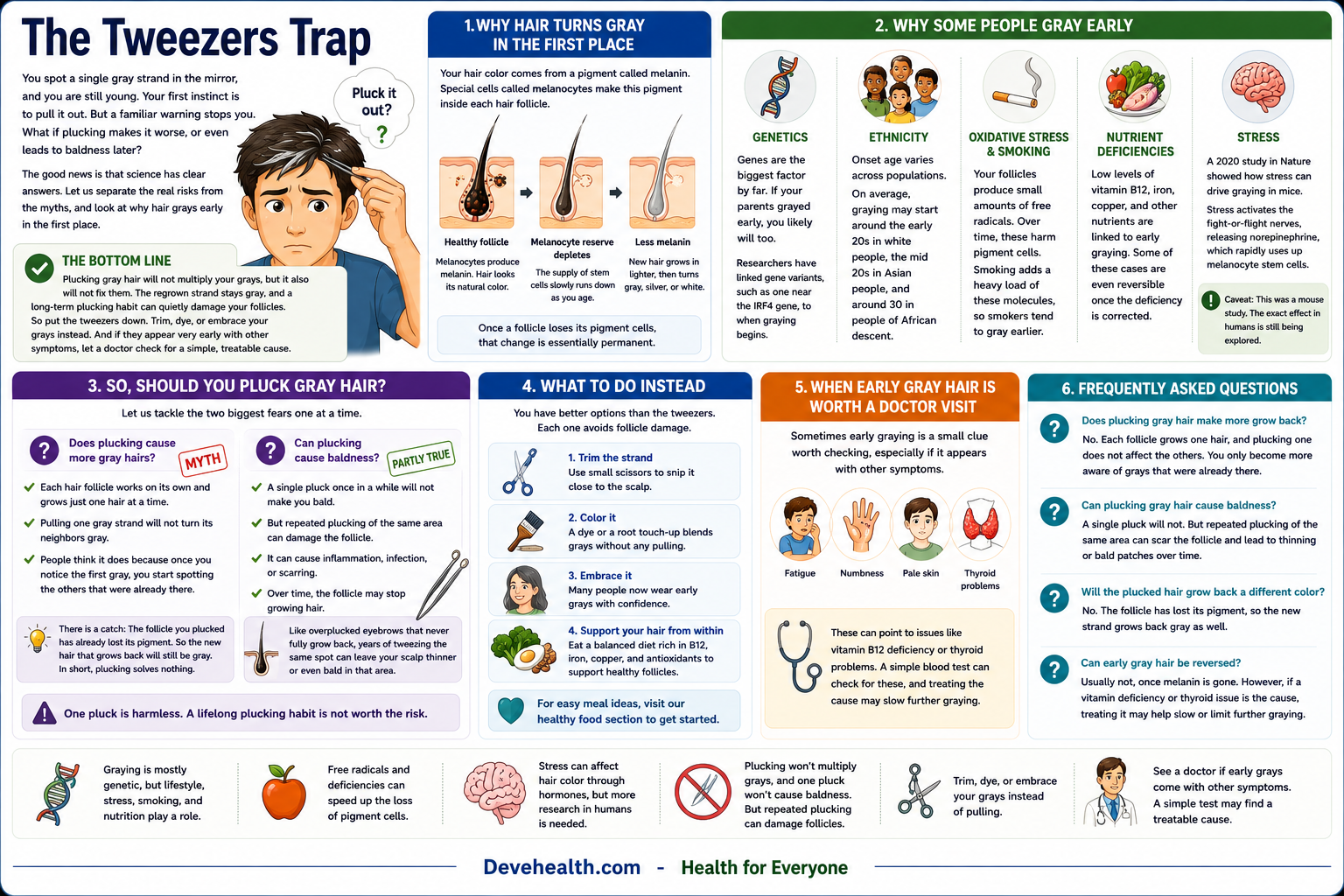
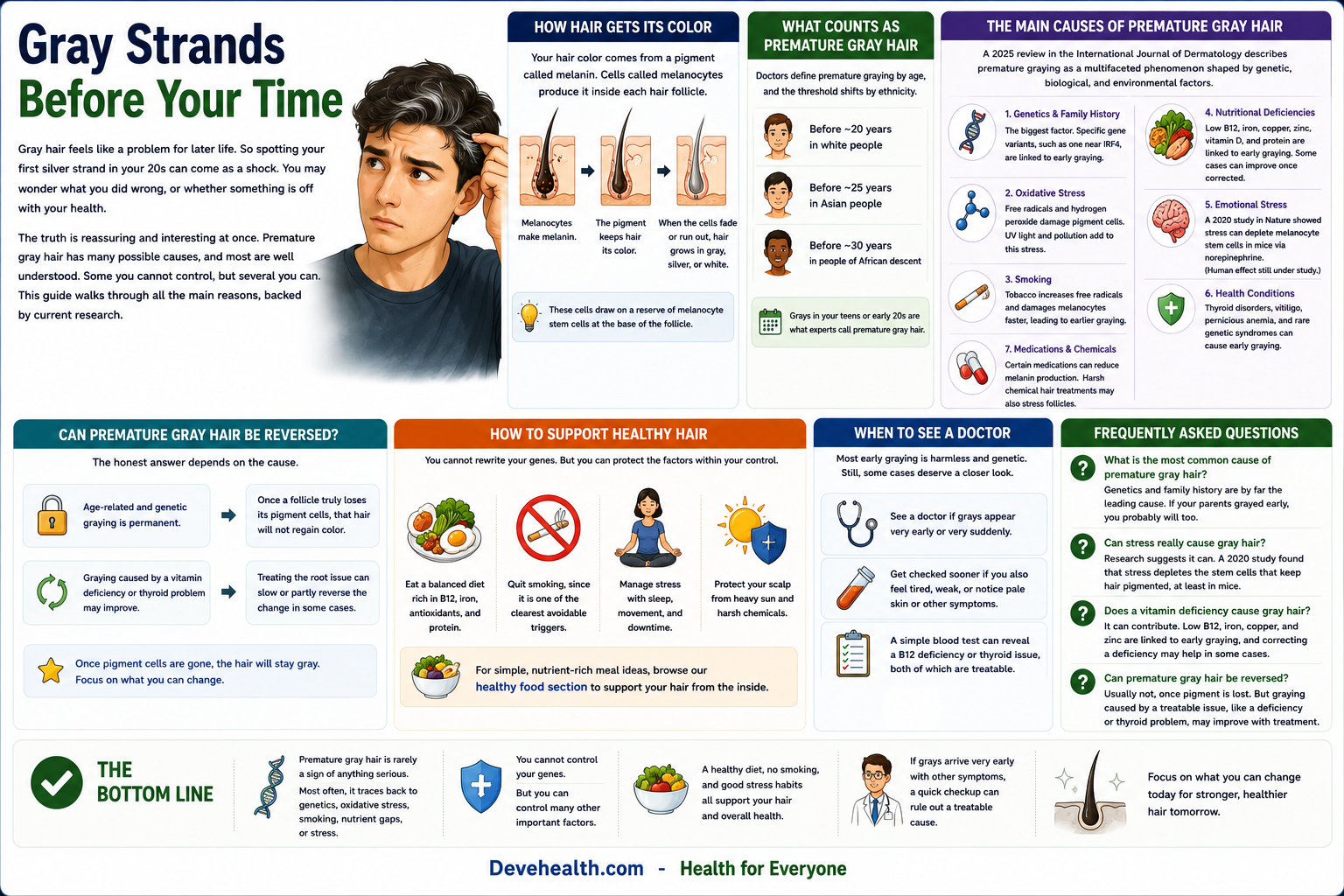
First, a quick look at the basics. Your hair color comes from a pigment called melanin. Cells called melanocytes produce it inside each hair follicle.
These cells draw on a reserve of melanocyte stem cells at the base of the follicle. As long as the reserve holds, your hair keeps its color. When the cells fade or run out, new hair grows in gray, silver, or white.
What Counts as Premature Gray Hair
Doctors define premature graying by age, and the threshold shifts by ethnicity. On average, graying is considered early before about age 20 in white people, before 25 in Asian people, and before 30 in people of African descent.
So a few grays in your late 30s are usually just normal aging. Grays in your teens or early 20s are what experts call premature gray hair.
The Main Causes of Premature Gray Hair
Researchers group the causes into genetic, biological, and environmental factors. A 2025 review in the International Journal of Dermatology describes premature graying as a multifaceted phenomenon shaped by all three. Let us break them down.
Genetics and family history
Genes are the single biggest factor. If your parents or grandparents grayed early, your odds rise sharply.
Scientists have even traced specific gene variants tied to graying, such as one near a gene called IRF4. You cannot change your genes. But knowing the pattern helps you set realistic expectations.
Oxidative stress
Inside every follicle, normal activity creates damaging molecules called free radicals. Over time, these can build up and harm the pigment cells.
One key culprit is hydrogen peroxide, which can accumulate and bleach the hair from within. Oxidative stress from sources like UV light and pollution adds to this damage. This is one of the central mechanisms behind early graying.
Smoking
Smoking is a major, avoidable trigger. Tobacco floods the body with free radicals.
That extra oxidative load damages melanocytes faster. As a result, smokers tend to gray noticeably earlier than non-smokers.
Nutritional deficiencies
What you eat affects your hair more than most people realize. Low levels of several nutrients are linked to early graying.
The usual suspects include vitamin B12, iron and ferritin, copper, zinc, and vitamin D. Protein matters too, since melanin is built from amino acids. The encouraging part is that some deficiency-related graying can improve once the gap is corrected.
Emotional stress
Stress is not just folklore. A landmark 2020 study in Nature, led by Harvard scientists, showed how stress can drive graying. Acute stress activated the fight-or-flight nerves in mice. Those nerves released norepinephrine, which rapidly used up the melanocyte stem cells.
One caveat is important. This was a mouse study, so the exact human effect is still under study. Even so, it gives a real biological basis for a very old belief.
Underlying health conditions
Sometimes early graying signals another condition. Thyroid disorders are a common example.
Autoimmune conditions like vitiligo and pernicious anemia can also play a role. Rare genetic syndromes that speed up aging may cause it too. Because of this, sudden early graying can be worth a medical check.
Certain medications and chemicals
A few medications can interfere with pigment production. Some drugs are known to reduce melanin formation. Harsh chemical hair treatments may also stress the follicles over time.
Can Premature Gray Hair Be Reversed?
This is the question everyone asks. The honest answer depends on the cause.
Once a follicle truly loses its pigment cells, that hair will not regain color. Age-related and genetic graying is permanent. However, graying tied to a vitamin deficiency or thyroid problem is different. In some of those cases, treating the root issue can slow or partly reverse the change.
How to Support Healthy Hair
You cannot rewrite your genes. But you can protect the factors within your control.
Eat a balanced diet rich in B12, iron, antioxidants, and protein. Quit smoking, since it is one of the clearest avoidable triggers. Manage stress with sleep, movement, and downtime. And protect your scalp from heavy sun and harsh chemicals.
For simple, nutrient-rich meal ideas, browse our healthy food section to support your hair from the inside.
When to See a Doctor
Most early graying is harmless and genetic. Still, some cases deserve a closer look.
See a doctor if grays appear very early or very suddenly. Get checked sooner if you also feel tired, weak, or notice pale skin or other symptoms. A simple blood test can reveal a B12 deficiency or thyroid issue, both of which are treatable.
Frequently Asked Questions
What is the most common cause of premature gray hair? Genetics and family history are by far the leading cause. If your parents grayed early, you probably will too.
Can stress really cause gray hair? Research suggests it can. A 2020 study found that stress depletes the stem cells that keep hair pigmented, at least in mice.
Does a vitamin deficiency cause gray hair? It can contribute. Low B12, iron, copper, and zinc are linked to early graying, and correcting a deficiency may help in some cases.
Can premature gray hair be reversed? Usually not, once pigment is lost. But graying caused by a treatable issue, like a deficiency or thyroid problem, may improve with treatment.
The Bottom Line
Premature gray hair is rarely a sign of anything serious. Most often, it traces back to genetics, oxidative stress, smoking, nutrient gaps, or stress.
You cannot control your genes. But a healthy diet, no smoking, and good stress habits all support your hair. And if grays arrive very early with other symptoms, a quick checkup can rule out a treatable cause.