You Have More Power Than You Think
Cancer can feel frightening and random, like something that simply strikes out of nowhere. That fear is understandable. But it is only part of the story.
The empowering truth is that a large share of cancer is preventable. A meaningful portion of cases is tied to everyday habits, the kind you can actually change. That means the choices you make, from what you eat to whether you smoke, genuinely shift your odds. This guide walks through the most powerful, science-backed cancer prevention habits, and the good news is that none of them is complicated.
How Much Cancer Is Actually Preventable?
Before the habits, it helps to grasp just how much is within your control. The numbers are striking.
According to the American Cancer Society, around 44 percent of cancer deaths in the United States are linked to modifiable risk factors, meaning things you can do something about. Globally, the World Health Organization estimates that between 30 and 50 percent of cancers could be prevented by avoiding key risk factors. No, not every cancer can be prevented, since some causes are beyond anyone’s control. But a huge slice of the risk is not. That is where your habits come in.
1. Do Not Use Tobacco
If there is one habit that matters most, this is it. Tobacco is the single largest preventable cause of cancer.
Smoking is linked to cancer in nearly every part of the body, not just the lungs. It is connected to at least 17 types of cancer and accounts for a huge share of cancer deaths. The chemicals in tobacco smoke damage cells in ways that can lead to cancer over time. The best approach is never to start. And if you do smoke, quitting at any age lowers your risk, though it takes time. Every attempt to quit increases your long-term chance of success, so it is always worth trying again.
2. Maintain a Healthy Weight
Carrying excess body weight is one of the most underestimated cancer risks. Many people do not realize how strong the link is.
Being overweight or obese is associated with around 13 to 15 different types of cancer. The reasons are biological. Excess fat fuels long-lasting inflammation, raises insulin levels, and increases certain hormones, all of which can encourage cells to grow abnormally. Reaching and keeping a healthy weight, through balanced eating and regular movement, is therefore a powerful protective step.
3. Stay Physically Active
Your body is built to move, and movement helps guard against cancer. Regular activity is linked to a lower risk of several types, including colon, breast, and endometrial cancer.
You do not need to become an athlete. Health guidelines suggest aiming for 150 to 300 minutes of moderate activity each week, such as brisk walking, plus muscle-strengthening exercises on two or more days. Activity also helps you manage your weight, which adds another layer of protection. If you are not sure where to begin, our guide on strength training and why it matters is a great starting point.
4. Eat a Cancer-Smart Diet
What fills your plate plays a real role in your risk. A protective diet is built around whole, plant-based foods.
Aim to eat plenty of vegetables, fruits, and whole grains, which are rich in fiber and beneficial compounds. A high-fiber, plant-forward diet is linked to lower risk, especially of cancers in the digestive tract. At the same time, limit processed meats like sausages and deli meat, which are best kept to a minimum, and keep red meat moderate. It also helps to cut back on sugary drinks and heavily salted foods. Because excess sugar can drive weight gain, being aware of where it hides is useful, as we explore in our guide on hidden sugar in everyday foods.
5. Limit Alcohol
Alcohol is a tougher topic, because many people do not realize it is a known cause of cancer. Yet the link is well established.
Drinking is associated with cancers of the breast, liver, colon, mouth, throat, and esophagus. Importantly, there is no completely safe level. Risk exists at every amount, and it rises the more you drink. This does not mean a single drink will cause cancer, but cutting back clearly lowers your risk. When it comes to alcohol and cancer prevention, less is genuinely better.
6. Protect Your Skin From the Sun
Skin cancer is one of the most common cancers, and unlike many others, its main cause is largely avoidable. Most cases are linked to ultraviolet radiation from the sun and tanning devices.
Protecting your skin is simple but powerful. Use a broad-spectrum sunscreen with an SPF of at least 30, and reapply it regularly. Seek shade during the hottest part of the day, wear protective clothing and a hat, and avoid indoor tanning entirely. These small habits add up to a major reduction in skin cancer risk over a lifetime.
7. Get Vaccinated Against Cancer-Linked Infections
This one surprises people, but certain cancers are caused by viruses, and vaccines can prevent them. It is one of the most direct forms of cancer prevention available.
The HPV vaccine is especially important, since the human papillomavirus causes nearly all cases of cervical cancer, along with several other cancers. The hepatitis B vaccine helps protect against liver cancer. Talk to your doctor about whether these vaccines are right for you or your children. Preventing the infection means preventing the cancers it can cause.
8. Get Screened for Early Detection
Prevention is not only about avoiding cancer. It is also about catching it as early as possible, when it is most treatable.
Recommended screening tests can find some cancers, and even pre-cancerous changes, before any symptoms appear. Screenings for colorectal, breast, cervical, and lung cancer save countless lives each year. Following the screening schedule your doctor recommends, based on your age and risk, is a vital partner to all the habits above. Prevention lowers your risk, while screening catches anything that slips through early.
What About Genes and Family History?
It is worth addressing a common question. If cancer runs in your family, can habits still help? The answer is yes.
Some cancer risk is inherited and beyond your control, and a family history can raise your odds. But genetics is rarely the whole story. For most people, lifestyle still has a powerful influence, even alongside inherited risk. In fact, healthy habits matter just as much, if not more, when your baseline risk is higher. If you have a strong family history of cancer, talk to your doctor. You may benefit from starting screening earlier or having it more often, so any problem can be caught at its most treatable stage.
The Power of Combining These Habits
Here is the most encouraging part. These habits are not just helpful on their own. Together, they multiply your protection.
Research shows that people who follow a low-risk lifestyle, never smoking, eating well, staying active, keeping a healthy weight, and limiting alcohol, can gain more than five extra years of life free from major chronic diseases, including cancer, heart disease, and diabetes. In other words, the same simple choices protect far more than just one part of your health. And it is never too late to start. Whatever your age or current habits, every positive change shifts the odds in your favor.
You also do not have to overhaul your life overnight. Trying to fix everything at once is the fastest way to give up. Instead, pick one habit to focus on first, perhaps adding a daily walk or cutting back on processed meat, and let it settle in. Once it feels natural, add another. Small, steady changes that you actually keep will always beat a perfect plan you abandon in a week.
Frequently Asked Questions
How much cancer is preventable? Estimates suggest around 30 to 50 percent of cancers could be prevented globally, and about 44 percent of cancer deaths in the US are linked to modifiable risk factors. Not all cancer is preventable, but a large share is.
What is the single most important thing I can do? Avoiding tobacco has the biggest impact, since smoking is the leading preventable cause of cancer. If you smoke, quitting at any age lowers your risk over time.
Does diet really affect cancer risk? Yes. A diet rich in vegetables, fruits, whole grains, and fiber, with limited processed and red meat, is linked to lower risk, especially of digestive cancers.
Is any amount of alcohol safe? There is no completely risk-free level of alcohol when it comes to cancer. Risk rises with the amount you drink, so cutting back lowers it.
Can vaccines prevent cancer? Yes, indirectly. The HPV vaccine prevents the virus behind nearly all cervical cancers, and the hepatitis B vaccine helps prevent liver cancer.
The Bottom Line
Cancer is not purely a matter of luck. A large share of cases is tied to habits you can change, which means you hold real power to lower your risk.
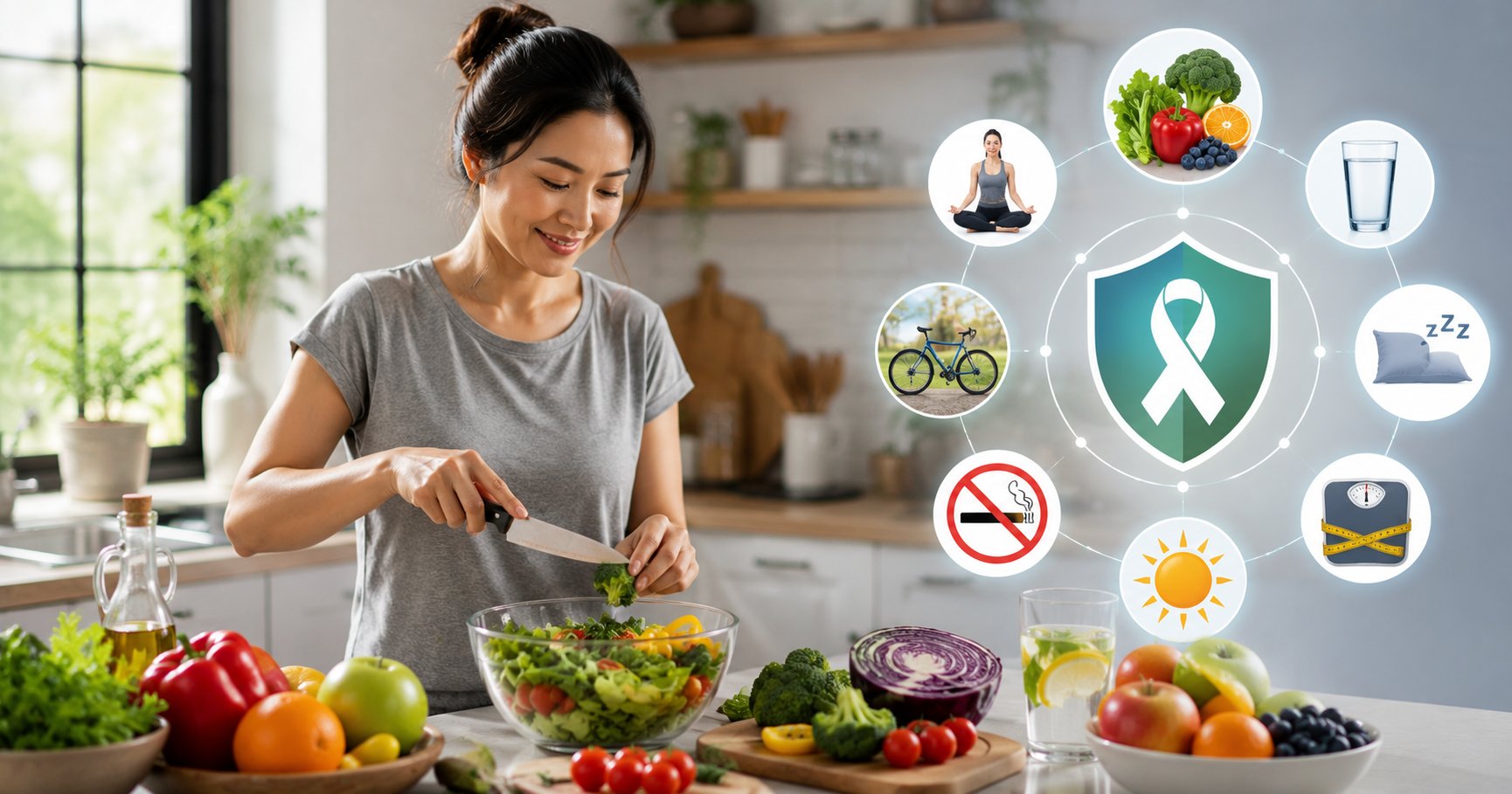
The most effective steps are refreshingly familiar. Do not smoke, keep a healthy weight, stay active, eat a plant-rich diet, limit alcohol, protect your skin, get relevant vaccines, and keep up with screening. None of these guarantees you will never face cancer, but together they stack the odds firmly in your favor, and improve your whole health along the way. The best time to start is today.