The Sugar You Do Not See
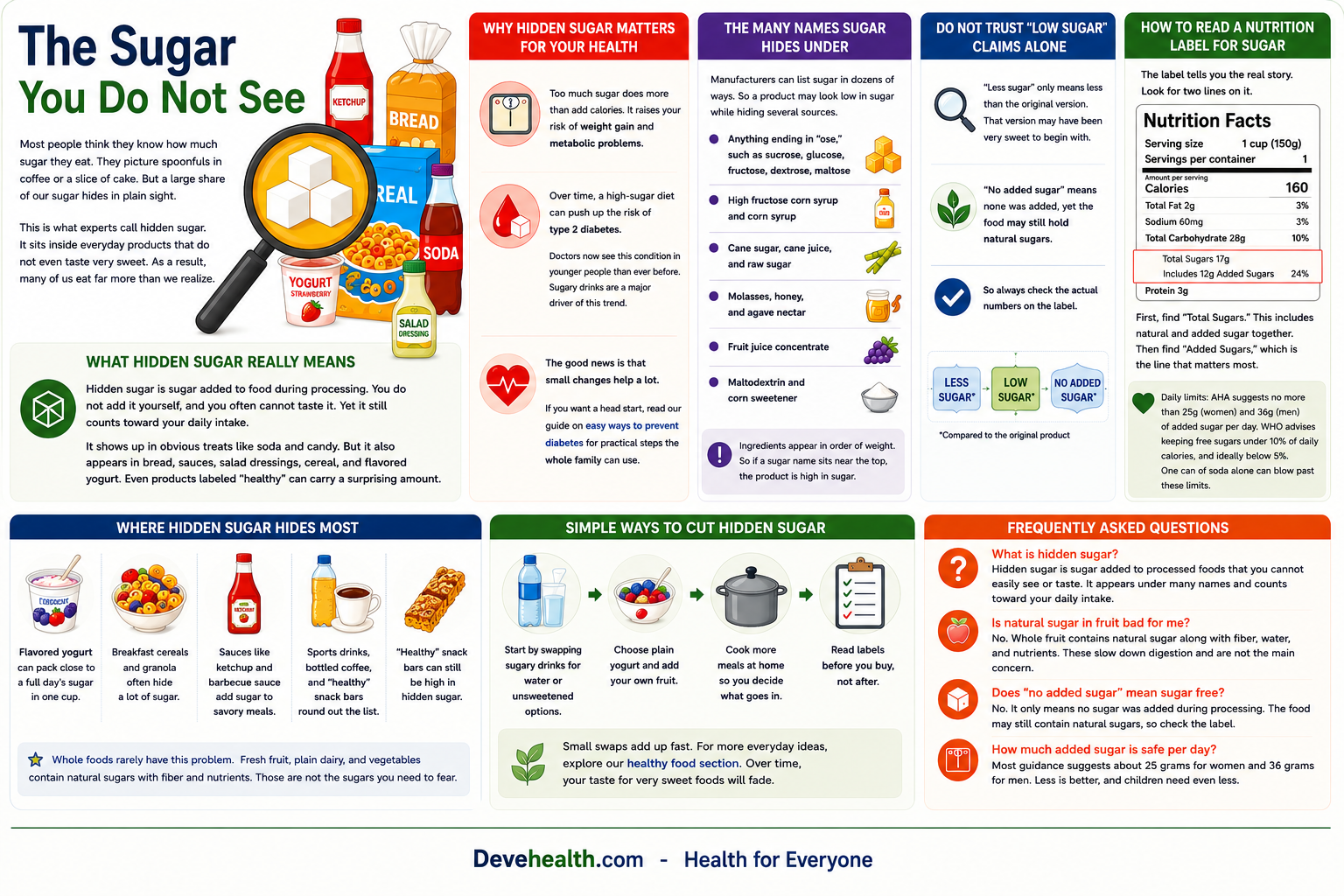
Most people think they know how much sugar they eat. They picture spoonfuls in coffee or a slice of cake. But a large share of our sugar hides in plain sight.
This is what experts call hidden sugar. It sits inside everyday products that do not even taste very sweet. As a result, many of us eat far more than we realize.
What Hidden Sugar Really Means
Hidden sugar is sugar added to food during processing. You do not add it yourself, and you often cannot taste it. Yet it still counts toward your daily intake.
It shows up in obvious treats like soda and candy. But it also appears in bread, sauces, salad dressings, cereal, and flavored yogurt. Even products labeled “healthy” can carry a surprising amount.
Why Hidden Sugar Matters for Your Health
Too much sugar does more than add calories. It raises your risk of weight gain and metabolic problems.
Over time, a high-sugar diet can push up the risk of type 2 diabetes. Doctors now see this condition in younger people than ever before. Sugary drinks are a major driver of this trend.
The good news is that small changes help a lot. If you want a head start, read our guide on easy ways to prevent diabetes for practical steps the whole family can use.
The Many Names Sugar Hides Under
One reason sugar stays hidden is its many names. Manufacturers can list it in dozens of ways. So a product may look low in sugar while hiding several sources.
Watch for these common names on ingredient lists:
- Anything ending in “ose,” such as sucrose, glucose, fructose, dextrose, and maltose
- High fructose corn syrup and corn syrup
- Cane sugar, cane juice, and raw sugar
- Molasses, honey, and agave nectar
- Fruit juice concentrate
- Maltodextrin and corn sweetener
Ingredients appear in order of weight. So if a sugar name sits near the top, the product is high in sugar.
Do Not Trust “Low Sugar” Claims Alone
Front-of-pack claims can mislead you. Terms like “less sugar,” “low sugar,” and “no added sugar” sound reassuring. But they do not always mean what you think.
“Less sugar” only means less than the original version. That version may have been very sweet to begin with. “No added sugar” means none was added, yet the food may still hold natural sugars. So always check the actual numbers on the label.
How to Read a Nutrition Label for Sugar
The label tells you the real story. Look for two lines on it.
First, find “Total Sugars.” This includes natural and added sugar together. Then find “Added Sugars,” which is the line that matters most. Modern labels separate the two to make this easier.
It also helps to know the daily limits. The American Heart Association suggests no more than 25 grams of added sugar for women and 36 grams for men each day. The World Health Organization advises keeping free sugars under 10 percent of your daily calories, and ideally below 5 percent. One can of soda alone can blow past these limits.
Where Hidden Sugar Hides Most
Some foods catch people off guard again and again. Knowing them makes shopping easier.
Flavored yogurt can pack close to a full day’s sugar in one cup. Breakfast cereals and granola often hide a lot too. Sauces like ketchup and barbecue sauce add sugar to savory meals. Sports drinks, bottled coffee, and “healthy” snack bars round out the list.
Whole foods rarely have this problem. Fresh fruit, plain dairy, and vegetables contain natural sugars with fiber and nutrients. Those are not the sugars you need to fear.
Simple Ways to Cut Hidden Sugar
You do not need to quit sugar completely. You just need to take back control.
Start by swapping sugary drinks for water or unsweetened options. Choose plain yogurt and add your own fruit. Cook more meals at home so you decide what goes in. And read labels before you buy, not after.
Small swaps add up fast. For more everyday ideas, explore our healthy food section. Over time, your taste for very sweet foods will fade.
Frequently Asked Questions
What is hidden sugar? Hidden sugar is sugar added to processed foods that you cannot easily see or taste. It appears under many names and counts toward your daily intake.
Is natural sugar in fruit bad for me? No. Whole fruit contains natural sugar along with fiber, water, and nutrients. These slow down digestion and are not the main concern.
Does “no added sugar” mean sugar free? No. It only means no sugar was added during processing. The food may still contain natural sugars, so check the label.
How much added sugar is safe per day? Most guidance suggests about 25 grams for women and 36 grams for men. Less is better, and children need even less.
The Bottom Line
Hidden sugar is easy to miss but simple to manage once you know where to look. Learn the names sugar uses, read the “Added Sugars” line, and watch out for misleading claims.
You can still enjoy sweet foods in moderation. The goal is awareness, not fear. With a few smart habits, you stay in charge of how much sugar you eat.