Singapore life expectancy has reached a new high, making the city-state one of the longest-lived societies on the planet. It has also earned a label that puts it in rare company: the world’s newest blue zone, a term used for the small handful of places where people live unusually long, healthy lives.
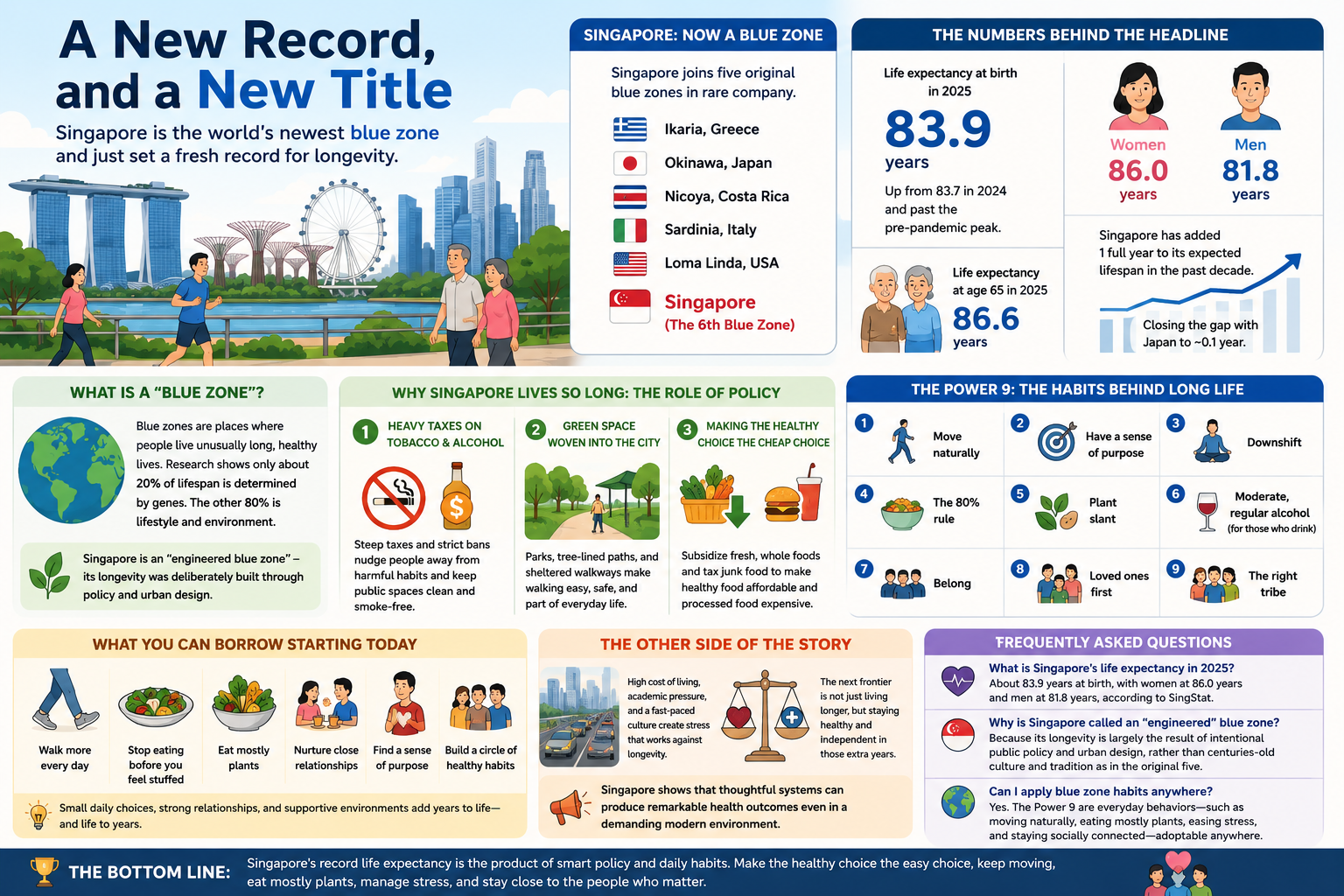
That status places Singapore alongside the five original blue zones identified by researchers: Ikaria in Greece, Okinawa in Japan, Nicoya in Costa Rica, Sardinia in Italy, and Loma Linda in the United States. The difference is that Singapore did not get there by accident. So what is actually behind it?
What the Singapore Life Expectancy Data Shows
According to data released by Singapore’s Department of Statistics (SingStat) in June 2026, Singapore life expectancy at birth reached 83.9 years in 2025, up from 83.7 in 2024 and past the pre-pandemic peak. Women continue to outlive men, with female life expectancy at 86.0 years and male life expectancy at 81.8 years.
The gains reach deep into old age, too. A resident who turns 65 in 2025 can expect, on average, to live to roughly 86.6 years. Over the past decade, Singapore has added a full year to its expected lifespan, narrowing the gap with Japan, the long-standing global leader, to about a tenth of a year.
What Exactly Is a “Blue Zone”?
The blue zones concept was popularized by author and National Geographic Fellow Dan Buettner, who, working with demographers, mapped pockets of the world where reaching 100 is far more common than average. A widely cited figure from his work, drawn from the Danish Twin Study, is that only about 20 percent of how long the average person lives is set by genes. The remaining 80 percent comes down to lifestyle and environment.
A big part of Singapore’s story is that healthy choices are made easier, and unhealthy ones harder, by design.
1. Heavy taxes on tobacco and alcohol
Singapore applies steep taxes on cigarettes and alcohol, paired with strict bans on smoking in public spaces. The effect is twofold: it nudges individuals away from habits that shorten life, and it keeps shared public spaces cleaner and free of secondhand smoke, which benefits everyone, not just smokers.
2. Green space woven into the city
The city-state has treated greenery as a planning priority rather than an afterthought. Parks, tree-lined walkways, and shaded paths are integrated into dense urban life, encouraging residents to walk and spend time outdoors. Sheltered walkways even help people rack up thousands of steps a day while staying out of the sun.
3. Making the healthy choice the cheap choice
Singapore subsidizes fresh, whole foods while taxing junk food and pushing to cut sugar in sweetened drinks. When fruit and vegetables are affordable and convenient, and processed food is comparatively expensive, the default everyday decision shifts toward health.
The Power 9, the Habits Behind Long Life
Beyond policy, Buettner and his team distilled the shared habits of the world’s longest-lived people into a set of nine principles known as the Power 9. These are the everyday behaviors that show up again and again across blue zones:
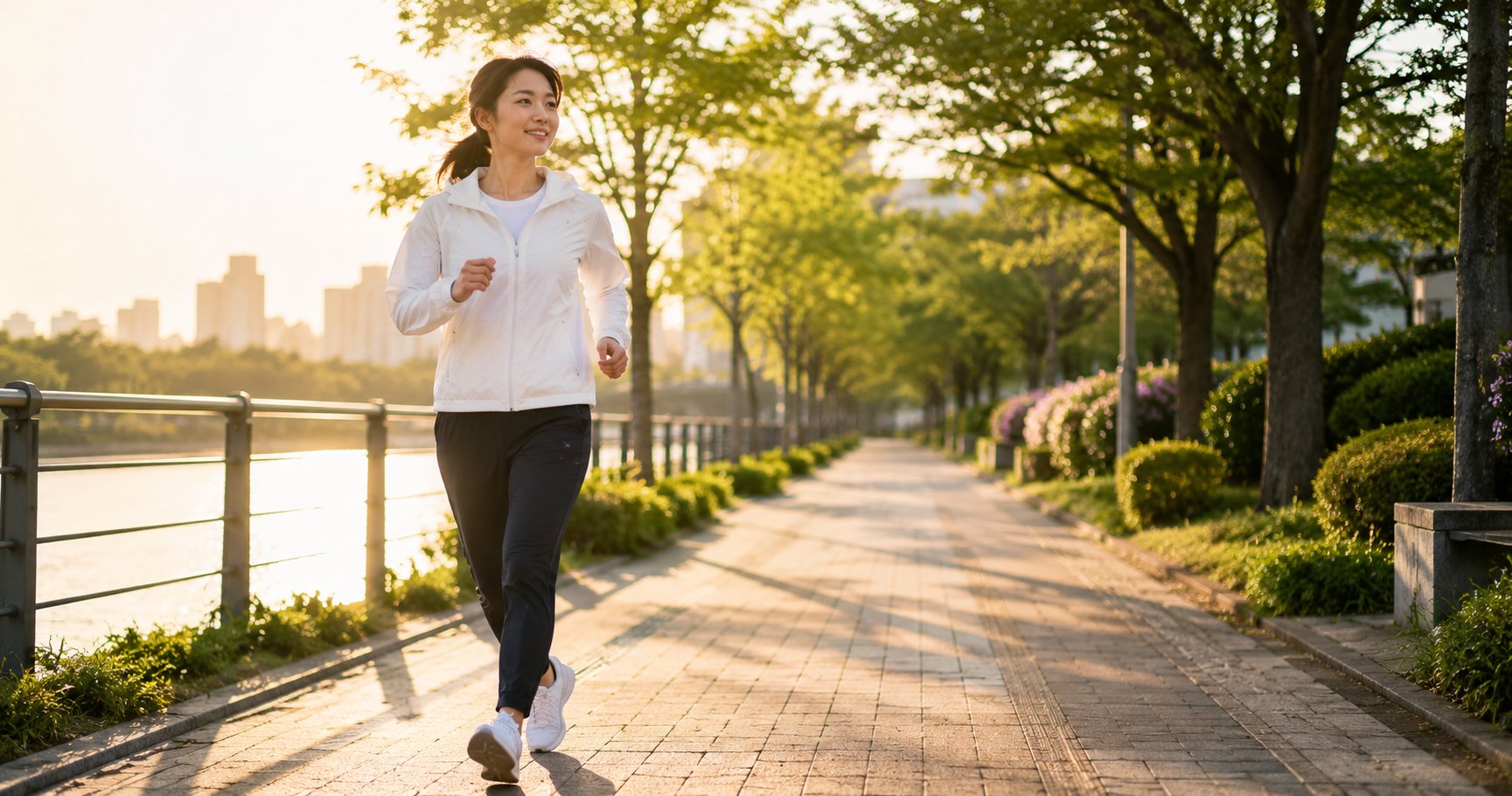
Move naturally. Build movement into daily life through walking, gardening, and chores rather than relying only on the gym.
Have a sense of purpose. Knowing why you wake up in the morning is linked to a longer life.
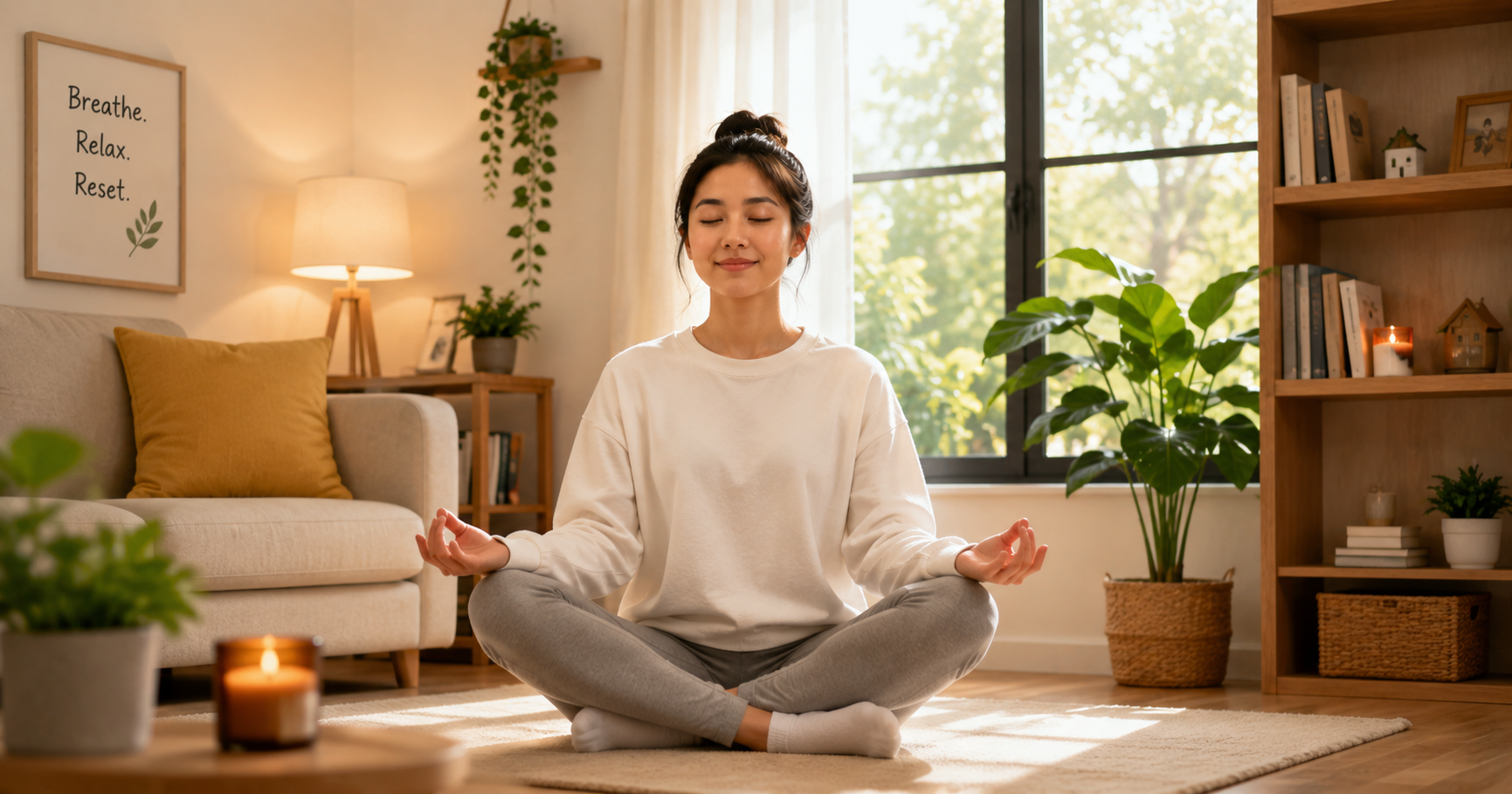
Downshift. Build in routines that relieve stress, whether through prayer, naps, or quiet time.
The 80 percent rule. Stop eating when you feel about 80 percent full.
Plant slant. Make plants, especially beans, greens, and whole foods, the center of your diet.
Moderate, regular alcohol (for those who drink). Where alcohol features, it tends to be modest and social rather than heavy.
Belong. Being part of a community, often faith-based, correlates with added years.
Loved ones first. Keeping family close and prioritizing relationships supports longevity.
The right tribe. Surrounding yourself with people who model healthy habits makes those habits stick.
Notice how many of these are social and environmental rather than purely medical. Longevity, in this view, is as much about how you live and who you live around as it is about any single diet or supplement.
What You Can Borrow Starting Today
You do not need to move to Singapore to benefit from these ideas. The most practical takeaways are simple and free: walk more as part of your daily routine, stop eating before you feel stuffed, and shift your plate toward plants. If you want a starting point for that last one, our guide to healthy foods worth adding to your diet is an easy place to begin, and you can explore more ideas in our healthy food section.
Just as important are the social habits: nurture close relationships, find a sense of purpose, and build a circle of people whose routines you would be happy to absorb.
The Other Side of the Story
It is worth keeping perspective. Some Singaporeans point out that daily life can feel far from a tranquil longevity retreat. A high cost of living, academic pressure from a young age, and a fast, competitive culture all add stress that runs against the blue zone ideal. The lesson is not that Singapore is perfect, but that thoughtful systems can produce remarkable health outcomes even in a demanding modern environment.
Experts also stress a subtle but crucial point: the next frontier is not simply living longer, but staying healthy and independent in those extra years. Extending lifespan is one thing, extending healthspan, the years lived in good health, is the harder and more meaningful goal.
Frequently Asked Questions
What is Singapore life expectancy in 2025? Singapore life expectancy is about 83.9 years at birth, with women at 86.0 years and men at 81.8 years, according to SingStat.
Why is Singapore called an “engineered” blue zone? Because its longevity is largely the result of intentional public policy and urban design, rather than centuries-old culture and tradition as in the original five blue zones.
Can I apply blue zone habits anywhere? Yes. The Power 9 are everyday behaviors, such as moving naturally, eating mostly plants, easing stress, and staying socially connected, that can be adopted regardless of where you live.
The Bottom Line
The record Singapore life expectancy is a reminder that long life is not just luck or genetics. It is largely the product of environment and daily habits, many of which are within reach for anyone. The country’s blend of smart policy and Power 9 living offers a practical blueprint, make the healthy choice the easy choice, keep moving, eat mostly plants, manage stress, and stay close to the people who matter.