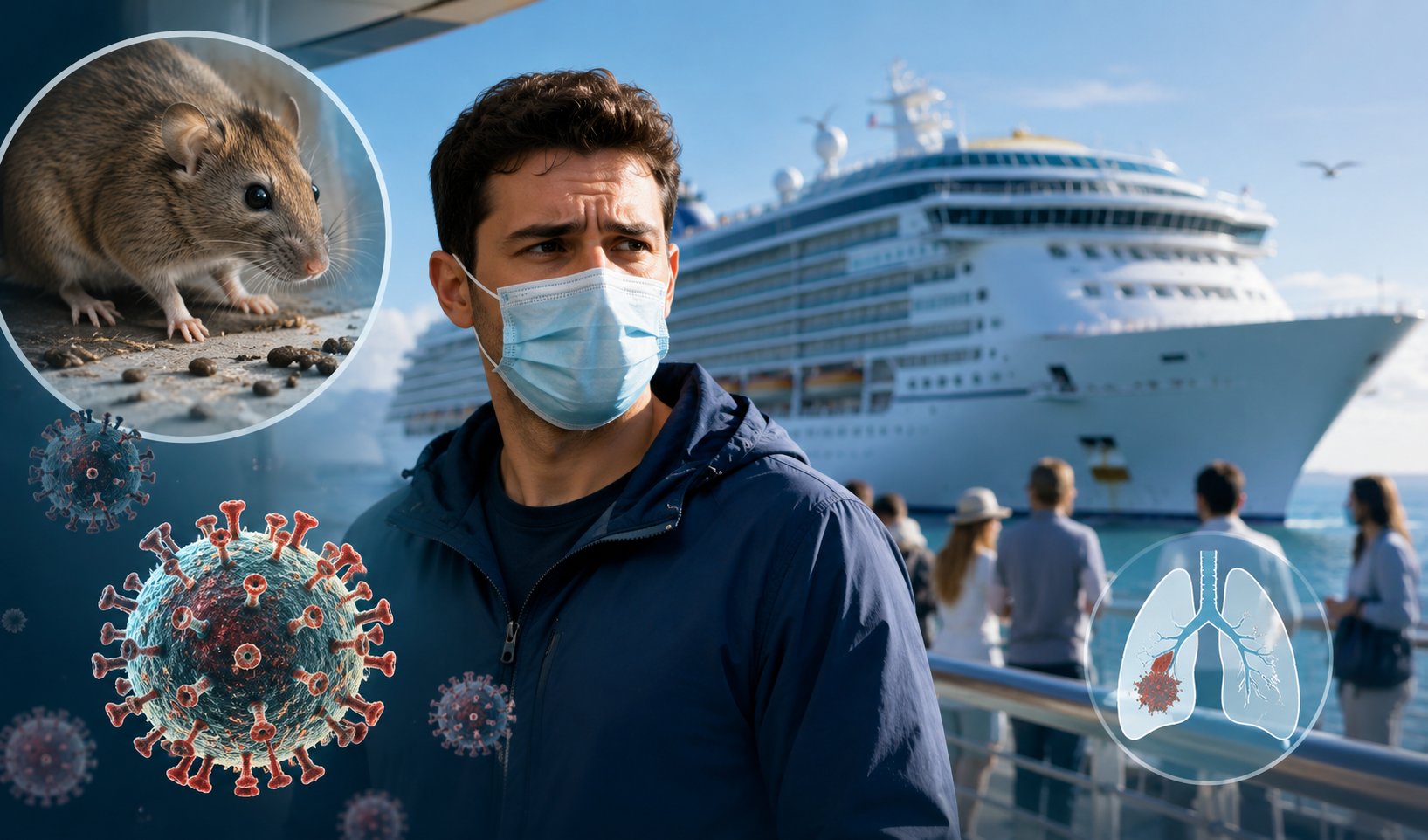
A cruise meant for adventure turned into a global health story. In 2026, a deadly outbreak aboard the MV Hondius pushed a little-known illness into the spotlight, called hantavirus.
The news raised understandable alarm. A dangerous virus spreading on a confined ship sounds frightening. Yet experts have been clear that the wider risk to the public is low. So what exactly is hantavirus, why was this outbreak unusual, and how worried should you be? This guide breaks it down.
What Happened on the MV Hondius
The MV Hondius is a Dutch cruise ship that set sail from Ushuaia, Argentina, in early April 2026. It carried passengers and crew from more than 20 countries on a transatlantic voyage.
By mid-May, all passengers had disembarked. Many were evacuated to hospitals or sent home for monitoring. American passengers, for example, were repatriated to a national quarantine unit for a 42-day monitoring period. Investigators believe some travelers were first exposed in Argentina before boarding, then passed the virus to others on the ship. The original source is still under investigation.
Where the Outbreak Likely Began
To understand the outbreak, it helps to look at where the journey started. The ship departed from Ushuaia, a gateway city in Argentine Patagonia, a remote region known for rugged outdoor travel.
This part of South America is the natural home of the rodents that carry the Andes virus. Travelers who hike, camp, or stay in rural cabins there can be exposed to the virus through rodent droppings and dust. Experts suspect one or more passengers picked up the infection on land before the voyage. Because the incubation period is so long, the first symptoms only appeared once the ship was already at sea, which delayed recognition of what was happening.
What Is Hantavirus?
Hantavirus is not a single virus, but a family of related viruses. They are zoonotic, meaning they normally live in animals and occasionally jump to people.
The natural hosts are rodents, such as mice and rats. People usually catch hantavirus by breathing in tiny particles from the urine, droppings, or saliva of infected rodents. This often happens when cleaning dusty, rodent-infested spaces like sheds or cabins.
Infections are rare, but they can be serious. Depending on the virus type and region, hantavirus disease can cause severe and sometimes fatal illness. That combination of rarity and danger is what makes it so concerning when an outbreak appears.
Why the Andes Virus Is Different
Most hantaviruses share one reassuring trait. They do not spread from person to person. You catch them from rodents, not from other people.
The Andes virus is the exception. It is the only hantavirus known to transmit between humans. This is precisely why an outbreak could take hold on a cruise ship, where people live in close quarters for weeks.
Even so, it does not spread easily. Transmission requires close, prolonged contact with an infected person, often through bodily fluids, and possibly through fine airborne particles in some settings. It is nothing like the rapid, casual spread of a cold or flu. Health officials have stressed that hantavirus is not COVID and behaves very differently.
Why a Cruise Ship Was the Perfect Setting
If the Andes virus spreads so poorly, why did a cruise ship outbreak happen at all? The answer lies in the unique environment on board.
Cruise ships place many people together in tight, shared spaces for weeks at a time. Passengers eat, socialize, and sleep in close proximity. For a virus that needs sustained close contact to pass between people, this is an unusually favorable setting. Add a long incubation period, and infected travelers can mingle for days before anyone realizes they are sick. This is why a virus that rarely spreads person to person managed to form a cluster here, while posing little threat to the general public on land.
The Two Faces of Hantavirus Disease
Hantavirus disease looks different depending on where in the world it occurs. There are two main forms.
In the Americas, hantavirus tends to cause hantavirus pulmonary syndrome (HPS), sometimes called hantavirus cardiopulmonary syndrome. This is a fast-moving illness that attacks the lungs and heart, and it can be deadly. The Andes virus behind the MV Hondius outbreak causes this form.
In Europe and Asia, hantaviruses more often cause hemorrhagic fever with renal syndrome (HFRS). As the name suggests, this form mainly affects the kidneys and blood vessels. This is the version most relevant for readers in regions like Asia, where rodent exposure is the key risk.
Symptoms to Know
One challenge with hantavirus is its long incubation period. Symptoms can take up to about six weeks to appear after exposure, which is why monitoring lasts so long.
Early symptoms are often vague and flu-like, which can make the illness hard to spot at first. They may include:
Fever and chills
Muscle aches, especially in the large muscle groups
Fatigue
Headache
Nausea, vomiting, or other stomach upset
In the pulmonary form, the illness can then turn severe. The person may develop a cough and serious shortness of breath as fluid builds up in the lungs. At that stage, urgent hospital care is essential.
How It Spreads
Understanding transmission helps separate real risk from panic. For most hantaviruses, the route is clear and limited.
People usually become infected through:
Breathing in airborne particles from rodent droppings, urine, or saliva
Touching contaminated surfaces and then the face
Rarely, a bite from an infected rodent
The Andes virus adds the human-to-human route, but only through close, sustained contact. For the general public not in direct contact with patients, the risk remains very low. This is very different from viruses that spread freely through a community.
Treatment and Outlook
There is currently no specific cure that eliminates hantavirus. This makes early, supportive medical care the most important factor in survival.
Treatment focuses on careful monitoring and managing complications. In severe cases, this means intensive care to support breathing, heart function, and the kidneys. Getting patients to advanced care quickly can meaningfully improve their chances. The earlier the support begins, the better the outlook tends to be.
How to Protect Yourself
For most people, prevention comes down to reducing contact with rodents and their droppings. These practical steps lower your risk:
Keep rodents out of your home. Seal gaps, store food securely, and manage waste.
Clean up safely. Do not sweep or vacuum dry droppings, since that sends particles into the air.
Use the wet method. Spray droppings with a disinfectant, let them soak, then wipe up while wearing gloves and a mask.
Ventilate first. Air out closed, unused spaces like cabins or sheds before cleaning.
Be cautious when traveling. Take extra care in rural areas or older buildings with rodent activity.
For the rare human-to-human virus like Andes, close contacts and healthcare workers follow stricter isolation and protective measures. These are guided by health authorities during an outbreak.
Should You Be Worried?
It is natural to feel uneasy after headlines like these. But context matters, and the experts have offered reassurance.
The World Health Organization has emphasized that the risk of a wider epidemic is low. Past Andes virus outbreaks have stayed limited to close-contact settings, not the general public. The main risk centers on people on the ship and their close contacts, including medical staff.
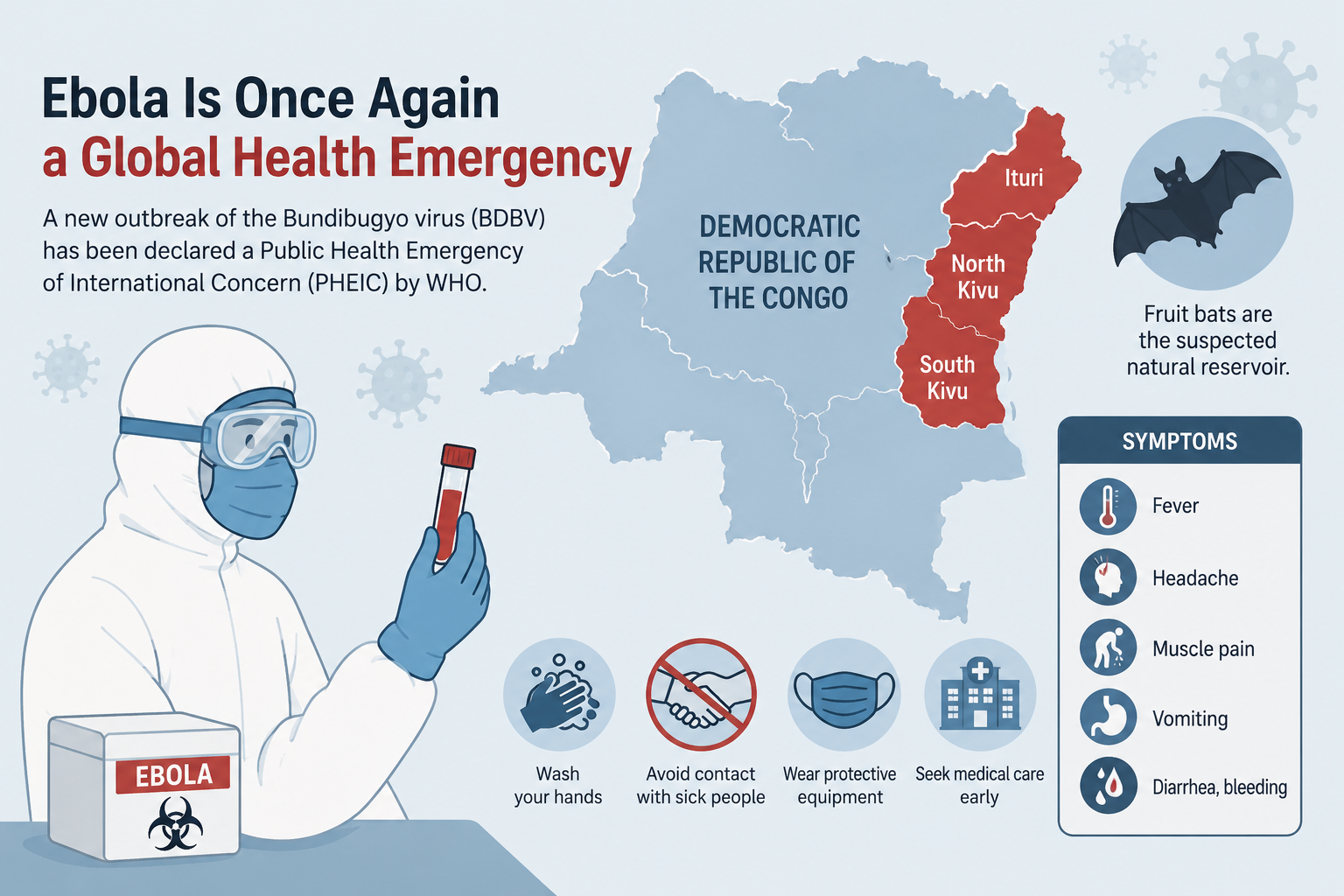
For readers far from the outbreak, the everyday concern is much simpler. It is ordinary rodent exposure, which is the usual route for the hantaviruses found in Asia and elsewhere. As with other serious outbreaks, the most powerful tools are accurate information, basic precautions, and a fast public health response. You can see a similar pattern in our coverage of the 2026 Ebola outbreak, where early action and good information made a real difference.
Frequently Asked Questions
Is hantavirus contagious between people? Most types are not. The Andes virus is the rare exception, but it only spreads through close, prolonged contact, not casual everyday interaction.
How do most people catch hantavirus? Usually by breathing in particles from infected rodent droppings, urine, or saliva, often while cleaning enclosed, dusty spaces.
Is hantavirus like COVID-19? No. Health officials have stressed that it spreads very differently and does not move easily through a community the way respiratory viruses do.
Is there a cure for hantavirus? There is no specific cure. Early supportive hospital care is the key to survival, especially in severe cases affecting the lungs or kidneys.
Should I worry about hantavirus where I live? For most people the risk is low. The practical step is to limit contact with rodents and clean any droppings safely.
The Bottom Line
The MV Hondius outbreak was a sobering reminder that rare diseases can still cause serious harm. Hantavirus, and especially the person-to-person Andes virus, deserves respect and careful public health attention.
Yet the wider risk to the public remains low, according to health authorities. For most of us, the lesson is practical rather than alarming. Keep rodents out, clean their droppings safely, and rely on trusted health sources rather than fear. With early care and good information, even serious outbreaks can be contained.