Not All Sugar Is Equal
Children love sweet flavors. That is natural, and it is not a problem on its own. But sugary drinks, packaged snacks, and processed foods make it easy to overdo it.
Here is the part many parents miss. Not all sugar behaves the same way inside the body. This is why free sugar in children deserves extra attention from an early age.
What “Free Sugar” Actually Means
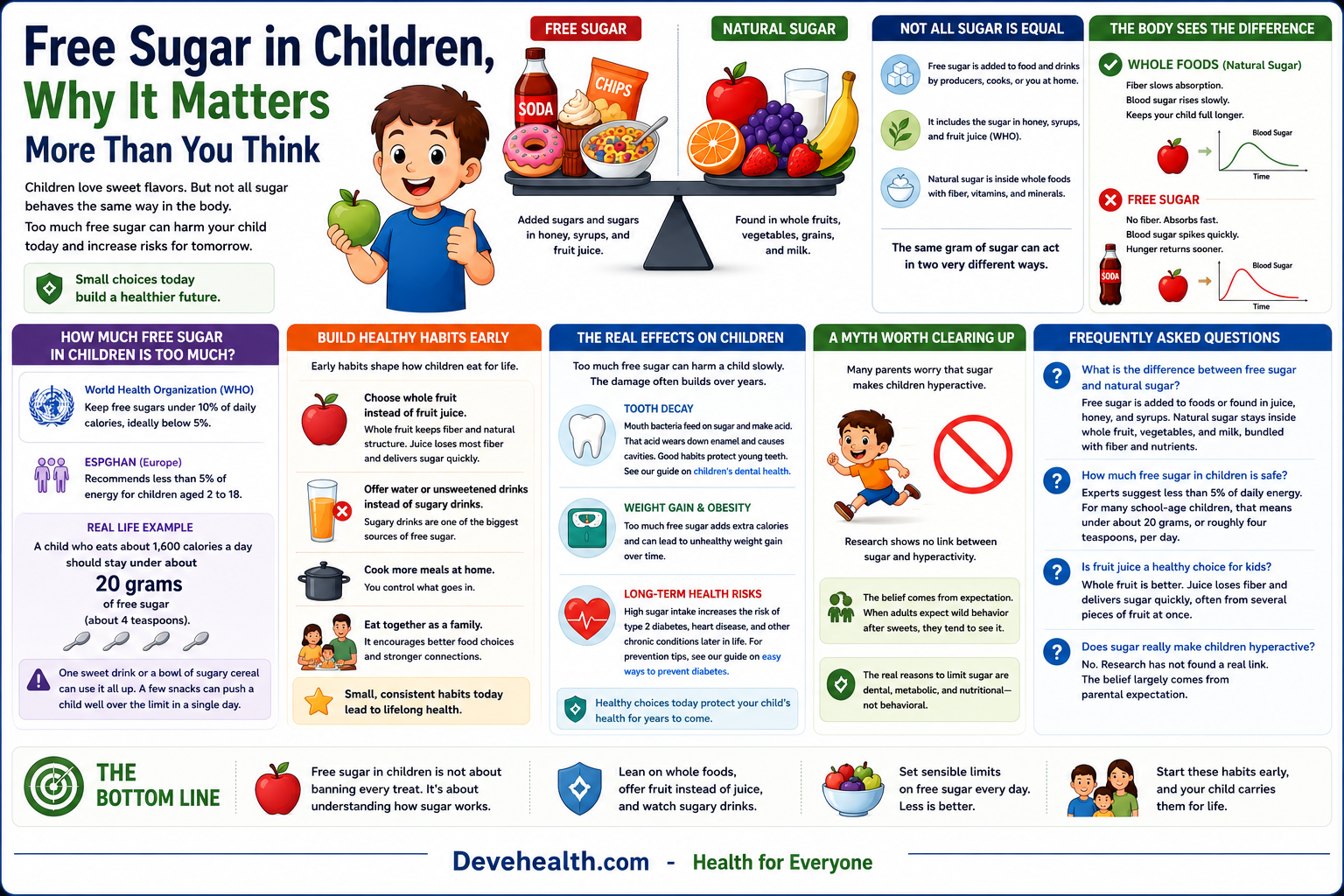
Free sugar is sugar that does not come locked inside whole foods. Producers, cooks, or even you at home add it to food and drinks. According to the World Health Organization, free sugars also include the sugar in honey, syrups, and fruit juice.
Natural sugar is different. It sits inside whole fruit, vegetables, grains, and milk. There, sugar comes bundled with fiber and other nutrients.
Why Free Sugar Affects the Body Differently
That bundle matters a lot. Fiber slows down how fast your body absorbs sugar.
So sugar from a whole apple enters the blood slowly. Blood sugar rises gently, and your child feels full for longer. Free sugar in a soda does the opposite. It floods the bloodstream quickly and leaves your child hungry again soon after.
This difference is the whole point. The same gram of sugar can act in two very different ways.
How Much Free Sugar in Children Is Too Much
Health experts set clear limits. The World Health Organization advises keeping free sugars under 10 percent of daily calories, and ideally below 5 percent. European pediatric experts at ESPGHAN go further and recommend less than 5 percent of energy for children aged 2 to 18.
What does that look like in real life? A school-age child who eats around 1,600 calories should stay under about 20 grams of free sugar a day. That is roughly four teaspoons.
Sadly, that limit is easy to pass. One sweet drink or a bowl of sugary cereal can use it all up. A few packaged snacks can push a child well over the line in a single day.
Build Healthy Habits Early
Early experiences shape how children eat for life. A child raised on very sweet foods will keep craving stronger sweetness. A child who learns natural flavors accepts a wider range of healthy foods.
One simple habit helps the most. Offer whole fruit instead of fruit juice.
Whole fruit keeps its fiber and natural structure. Juice loses most of that fiber, so the sugar absorbs fast. Worse, one glass of juice can squeeze in several pieces of fruit at once. Whole fruit gives your child natural sweetness and lasting fullness instead.
The Real Effects on Children
Too much free sugar can harm a child slowly. The damage often builds over years rather than days.
The clearest effect is tooth decay. Mouth bacteria feed on sugar and make acid, and that acid wears down enamel. Good habits protect those young teeth, and our guide on children’s dental health covers simple daily steps.
Over time, high sugar intake also raises the risk of obesity. That can open the door to type 2 diabetes and heart problems later in life. For practical prevention tips, see our guide on easy ways to prevent diabetes.
A Myth Worth Clearing Up
Many parents blame sugar for hyperactive behavior. It feels true, but the science says otherwise. Controlled studies have found no real link between sugar and hyperactivity in children.
Much of the belief comes from expectation. When adults expect wild behavior after sweets, they tend to see it. So the real reasons to limit sugar are dental, metabolic, and nutritional, not behavioral.
Frequently Asked Questions
What is the difference between free sugar and natural sugar? Free sugar is added to foods or found in juice, honey, and syrups. Natural sugar stays inside whole fruit, vegetables, and milk, bundled with fiber and nutrients.
How much free sugar in children is safe? Experts suggest less than 5 percent of daily energy. For many school-age children, that means under about 20 grams, or roughly four teaspoons, per day.
Is fruit juice a healthy choice for kids? Whole fruit is better. Juice loses fiber and delivers sugar quickly, often from several pieces of fruit at once.
Does sugar really make children hyperactive? No. Research has not found a real link. The belief largely comes from parental expectation.
The Bottom Line
Free sugar in children is not about banning every treat. It is about understanding why some sugars act differently and setting sensible limits.
Lean on whole foods, offer fruit instead of juice, and watch sugary drinks. Start these habits early, and your child carries them for life.