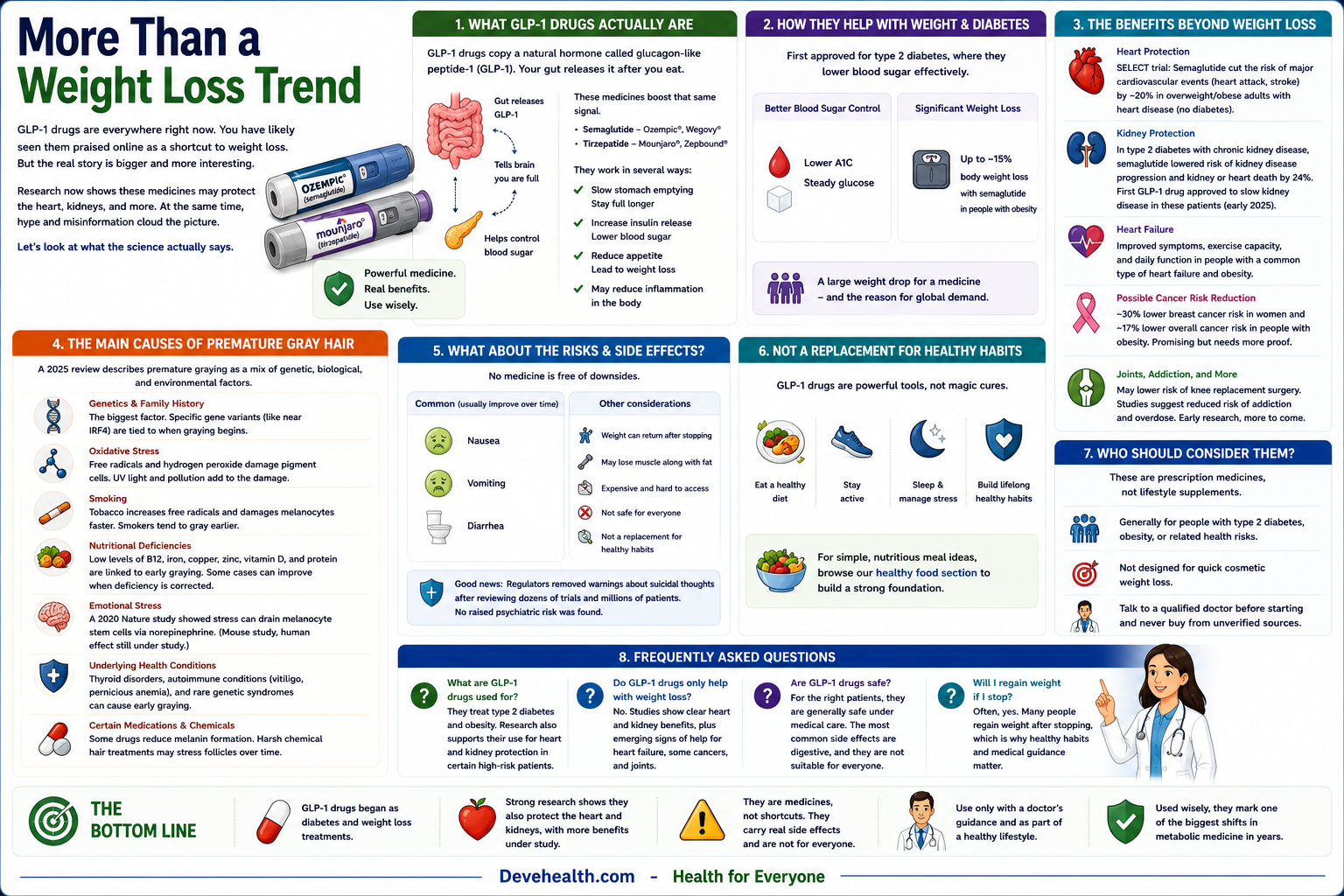
More Than a Weight Loss Trend
GLP-1 drugs are everywhere right now. You have likely seen them praised online as a shortcut to weight loss. Names like Ozempic and Wegovy have become household words.
But the real story is bigger and more interesting. Research now shows these medicines may protect the heart, kidneys, and more. At the same time, hype and misinformation cloud the picture. So let us look at what the science actually says.
What GLP-1 Drugs Actually Are
GLP-1 drugs copy a natural hormone called glucagon-like peptide-1. Your gut releases this hormone after you eat. It helps control blood sugar and tells your brain that you feel full.
These medicines, known as GLP-1 receptor agonists, boost that same signal. The best known is semaglutide, sold as Ozempic and Wegovy. Another is tirzepatide, sold as Mounjaro and Zepbound.
They work in several ways at once. They slow how fast your stomach empties, so you stay full longer. They help the body release insulin and lower blood sugar. They also reduce appetite, which leads to weight loss. Some research suggests they even calm inflammation in the body.
How They Help With Weight and Diabetes
GLP-1 drugs first earned approval for type 2 diabetes. They lower blood sugar well and steadily.
Their weight effect then drew global attention. In people with obesity, semaglutide can reduce body weight by up to about 15 percent. That is a large drop for a medicine, and it explains the surge in demand.
The Benefits Beyond Weight Loss
This is where the science gets exciting. Researchers keep finding effects that go well past the scale.
Heart protection
The heart benefits are the strongest evidence so far. The landmark SELECT trial studied overweight and obese adults with heart disease but no diabetes. Semaglutide cut the risk of major cardiovascular events, such as heart attack and stroke, by about 20 percent.
Because of results like these, the drug won approval to reduce cardiovascular risk in this group. Cardiologists note that weight loss alone cannot fully explain these heart and metabolic benefits.
Kidney protection
The kidneys benefit too. In a major trial of people with type 2 diabetes and chronic kidney disease, semaglutide lowered the risk of kidney disease progression and kidney or heart death by 24 percent. In early 2025, it became the first GLP-1 drug approved to slow kidney disease in these patients.
Heart failure
There is promise for heart failure as well. In patients with a common type of heart failure and obesity, semaglutide improved symptoms and exercise capacity. It also helped people move more easily in daily life.
Possible cancer risk reduction
Cancer research is newer and still mixed. Penn Medicine researchers found women using GLP-1 drugs were about 30 percent less likely to develop breast cancer. A large study also linked the drugs to a 17 percent lower overall cancer risk in people with obesity. Still, these findings need more proof before doctors can rely on them.
Joints, addiction, and more
The list keeps growing. Early research links long-term GLP-1 use to a lower chance of needing knee replacement surgery. Other studies suggest the drugs may even reduce the risk of addiction and overdose. These areas are promising but far from settled.
What About the Risks and Side Effects?
No medicine is free of downsides. GLP-1 drugs are no exception.
The most common problems affect the gut. Many people feel nausea, vomiting, or diarrhea, especially early on. These often ease over time, but not always.
There are other concerns to weigh. People can regain weight after stopping the drug. Some lose muscle along with fat. The medicines are also expensive and hard to access in many places. And they are not safe for everyone, so certain people cannot take them.
One worry has eased recently. After reviewing dozens of trials and millions of patients, regulators removed warnings about suicidal thoughts from several of these drugs, finding no raised psychiatric risk.
Not a Replacement for Healthy Habits
It helps to keep expectations realistic. GLP-1 drugs are powerful tools, not magic cures.
They work best alongside a healthy diet and regular activity. Good habits still protect your heart, blood sugar, and weight over the long run. For simple, nutritious meal ideas, browse our healthy food section to build a strong foundation.
Who Should Consider Them
These are prescription medicines, not lifestyle supplements. A doctor decides if they fit your situation.
Generally, they are meant for people with type 2 diabetes or obesity, or related health risks. They are not designed for quick cosmetic weight loss. So talk to a qualified doctor before starting, and never buy them from unverified sources.
Frequently Asked Questions
What are GLP-1 drugs used for? They treat type 2 diabetes and obesity. Research also supports their use for heart and kidney protection in certain high-risk patients.
Do GLP-1 drugs only help with weight loss? No. Studies show clear heart and kidney benefits, plus emerging signs of help for heart failure, some cancers, and joints.
Are GLP-1 drugs safe? For the right patients, they are generally considered safe under medical care. The most common side effects are digestive, and they are not suitable for everyone.
Will I regain weight if I stop? Often, yes. Many people regain weight after stopping, which is why healthy habits and medical guidance matter.
The Bottom Line
GLP-1 drugs began as diabetes and weight loss treatments. But strong research now shows they also protect the heart and kidneys, with more benefits under study.
Still, they are medicines, not shortcuts. They carry real side effects and need a doctor’s guidance. Used wisely, alongside healthy habits, they mark one of the biggest shifts in metabolic medicine in years.