White, Yellow, or Orange, Does It Matter?
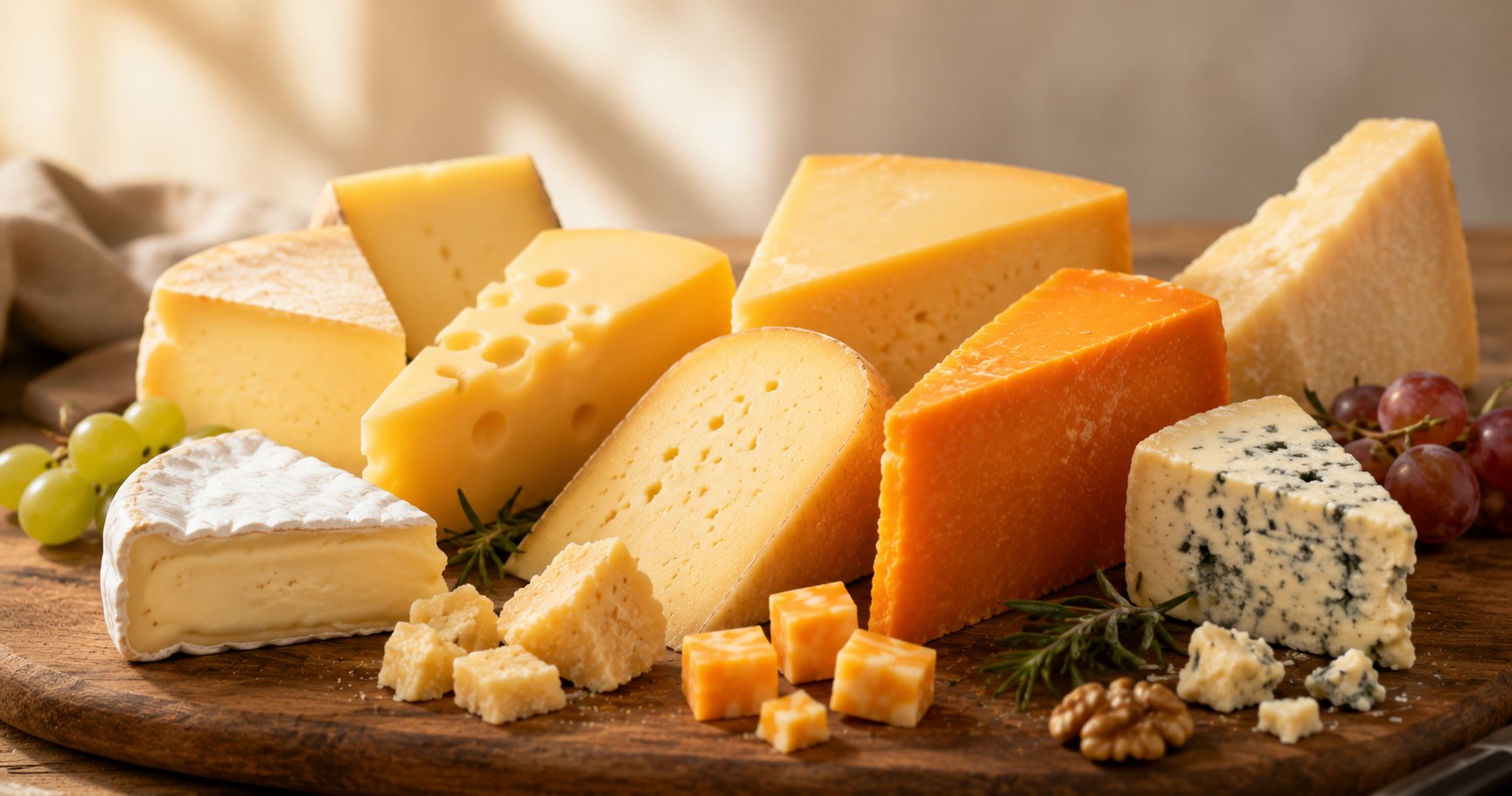
Walk down any cheese aisle and you will see a rainbow of shades. Cheese ranges from pale white to soft yellow to bright orange. It is a striking variety for a single food.
Many shoppers quietly assume that a deeper yellow or orange means a richer, higher-quality cheese. White cheese, by contrast, can seem plainer or less premium. But is that belief actually true? The science says no. Cheese color is shaped by several factors that have little to do with quality or nutrition. Let us look at what really gives cheese its color, and what you should check instead.
Does Cheese Color Mean Better Quality?
Let us answer the main question first. The color of a cheese is not a reliable sign of its quality or nutritional value.
A cheese can be deep orange and average, or plain white and excellent. The shade tells you more about the cow’s diet, the season, and the maker’s choices than about how good or healthy the cheese is. In fact, research on consumer perceptions of cheddar found that most people did not see color as a true marker of quality once they thought about it.
Why Cheese Comes in Different Colors
So if color is not about quality, what is it about? The answer is a mix of natural and human factors.
Cheese color depends on three main things. There is the natural pigment in the milk, which comes from what the animal eats. There is the type of animal and the season. And there is the cheesemaker’s decision to add a natural coloring or not. Together, these explain almost every shade on the shelf.
The Role of Beta-Carotene
The natural yellow in cheese comes mostly from a pigment called beta-carotene. This is the same compound that gives carrots their orange hue.
Cows pick up beta-carotene by eating green forage like fresh grass. The pigment is then stored in the fat of their milk. When that milk is turned into cheese, the fat and its pigment become concentrated, so the color shows up more clearly. This is why many cow’s milk cheeses have a natural pale-yellow tint rather than being pure white.
Why Grass-Fed Cheese Is More Yellow
The amount of beta-carotene in milk is not fixed. It changes with the animal’s diet and the time of year.
Cows that graze on plenty of fresh grass take in more beta-carotene. As a result, their milk and cheese tend to have a more intense yellow color. Cows fed mostly dry hay or grain, often in winter or in feedlots, produce milk with less beta-carotene, so their cheese looks paler. This is why pasture-raised cheese, such as cheese from heavily grass-fed regions, often has a richer golden tone than cheese from grain-fed herds. The color reflects the diet, not a quality grade.
There is even variation between individual cows and breeds. Some animals pass beta-carotene through their system without storing much in their milk, while others retain more. Region plays a part too. In places where cows graze on pasture year-round, cheese tends to look naturally golden, while cheese from mostly grain-fed herds starts out much whiter. So two blocks of plain, uncolored cheddar can look quite different purely because of where and how the cows were raised.
Why Some Cheeses Are Naturally White
If beta-carotene makes cheese yellow, why are some cheeses bright white? There is a neat biological reason.
Goats and sheep handle beta-carotene differently from cows. They convert it almost completely into vitamin A, which is colorless. So very little pigment is left to tint their milk. That is why goat and sheep cheeses, like many fresh white cheeses, are naturally pale. Mozzarella and similar fresh cheeses are also typically white. None of this makes them lower in quality. It is simply biology and milk source at work.
The Orange Mystery, Annatto and History
Now for the boldest color of all. That vivid orange cheddar is not a natural shade. Milk does not contain an orange pigment strong enough to produce it.
Instead, the orange usually comes from a natural coloring called annatto. Annatto is made from the seeds of the achiote tree, known scientifically as Bixa orellana. Cheesemakers have used it for generations, especially in cheddar, to create a consistent yellow-to-orange color.
But why dye cheese at all? The story goes back to 17th-century England. In summer, grass-fed cows produced richer, more golden milk, and people came to associate that color with the best cheese. To keep their product looking premium all year, some makers added annatto to mimic that golden glow regardless of season. Over time, orange cheddar simply became the expected look in many markets. Annatto also helps give an even color and can offset the pale, translucent look of some low-fat cheeses.
So Color Is Not a Quality Signal
Put all this together, and the conclusion is clear. Cheese color is mostly about diet, animal type, season, and tradition.
A natural coloring like annatto is added purely for appearance and does not change the cheese’s basic nutrition. So a brighter color does not mean more protein, more calcium, or better flavor. It is a cosmetic and historical feature, not a nutritional one. Judging cheese by its color alone can easily mislead you.
Does Color Change the Taste?
This is where psychology sneaks in. Many people honestly believe orange cheese tastes richer or creamier than white cheese.
The interesting part is that the cheese inside can be identical. Studies on cheese perception suggest that when people cannot see the color, they often cannot tell the difference in taste. In other words, the expectation created by color can shape how we think a cheese tastes, even when the flavor is the same. It is a reminder of how strongly our eyes influence our sense of taste.
Is the Added Coloring Safe?
If orange cheese gets its color from a dye, is that something to worry about? For the vast majority of people, no.
Annatto is a natural coloring derived from a plant seed, and it is one of the most widely used natural food colors. Food safety authorities regard it as safe for general use. Allergic reactions do exist but are rare. So while it is always wise to read labels if you have known sensitivities, annatto is a non-issue for most people. It changes the look of the cheese, not its safety or nutrition.
What to Actually Look at When Choosing Cheese
If color is not the answer, what should guide your choice? The nutrition label is far more useful. A few values are worth comparing between products:
- Protein. Protein helps build and repair tissue and keeps you feeling full. A higher-protein cheese can be a helpful choice for meeting daily needs.
- Saturated fat. Many guidelines advise limiting saturated fat, since too much can raise LDL, the so-called bad cholesterol. Comparing this figure across products is smart.
- Sodium. Some cheeses are quite salty due to processing, and excess sodium can raise blood pressure in salt-sensitive people.
- Calcium. This is a plus, since calcium supports healthy bones and teeth.
Reading the label this way tells you far more than the shade ever could. For more on making balanced food choices, browse our healthy food section.
A Quick Cheese-Buying Checklist
To make it simple, keep these points in mind at the store:
- Ignore the color as a quality cue.
- Compare protein and calcium, which are nutritional pluses.
- Check saturated fat and sodium, and compare between products.
- Choose strongly flavored cheeses if you want big taste from a small amount.
- Match the cheese to how you will use it, rather than to its shade.
Frequently Asked Questions
Is orange cheese healthier than white cheese? No. The orange color usually comes from a natural dye called annatto, which does not change the cheese’s nutrition. Color is not a health indicator.
Why is some cheese yellow and some white? Yellow often comes from beta-carotene in the grass that cows eat. Goat and sheep cheeses are white because those animals convert beta-carotene into colorless vitamin A.
Does grass-fed cheese being yellower mean it is better? Not necessarily. A deeper color reflects more beta-carotene from a grass diet, but it is not a direct measure of overall quality or nutrition.
What should I check instead of color? Look at the nutrition label, especially protein, saturated fat, sodium, and calcium, to compare cheeses in a meaningful way.
The Bottom Line
Cheese color is one of the most misleading signals in the dairy aisle. White, yellow, or orange mostly reflects an animal’s diet, the season, or a natural dye like annatto, not the cheese’s quality or nutrition.
So do not judge cheese by its shade. Turn the package over and read the label instead. By comparing protein, saturated fat, sodium, and calcium, you will make a far smarter choice than color alone could ever guide.