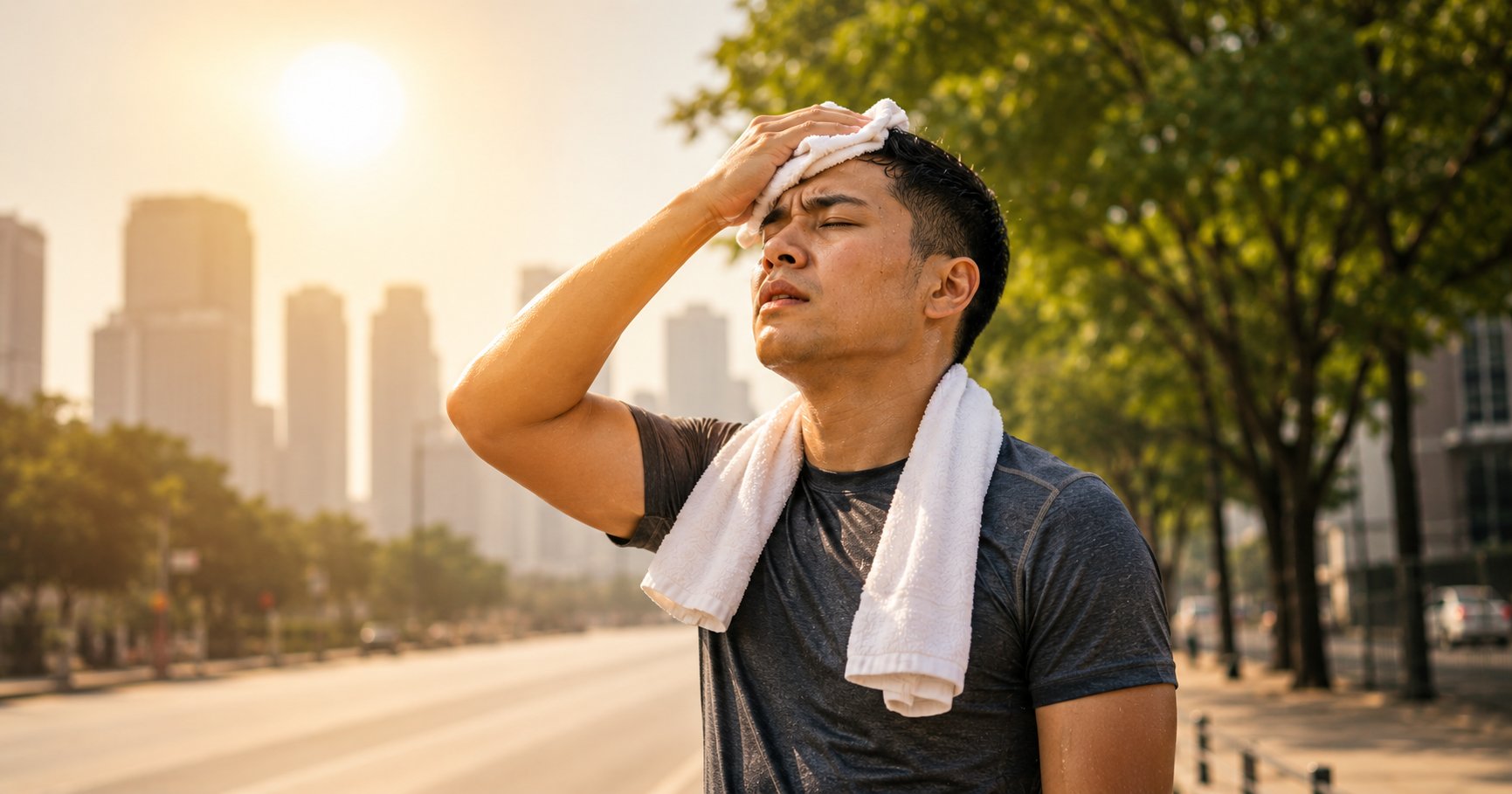
We often treat hot weather as a minor nuisance. We complain, fan ourselves, and carry on. But extreme heat is more than uncomfortable. It can be deadly.
One of the most serious dangers is heat stroke, a true medical emergency. It can develop quickly, and without fast treatment, it can cause lasting harm or death. This matters especially during long, hot spells.
In Indonesia, for example, the 2026 dry season is expected to run longer and hotter than usual, stretching from April well into the following months. Health authorities have urged people not to take the heat lightly. Yet the lesson applies anywhere temperatures climb, in any season. This guide explains what heat stroke is, how to spot it, who is most at risk, and how to stay safe.
What Is Heat Stroke?
Heat stroke happens when your body can no longer control its own temperature. Normally, your body cools itself by sweating and releasing heat. In extreme heat, that system can fail.
When it does, your core temperature climbs dangerously high. Doctors generally define heat stroke as a core body temperature of 40°C (104°F) or above. According to health authorities, the body temperature can rise to 41°C (106°F) or higher within just 10 to 15 minutes.
At that point, the heat begins to damage the brain and other organs. This makes heat stroke a life-threatening emergency that needs immediate care. There are two main forms. Classic heat stroke comes from a hot environment, such as a sweltering room or car. Exertional heat stroke comes from intense activity in the heat, often in athletes or outdoor workers.
Heat Stroke vs Heat Exhaustion, Know the Difference
People often confuse heat stroke with heat exhaustion. They are related, but knowing the difference can save a life.
Heat exhaustion is the earlier, milder stage. The person usually keeps sweating heavily and stays alert, but feels weak, dizzy, and unwell. Think of it as a serious warning sign.
Recognizing heat stroke quickly is vital. Watch for these warning signs, especially during hot weather:
A very high body temperature
Confusion, agitation, or slurred speech
Hot skin that may be dry or, in some cases, still sweaty
A rapid heartbeat and fast breathing
A throbbing headache, nausea, or dizziness
Seizures
Fainting or loss of consciousness
The neurological signs are the biggest red flags. Confusion, strange behavior, or passing out should never be ignored in the heat.
Why Heat Raises the Risk
To understand the danger, it helps to know how your body cools itself. As you heat up, you sweat, and the evaporation of that sweat carries heat away from your skin.
This system has limits. When it is very humid, sweat cannot evaporate easily, so cooling slows down. When you lose a lot of fluid through sweat and do not replace it, you become dehydrated, which makes things worse.
Long exposure adds up too. The more hours your body spends fighting the heat, the higher the risk. That is why prolonged hot spells, extended dry seasons, and heatwaves are so concerning. Staying active outdoors during peak heat raises the danger further.
Who Is Most at Risk
Heat affects everyone, but some people are far more vulnerable. They deserve extra attention during hot weather. Higher-risk groups include:
Young children, whose bodies heat up faster and who cannot always express distress
Older adults, who regulate temperature less efficiently
Pregnant women, who face added strain in the heat
People with chronic conditions, such as heart disease, diabetes, or kidney problems
Outdoor workers and athletes, who exert themselves in hot conditions
People on certain medications, which can affect hydration or temperature control
If you work outdoors, heat is a genuine occupational hazard worth taking seriously, much like the risks covered in our guide on occupational health and safety. Families should keep a close eye on vulnerable members during hot spells.
What to Do in a Heat Stroke Emergency
Heat stroke is a race against time. Fast cooling can be the difference between recovery and tragedy. If you suspect heat stroke, act immediately:
Call emergency services right away. Do not wait to see if the person improves.
Move them to a cool, shaded, or air-conditioned place.
Remove excess clothing to help heat escape.
Cool them aggressively. Apply cold water or ice packs, focusing on the neck, armpits, and groin, where large blood vessels lie close to the skin.
Use wet cloths and a fan to speed up cooling, or soak their clothing in cool water.
Stay with them until help arrives.
One caution. If the person is confused or unconscious, do not give them fluids to drink, since they could choke. The priority is rapid cooling and emergency care.
First Aid for Heat Exhaustion
If symptoms are milder and the person is still alert, you may be dealing with heat exhaustion. Quick action can stop it from progressing.
Move them to a cool place and have them rest. Loosen tight clothing and apply cool, wet cloths to the skin. If they are fully alert, let them sip water or an electrolyte drink slowly.
Avoid the peak sun. Stay in the shade during the hottest hours, often between 10 a.m. and 4 p.m.
Use sunscreen. Sunburn makes it harder for your body to cool down.
Take breaks. If you must be active outdoors, rest often in a cool spot.
Acclimatize slowly. Build up your time in the heat gradually over several days.
Never leave anyone in a parked car. Temperatures inside can become deadly within minutes.
Check on vulnerable people, such as elderly neighbors or relatives.
Eating water-rich foods can support your hydration too. For light, refreshing meal ideas during hot spells, browse our healthy food section.
Common Myths About Heat Stroke
Several myths make people lower their guard in the heat. Clearing them up can prevent dangerous mistakes.
The first myth is that only athletes or outdoor workers get heat stroke. In reality, classic heat stroke can strike anyone, including an older person sitting in a hot, poorly ventilated room. You do not need to exercise to be at risk.
The second myth is that sweating means you are safe. Heavy sweating is common in heat exhaustion, but as heat stroke sets in, the body’s cooling system can break down. Sweating is not a reliable sign that everything is fine.
A third myth is that you can wait out the symptoms. Heat stroke worsens fast, and every minute of delay raises the risk of organ damage. When confusion or collapse appears, immediate cooling and emergency care are essential.
Finally, many believe that any cold drink solves the problem. Fluids help with mild dehydration, but they cannot reverse true heat stroke. And giving drinks to a confused or unconscious person is unsafe. Rapid external cooling and professional help come first.
When to See a Doctor
Most mild heat symptoms ease with rest and fluids. But certain situations call for prompt medical attention.
Seek help if symptoms do not improve, or if they worsen despite cooling and rest. Any sign of confusion, fainting, seizures, or a very high temperature is a medical emergency. When in doubt, especially with children, older adults, or pregnant women, do not hesitate to get professional care.
Frequently Asked Questions
What is the main difference between heat stroke and heat exhaustion? Heat exhaustion leaves a person sweaty but alert, with fatigue and dizziness. Heat stroke affects the brain, causing confusion or unconsciousness, and is a medical emergency.
How quickly can heat stroke develop? Very quickly. In extreme conditions, body temperature can climb to dangerous levels within minutes, so fast recognition matters.
Can you get heat stroke without exercising? Yes. Classic heat stroke can happen simply from being in a very hot environment, such as a hot room or car, even without physical activity.
What is the most important first aid step for heat stroke? Call emergency services and start cooling the person immediately. Rapid cooling while waiting for help can be life-saving.
How much water should I drink in hot weather? There is no single number for everyone, but drink regularly throughout the day rather than waiting for thirst. Increase your intake when active or sweating heavily.
The Bottom Line
Hot weather deserves respect, not dismissal. Heat stroke is a fast-moving, life-threatening emergency, but it is also largely preventable with simple precautions.
Learn the warning signs, especially confusion and collapse, and know that quick cooling saves lives. Stay hydrated, avoid the harshest heat, and watch over the vulnerable people around you. During a long, hot season, those small steps are your best protection against dehydration and heat stroke.