A Tropical Staple Under the Spotlight
In a warm, tropical country, flip flops are practically a second skin. They are cheap, cool, convenient, and perfect for slipping on in seconds. For millions of people, they are the default footwear from morning to night.
But this convenience raises a nagging question. Are flip flops bad for your feet? You may have heard podiatrists warn against them, yet they remain everywhere for good reason. The honest answer is more balanced than a simple yes or no. The problem is rarely the occasional pair of flip flops, but rather how long, how far, and how often we walk in them. Let us unpack what the experts actually say, without the scare tactics.
The Core Problem, No Support
To understand the concern, you need to know the one thing flip flops fundamentally lack. It explains nearly every issue linked to them.
The basic flip flop offers almost no structural support. There is no arch support, no heel cup, no stability, and very little shock absorption. As one podiatrist puts it, flip flops do not provide structural support for the joints in the foot, so the tendons and muscles have to work harder to stabilize the foot. Your foot lands flat on a thin sole with every step, with nothing to absorb the impact or guide your natural movement. Over hours and miles, that extra workload adds up.
The Toe-Gripping Problem
There is a second, less obvious issue that surprises many people. It comes down to how you keep the shoes on your feet.
Because flip flops have no back strap, your toes have to grip and curl with every single step just to stop them flying off. As podiatrists explain, this constant gripping overworks the flexor tendons and can contribute to hammertoe development over years of habitual wear. Your toes were simply not designed to clench like that for hours at a time. This unnatural motion also alters your gait, leading you to take shorter steps and changing how your heel strikes the ground.
The Problems Linked to Overuse
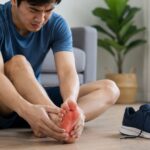
So what can happen if flip flops become your all-day, every-day footwear? The combination of no support and constant toe gripping can contribute to several issues over time. The most common include:
- Plantar fasciitis, a very common and painful inflammation of the tissue along the bottom of the foot, often the leading concern
- Heel pain, since there is no cushioning to absorb the impact of each step
- Hammertoes and tendonitis, from the repeated toe gripping
- Ankle sprains, because the loose, unstable fit makes trips and rolls more likely
- Blisters, where the strap rubs against sweaty or wet skin
It is worth stressing that these issues come from prolonged, heavy use, not the occasional wear. The structures of your foot are remarkably tough, but they have limits.
A Balanced View, Flip Flops Are Not Always the Enemy
Before you toss every pair you own, here is some important balance. Used sensibly, flip flops have a genuine place, and even podiatrists who live in warm climates do not tell people to abandon them entirely.
There are situations where flip flops are actually the smart choice. They are perfect for the beach and poolside, where they protect your feet from hot sand and rough concrete. Crucially, wearing them in public showers, gyms, and shared changing rooms helps protect you from fungal infections like athlete’s foot, which thrive in those damp environments. For short, low-impact trips, such as a quick walk to the shop, most healthy feet handle flip flops just fine.
A Word for Hot, Humid Climates
In a tropical country, this topic deserves a little extra thought, because the heat and humidity add their own twist. Flip flops feel like the only sensible option in sticky weather, and there are real reasons for that.
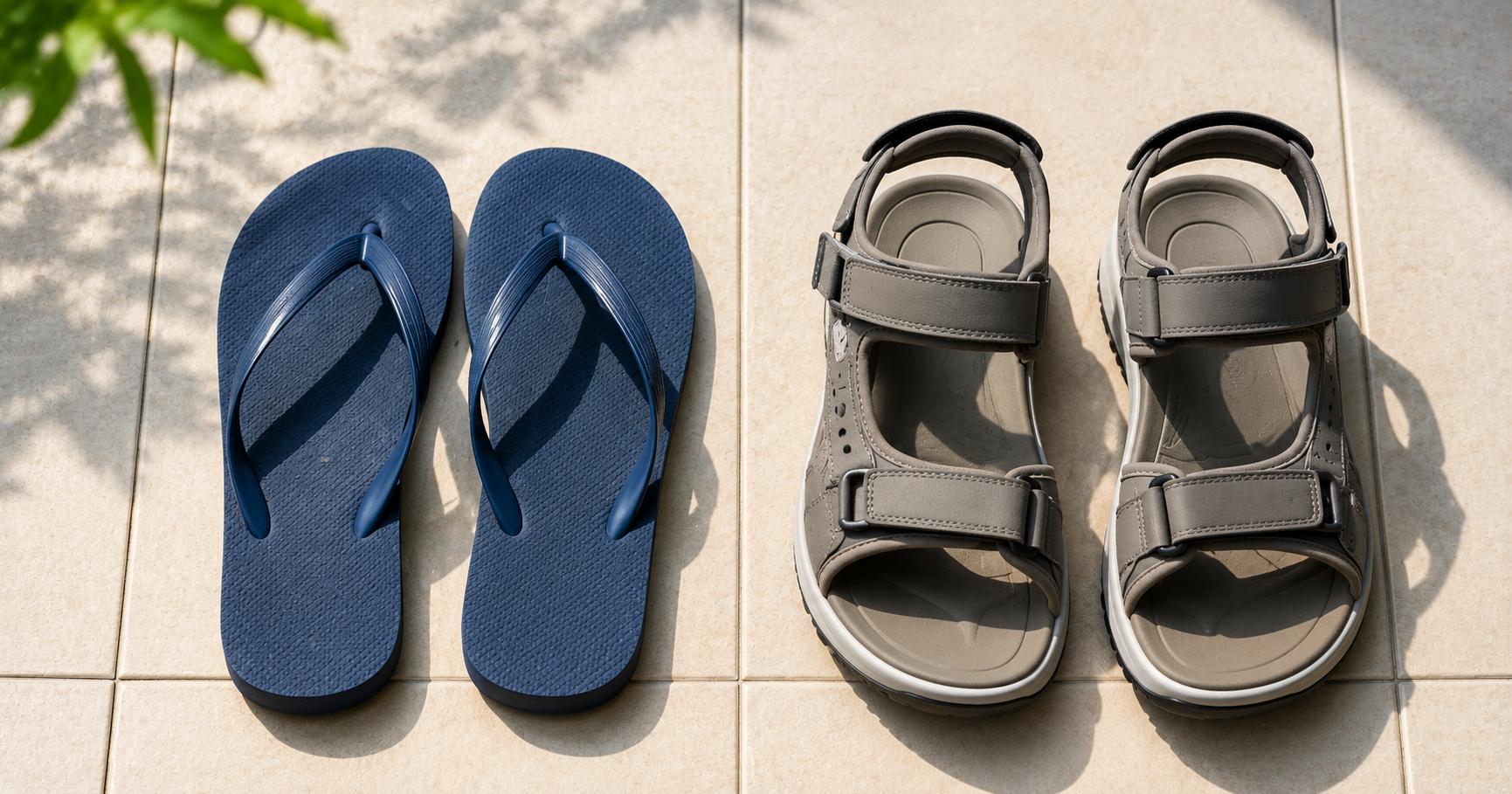
Open footwear lets your feet breathe, which genuinely helps in hot, humid conditions where closed shoes trap sweat. That moisture can encourage fungal infections, so airflow has its benefits. At the same time, hot and damp feet are more prone to blisters where the strap rubs, and feet can swell in the heat, making fit and support matter even more. The balanced approach is to enjoy the breathability of sandals while still choosing supportive ones for longer wear, and keeping your feet clean and dry to avoid infections. A breathable but supportive sandal often gives you the best of both worlds in a tropical climate.
Who Should Be Most Careful
While moderate use is fine for many, certain people need to take extra care. For some, the stakes are genuinely higher. This is where caution becomes important.
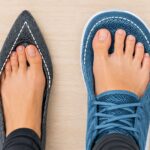
If you already have foot problems like plantar fasciitis, bunions, hammertoes, or flat feet, unsupportive flip flops will tend to make them worse. People with diabetes deserve a special warning. Because diabetes can reduce sensation in the feet, the lack of protection from open flip flops raises the risk of unnoticed cuts and injuries that can become serious. For anyone in these groups, it is wise to choose more protective, supportive footwear for daily wear. The broader issue of how unsupportive shoes affect you is something we explore in our guide on how the wrong shoes affect your whole body.
How to Choose a Better Flip Flop
Here is the good news. Not all flip flops are created equal, and a better pair can make a real difference. If you are going to wear them often, it pays to choose wisely.
When shopping, look for a few key features that set a supportive sandal apart:
- A contoured footbed with genuine arch support
- Cushioning that absorbs shock under the heel
- A secure fit, ideally with an adjustable or back strap to reduce toe gripping
- A sole that bends at the ball of the foot, not in the middle
A simple test helps too. If a flip flop folds completely in half or twists like a rag, it lacks support. A supportive pair will flex only at the toes. Spending a little more on a well-designed sandal is often worth it for your feet.
How to Wear Flip Flops Wisely
Beyond choosing a better pair, how you use flip flops matters just as much. A few sensible habits let you enjoy them without paying the price. It all comes down to moderation.
Treat basic flip flops as short-distance, low-activity footwear rather than your all-day default. Never wear them for sports, long walks, hiking, or driving, where you need grip and protection. Rotate them with more supportive shoes, especially on days you will be on your feet a lot.
A few everyday scenarios make the line clearer. A quick trip to the warung, lounging at home, or a few hours at the pool are all perfectly reasonable in flip flops. But a full day at the market, a long commute on foot, a day of errands in the city, or any activity involving running or uneven ground calls for sturdier, supportive shoes. And listen to your body. If your feet, arches, or heels ache after a day in flip flops, that is a clear signal to switch to something sturdier. These aches often overlap with the broader signs your shoes are hurting your feet.
Keep Your Feet Strong
One often-forgotten factor is the condition of your feet themselves. Stronger feet cope better with minimal footwear. This puts you in control rather than relying on the shoe alone.
Feet that are strong and active are more capable of supporting themselves without constant assistance from a shoe. Gentle, regular movement helps keep them that way, and our guide on the Japanese walking workout offers an easy routine to build that habit. Broader strength and fitness support your feet too, as we cover in our guide on strength training and why it matters. And whatever footwear you choose, remember to replace it once it wears out, since worn flip flops offer even less protection, a topic we explore in our guide on how often you should replace your shoes.
Simple foot exercises can help here too. Picking up a towel or small objects with your toes, or stretching your calves and the soles of your feet, builds the strength and flexibility that make minimal footwear less of a strain. A little daily attention to your feet goes a long way toward keeping them comfortable, whatever sandals you reach for.
The Bottom Line
So, are flip flops bad for your feet? Not inherently. The real issue is wearing thin, unsupportive flip flops for long periods, day after day, which can contribute to problems like plantar fasciitis, hammertoes, and heel pain over time.
The reassuring truth is that you do not have to give them up, especially in a hot climate where they make sense. Save basic flip flops for the beach, the pool, and short trips, choose a supportive pair for more regular wear, and switch to sturdier shoes for long days and activity. Used wisely and in moderation, flip flops can stay part of your life without harming your feet.