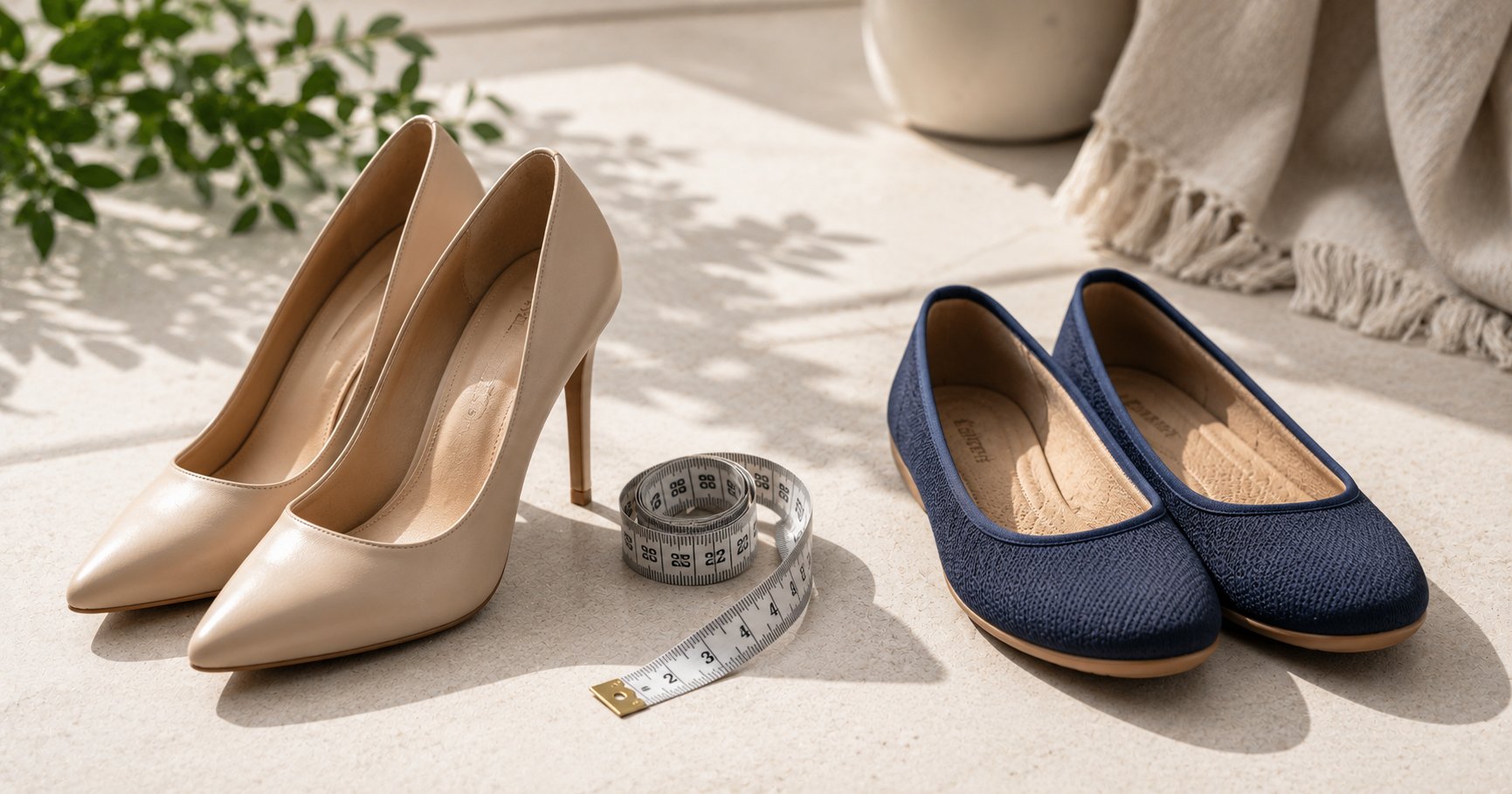
A Beautiful Shoe With a Hidden Cost
Few shoes carry the timeless appeal of high heels. They add height, elegance, and confidence, and for many people they are a wardrobe essential for work and special occasions. Yet there is a reason your feet often beg for relief by the end of the night.
The relationship between high heels and foot health is genuinely complicated, and the research is fairly clear. Regularly wearing heels can take a real toll on your feet, and even your posture, knees, and back. The aim here is not to lecture or tell you to throw them out. It is to help you understand exactly what heels do to your body, so you can make informed choices and wear them more wisely. Here is what to know.
What Happens to Your Feet in Heels
To understand the risks, it helps to picture what a heel actually does to your foot. The whole problem begins with a simple shift in weight.
When you put on a high heel, the elevated back of the shoe shifts your body weight forward onto the ball of your foot and your toes. As one podiatry clinic explains, as heel height increases, more body weight shifts forward, placing greater pressure on the toes and the ball of the foot. Your foot is forced into a steep, unnatural incline. This single change sets off a cascade of effects, both in your feet and all the way up your body, that explains nearly every issue that follows.
The Toll on Your Feet
So what does all that forefoot pressure actually lead to over time? Podiatrists link regular heel wear to a familiar list of foot problems. The most common include:
- Bunions, the bony bump at the base of the big toe, often worsened by narrow, pointed toe boxes
- Hammertoes, where the toes bend and stiffen in a curled position
- Morton’s neuroma, a painful thickening of nerve tissue between the toes
- Plantar fasciitis, inflammation of the tissue along the bottom of the foot
- Ingrown toenails, as weight presses the toes into the front of the shoe
The narrow, pointed toe box found in many heels makes things worse, squeezing the toes together. This crowding is a major reason heels are linked to bunions and hammertoes.
The Achilles and Arch Problem
Two structures in particular take a hit from heels, and the effects can linger even after you take the shoes off. This is one of the more surprising parts of the story.
When your heel is constantly raised, your Achilles tendon is held in a shortened position. Over time, daily heel wear can actually cause the calf muscles and Achilles tendon to tighten and shorten. This is why switching suddenly to flat shoes can feel uncomfortable. At the same time, heels weaken and strain the arch. Research using biomechanical modeling has found that higher heels increase the tension on the plantar fascia, the band of tissue supporting your arch, which transfers a greater portion of weight to the forefoot. A weakened arch struggles to absorb impact properly.
It Is Not Just Your Feet
Here is where many people are surprised. The effects of high heels do not stop at your feet. They ripple all the way up your body.
To stay balanced on heels, your body has to compensate by changing your posture. This tilt strains your lower back, hips, and knees. As podiatrists note, this misalignment can lead to pain in the lower back and knees over time. Heels also make your ankles work harder to stay stable, increasing fatigue and the risk of rolling or spraining an ankle. This whole-body chain reaction is something we explore more fully in our guide on how the wrong shoes affect your whole body.
The Danger of Twisted Ankles
One risk deserves its own mention, because it can happen in an instant. Unlike the gradual problems above, this one is sudden.
By raising and narrowing your base of support, high heels throw off your natural balance. This makes it far easier to wobble, lose your footing, and roll your ankle, especially on uneven surfaces, stairs, or slippery floors. A twisted ankle can mean anything from a mild strain to a serious sprain that keeps you off your feet for weeks. The higher and thinner the heel, the greater this risk becomes.
Does This Mean You Can Never Wear Heels?
After all that, you might expect the advice to be to ban heels forever. But that is neither realistic nor strictly necessary for most people. The key word, as so often with footwear, is moderation.
The real problem comes from wearing high heels frequently, for long hours, day after day. The occasional pair for a special event is unlikely to cause lasting harm to an otherwise healthy foot. The cumulative effect of daily wear is what does the damage. So rather than giving them up entirely, the smarter approach is to be strategic about how and when you wear them. That way you can enjoy your favorite heels while protecting your feet.
Who Should Take Extra Care
While moderate heel wear is manageable for many healthy feet, some people face higher stakes and should be especially thoughtful. It is worth knowing where you stand.
If you already have foot conditions like bunions, hammertoes, plantar fasciitis, or flat feet, high heels will tend to aggravate them. People who stand or walk for long hours at work feel the cumulative strain far sooner, so daily heel wear is particularly hard on them. Pregnancy is another time for caution, since shifts in balance and the loosening of ligaments raise the risk of falls. And anyone with diabetes or reduced sensation in the feet should be careful, as pressure points and minor injuries can go unnoticed. For these groups, lower, supportive footwear for everyday wear is the wiser choice.
How to Wear Heels More Safely
If heels are part of your life, a handful of practical habits can dramatically reduce the risks. Podiatry experts and the American Podiatric Medical Association offer sensible guidance. Here are the key strategies:
- Choose a lower heel. Sticking to around 2 to 3 centimeters, or up to a moderate height, puts far less pressure on the forefoot than tall stilettos.
- Pick a wider toe box. Avoid sharply pointed shoes that crowd your toes, which helps prevent bunions and pain.
- Opt for a chunkier heel. A wider block heel offers more stability than a thin stiletto, lowering your risk of rolling an ankle.
- Add cushioning. Gel pads or cushioned insoles can ease pressure on the ball of the foot.
- Limit your time. Carry comfortable flats to change into for commuting or long stretches of standing.
Give Your Feet Some Recovery
Beyond the shoes themselves, how you care for your feet around heel wear matters a great deal. A little recovery goes a long way. Think of it as balancing the load.
The single best habit is to rotate your footwear, alternating heels with flats and supportive sneakers rather than wearing heels every day. Gentle calf and foot stretches before and after wearing heels help keep the Achilles tendon and calf muscles from tightening. Keeping your feet and lower legs strong also helps them cope, which is where general fitness comes in, as we cover in our guide on strength training and why it matters. Easy daily movement, like the routine in our guide on the Japanese walking workout, keeps everything mobile and resilient.
Listen to the Warning Signs
Finally, your feet will tell you when heels are pushing them too far. Learning to listen is one of the most important skills of all. Do not dismiss the signals.
Soreness, stiffness, tingling, or numbness after wearing heels are early signs of distress that are worth taking seriously. These often overlap with the broader signs your shoes are hurting your feet. It also helps to replace worn-out shoes, since broken-down heels offer even less support, a topic we cover in our guide on how often you should replace your shoes. If you develop persistent foot pain, bunions, or ongoing heel discomfort, it is wise to see a podiatrist, who can assess your feet and suggest the best path forward.
The Bottom Line
When it comes to high heels and foot health, the evidence is honest but not hopeless. By shifting your weight forward and altering your natural alignment, heels can contribute to bunions, hammertoes, plantar fasciitis, ankle sprains, and even back and knee pain, especially with frequent wear.
The encouraging news is that you do not have to choose between style and healthy feet. Save your tallest heels for special occasions, choose lower and wider designs for regular wear, rotate with supportive shoes, and stretch and care for your feet along the way. With a little strategy, you can keep wearing the shoes you love while giving your feet the protection they deserve.