A Common and Fixable Problem
We have all experienced it. You pull off your shoes after a long day and are met with an unmistakable, unwelcome smell. It is an awkward, often embarrassing moment, whether it happens at home or, worse, at someone else’s.
Here is the first thing to know. Smelly feet are extremely common, and there is no need to feel ashamed. There is even a medical name for it, bromodosis. The second thing to know is more empowering. In most cases, your shoes are a major part of the problem, and once you understand why, the solution is refreshingly simple. Let us look at what actually causes that odor and exactly how to fix it.
The Real Cause, Sweat Meets Bacteria
To solve the problem, you first need to understand where the smell comes from. It is not really the sweat itself. The true culprit is a combination of two things.
Your feet are remarkably sweaty. In fact, they contain more sweat glands than any other part of your body, with each foot holding around 250,000 of them. On its own, this sweat is odorless. The smell appears when bacteria that naturally live on your skin break down that sweat, releasing a sour, sometimes vinegary odor as a byproduct. So foot odor is really the result of sweat and bacteria working together. And this is exactly where your shoes come in.
Why Your Shoes Are the Perfect Storm
Now we get to the heart of the matter. Your feet may produce the sweat, but your shoes often create the conditions that turn it into a powerful smell. They are the perfect breeding ground.
When you wear closed shoes and socks all day, you trap heat and moisture against your skin. As one podiatrist explains, wearing socks and closed-toed shoes creates a warm and wet environment that ultimately produces odors. Bacteria thrive in exactly these warm, damp, dark conditions, multiplying happily inside your shoes. To make matters worse, the bacteria do not just live on your feet. They live in your shoes too, which is why a favorite pair can smell even when you are not wearing them.
When Fungus Joins the Party
Sometimes there is a second factor at play beyond ordinary bacteria. It is worth knowing about, because it may need different treatment. The same trapped moisture invites it in.
That warm, damp environment inside your shoes is also ideal for fungus to grow. A common fungal infection called athlete’s foot can develop and contribute to the odor, often alongside itching, redness, or peeling skin between the toes. The good news is that most smelly feet are caused simply by bacteria, not fungus. But if you notice those extra symptoms, or the smell persists despite good hygiene, a fungal infection may be involved and is worth addressing.
How to Fix Smelly Feet, Start With Your Feet
The best results come from tackling the problem on two fronts, your feet and your shoes. Let us begin with your feet, since good hygiene is the foundation. These habits make the biggest difference.
A consistent daily routine works wonders:
- Wash your feet daily with an antibacterial soap, scrubbing properly rather than just letting water run over them.
- Dry them thoroughly, especially between the toes, since leftover moisture feeds bacteria.
- Exfoliate regularly with a pumice stone or foot file, because bacteria also feed on dead skin.
- Keep toenails trimmed and clean, as long nails can harbor bacteria and debris.
These simple steps remove both the sweat and the bacteria that cause the smell. Consistency is what makes them effective.
Then Tackle Your Shoes and Socks
Since your shoes are such a big part of the problem, treating them is essential. This is the step most people skip. Give your footwear the same attention as your feet.
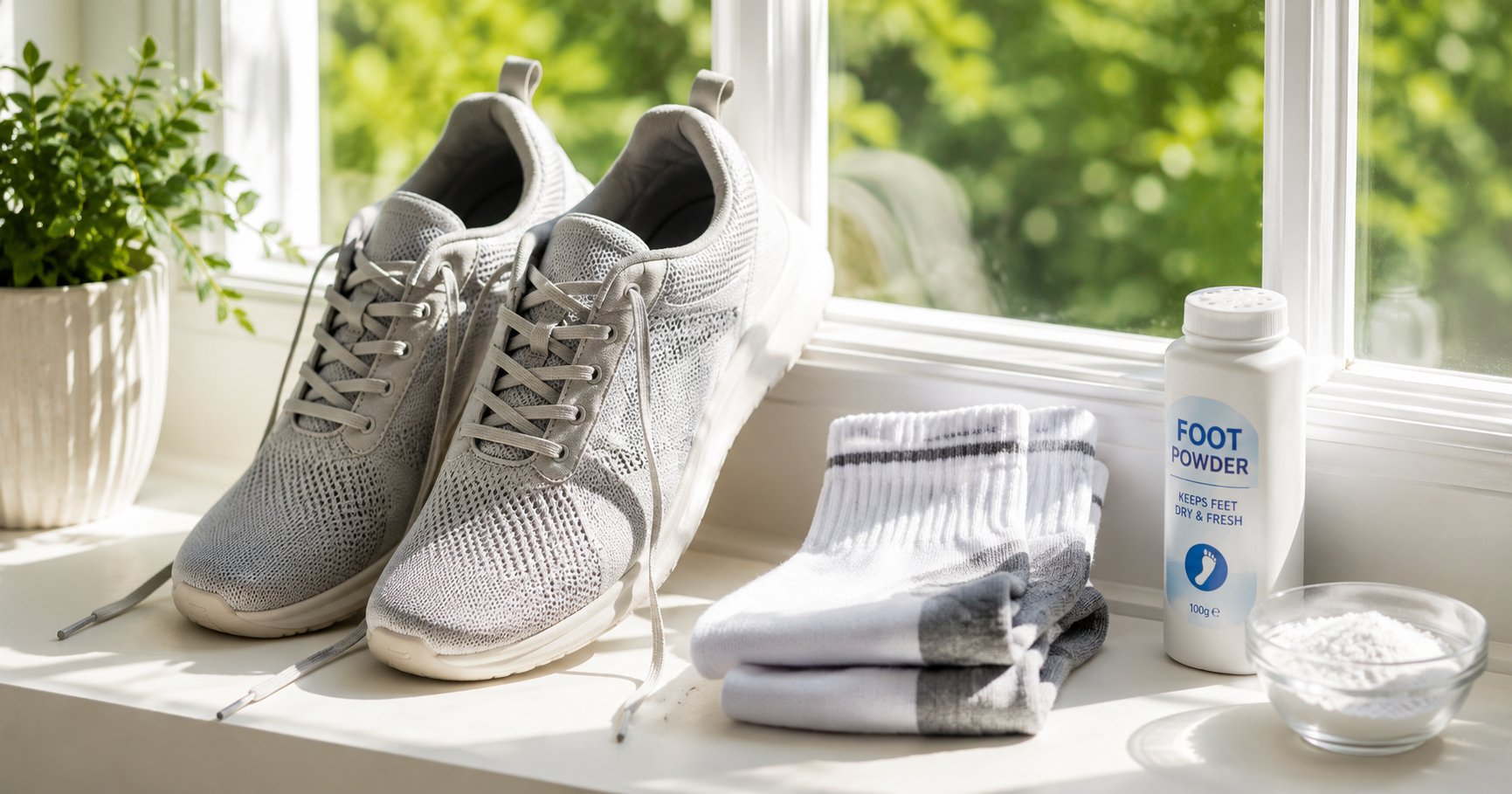
The single most powerful habit is to rotate your shoes. Avoid wearing the same pair two days in a row, giving each pair at least 24 hours to dry out completely between wears. When you take your shoes off, let them air out somewhere cool and dry rather than tossing them in a dark cupboard. Placing baking soda, cedar inserts, or a foot powder inside helps absorb moisture and odor. For socks, choose clean, moisture-wicking pairs, change them during the day if they get damp, and never wear the same socks two days running.
Smart Footwear Choices
Beyond cleaning, the type of footwear you choose makes a real difference to how much your feet sweat. A few choices help your feet breathe. Airflow is your best friend here.
Whenever it is appropriate, opt for open-toed shoes or sandals to let air circulate around your feet. When you do wear closed shoes, choose breathable materials like leather or mesh over synthetic ones that trap moisture. Make sure your shoes are not too tight, since cramped shoes increase sweating and trapped heat. This is one more reason fit matters so much, a topic we explore in our guide on how to choose healthy shoes for your feet. Letting your feet breathe is one of the simplest ways to keep odor at bay.
A Few Extra Tricks That Help
If the basics are not quite enough, a handful of additional remedies can give you an extra edge. These are easy, inexpensive, and worth trying. Many people swear by them.
Applying an antiperspirant or a little rubbing alcohol to your clean, dry feet at night can help reduce the sweat that feeds bacteria. An antifungal foot powder or spray used daily keeps both moisture and fungus in check. Some people find a regular foot soak, such as in warm water with a little vinegar or Epsom salt, helps freshen things up. The key with all of these is consistency. Used regularly alongside good hygiene and shoe care, they make a noticeable difference.
Do Not Forget the Whole Picture
Smelly feet rarely exist in isolation, so it helps to think about your overall foot care. Healthy feet and good footwear habits go hand in hand. A little awareness goes a long way.
Worn-out, damp shoes hold onto odor and bacteria more stubbornly, which is one more reason to replace them when they are past their prime, as we cover in our guide on how often you should replace your shoes. Paying attention to your feet also helps you catch other issues early, including the broader signs your shoes are hurting your feet. And since poorly fitting shoes can cause trouble well beyond odor, it is worth understanding how the wrong shoes affect your whole body. Good foot hygiene fits naturally into caring for your feet as a whole.
What Else Can Make It Worse
While shoes, sweat, and bacteria are the core of the problem, a few other factors can turn ordinary foot odor into a bigger issue. Knowing them helps you target the cause. Some are within your control, others less so.
Several things tend to make feet smellier than average:
- Hyperhidrosis, a condition that causes excessive sweating regardless of temperature
- Hormonal changes, such as during puberty or pregnancy, which can increase sweating
- Stress, which activates sweat glands
- Standing all day, since long hours in shoes keep feet warm and damp
That last point is worth a mention for anyone on their feet for work. If you stand for hours, your feet sweat more and your shoes get less chance to dry, so rotating footwear and changing socks midday matters even more. Supportive, breathable shoes for long days help here too, which connects to our guide on the right shoe size for sports and active footwear in general.
When to See a Doctor
For most people, the steps above will solve the problem within a few weeks. But sometimes odor needs professional attention. It is worth knowing when to seek help.
If you have followed good hygiene and shoe care for a few weeks and the smell persists, it may point to a bacterial or fungal overgrowth that needs treatment, so see a doctor or podiatrist. They can prescribe stronger antifungal or antibacterial products. If excessive sweating, known as hyperhidrosis, is the issue, there are specific medical treatments available. People with diabetes deserve special care here, since foot problems can develop unnoticed, so any persistent foot issue should be checked promptly.
The Bottom Line
Smelly feet are a common, harmless, and very fixable problem, and your shoes are usually a central part of the cause. The odor comes from bacteria breaking down the sweat that gets trapped in the warm, damp environment inside your footwear.
The solution is a simple two-part routine. Keep your feet clean and dry with good daily hygiene, and give your shoes equal attention by rotating them, airing them out, and choosing breathable styles. Stick with these habits, and fresh, comfortable feet are well within reach. There is no need to feel embarrassed, just a few easy changes to make.