More Than Just Cute
Few things are as adorable as a pair of tiny shoes. As parents, it is easy to choose them based on how sweet they look or which character is on the side. But those little shoes are doing a much bigger job than they appear.
The right children’s shoes genuinely support healthy foot development, while the wrong ones can quietly interfere with it. A child’s feet are still forming, and the footwear choices you make now can influence their comfort and foot health for years. The encouraging news is that choosing well is simple once you understand a few key principles. Here is a practical, reassuring guide for parents.
Little Feet Are Still Growing
To choose well, it helps to understand just how different a child’s foot is from an adult’s. It is a work in progress, quite literally.
A young child’s foot is soft, padded with fat, and highly flexible. The bones are not yet fully formed and hardened, a process that continues throughout childhood and into the late teens. This means the goal of footwear is not to force the foot into shape, but to protect it while letting it develop naturally. The best shoes simply get out of the way and let little feet do what they are designed to do, which is move, flex, and grow stronger.
The Best Shoe for a Baby Is Often No Shoe
Here is a fact that surprises many parents. For babies who are not yet walking, shoes are not just unnecessary, they can actually get in the way of development.
According to foot and ankle specialists, babies and crawlers do not need shoes, only booties or wide socks to keep their feet warm. Going barefoot allows the foot to grow normally and to build its muscles, strength, and the natural grasping action of the toes. As health experts note, toddlers should go barefoot as often as possible to encourage balance, posture, and coordination. Barefoot time on safe surfaces remains valuable at every age, since it builds strength and body awareness.
When Do Children Actually Need Shoes?
So if barefoot is so good, when are shoes actually necessary? The answer is straightforward, and it centers on protection.
Once your child is walking outside or on rough, hard, or potentially hazardous surfaces, shoes become important to protect their feet. The key is to choose footwear that protects without restricting. Even then, letting your child go barefoot in safe indoor environments continues to support their development. Think of shoes as protective gear for the outside world, not something little feet need all day long at home.
What to Look for in Children’s Shoes
When shoes are needed, a handful of features separate a healthy choice from a harmful one. Podiatrists largely agree on what matters. Look for these key qualities:
- A flexible sole that bends at the ball of the foot, not in the middle, supporting natural movement
- Lightweight construction that is not too thick or heavy, so your child can feel the ground
- A wide, foot-shaped toe box that lets the toes spread and wiggle freely
- Breathable materials like leather or mesh, since little feet sweat a lot
- A secure fastening such as velcro or laces to hold the foot in place
- A firm heel counter and a non-slip sole for stability
A roomy toe box deserves special attention, as crowding growing toes can cause problems, a topic we explore in our guide on why toe box width matters for foot health. Many of these principles apply to adults too, as we cover in our guide on how to choose healthy shoes.
Why You Usually Do Not Need Arch Support
Many parents worry when they notice their child appears flat-footed. Here is some genuinely reassuring news. For most young children, this is completely normal.
Nearly all toddlers have flat feet, partly because a pad of fat covers the developing arch and their foot muscles are still strengthening. The arch typically begins to develop around ages five to six, and may not fully form until later. As experts explain, flat-footedness nearly always improves as the bones develop and the feet strengthen. This is why most children do not need special arch support. Their feet develop best with the freedom to move, not with unnecessary structure forcing them into shape.
Getting the Fit Just Right
Fit is where many well-meaning shoe choices go wrong. Getting it right is simpler than it sounds, but it does take a little care. The aim is snug but not tight, roomy but not loose.
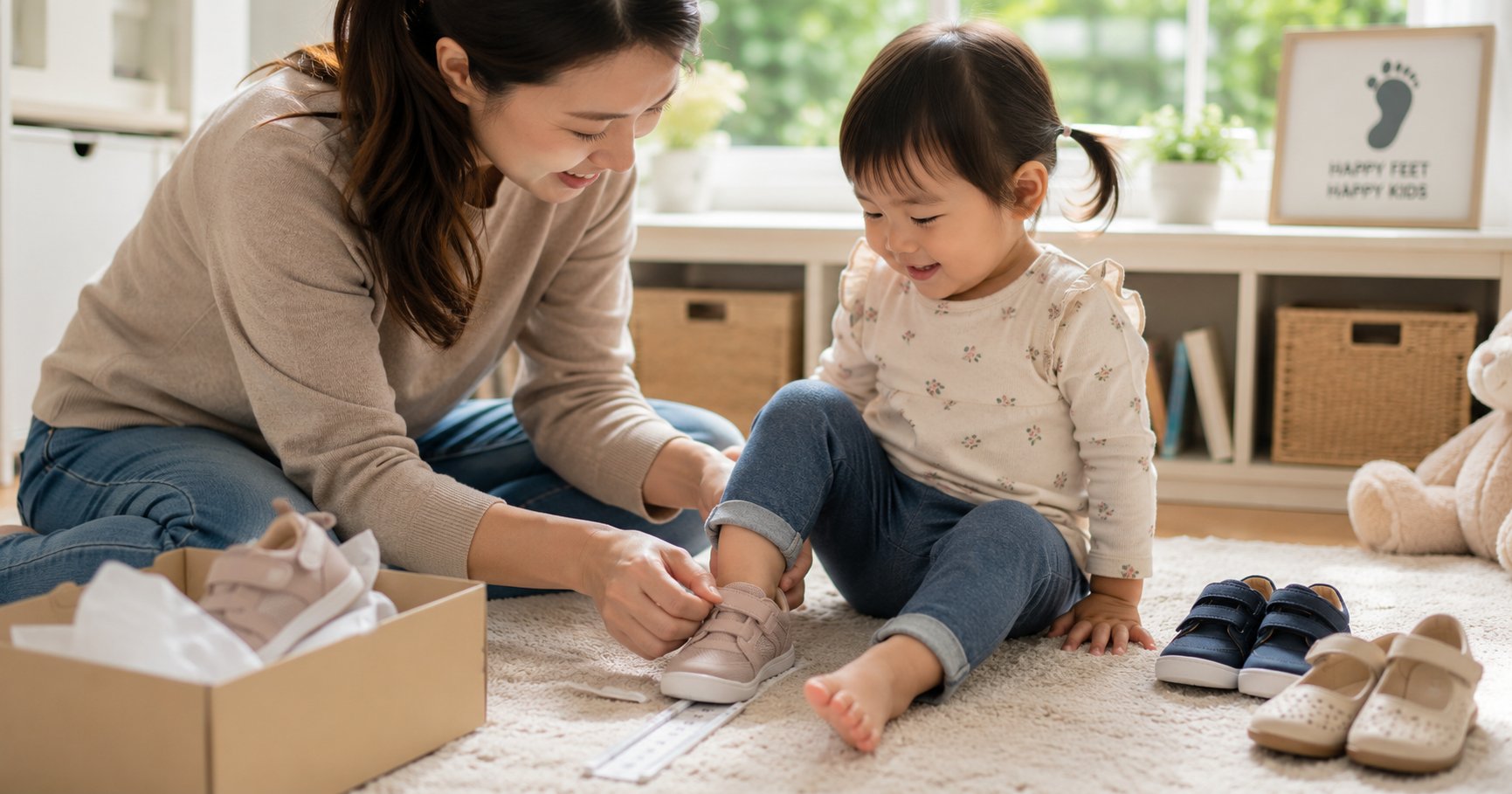
Leave about a thumb’s width of space between your child’s longest toe and the end of the shoe. The heel should fit snugly without slipping, and the shoe should be wide enough not to squeeze the sides of the foot. Always measure both feet, since they can differ, and fit to the larger one. Resist the temptation to buy shoes that are too big for your child to grow into, as oversized shoes can cause tripping and change how your child walks.
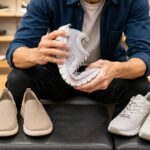
A couple of simple shopping habits help too. Take your child along and have them try shoes on with the socks they will actually wear, then let them stand and walk around the store. Children’s feet can spread when bearing weight, so checking the fit while standing gives a far truer picture than measuring a sitting foot. If your child seems hesitant or uncomfortable walking in a pair, listen to that, since they often sense a poor fit before you can see it.
Children’s Feet Grow Surprisingly Fast
One of the biggest challenges with children’s shoes is simply keeping up. Their feet grow at a remarkable pace, far faster than many parents realize.
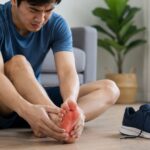
Toddler feet can grow about half a shoe size every two to three months, and children’s feet can increase by a couple of sizes a year. Because of this, podiatrists recommend checking your child’s shoe fit every few months, since feet quickly outpace last season’s pair. Watch for telltale signs that shoes have been outgrown, such as red marks or blisters, your child complaining of discomfort, toes pressing against the front, or your child trying to pull the shoes off.
Common Mistakes to Avoid
A few well-intentioned habits can actually work against your child’s foot health. Knowing them helps you sidestep the most common pitfalls. These mistakes are easy to make and easy to fix.
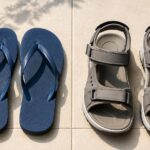
The most important one to avoid is using hand-me-down shoes. Experts advise that shoes should never be handed down, because they mold to the first child’s foot and can affect the next child’s development. Other mistakes include buying shoes too big to save money, choosing stiff or heavy shoes that restrict movement, and picking pointy styles that crowd the toes. Flip flops are also a poor choice for everyday footwear, a topic we cover in our guide on whether flip flops are bad for your feet.
Foot Health Is Part of the Bigger Picture
It helps to remember that healthy feet are just one part of your child’s overall development. Supporting your child’s growth means caring for the whole body. Everything is connected.
Poorly fitting shoes can affect more than just the feet, influencing posture and comfort throughout the body, as we explain in our guide on how the wrong shoes affect your whole body. Just as you watch your child’s feet, it is worth caring for other developing parts of their health, from their teeth, covered in our guide on children’s dental health, to their overall growth and nutrition, which we explore in our guide on the characteristics of stunting in children. A whole-body view gives your child the best start.
When to See a Professional
Most quirks in a young child’s feet and walking are completely normal and resolve on their own. Still, it is good to know when a check-up is wise. Trust your instincts as a parent.
While flat feet and a little in-toeing are usually nothing to worry about, see a doctor or podiatrist if your child complains of foot, heel, or ankle pain, walks differently or limps, trips frequently, or if you notice their feet developing unevenly. Persistent flat feet with pain after around age six are also worth checking. Early advice can catch any genuine issue while it is easy to address, and more often than not, it brings peace of mind.
The Bottom Line
When it comes to children’s shoes, the guiding principle is simple. Choose footwear that protects little feet while letting them move and grow naturally. For babies and toddlers, plenty of barefoot time is one of the best things for healthy development.
When shoes are needed, look for lightweight, flexible pairs with a wide toe box, breathable materials, and a snug, well-checked fit, and remember that fast-growing feet need frequent fit checks. Skip the hand-me-downs and the oversized bargains. With these simple habits, you give your child’s feet the strong, healthy foundation they deserve for a lifetime of happy steps.