A Question With a Surprising Answer
Walk into almost any shoe store, and before long someone will tell you that you need arch support. Insoles, orthotics, and supportive shoes are a massive industry, all built on the idea that your feet require extra help to function properly.
But is that actually true? Do you really need arch support? The answer is more surprising, and more nuanced, than the marketing suggests. In fact, arch support is genuinely one of the most debated topics in foot health, with experts genuinely divided. Rather than picking a side, this article looks at what the research actually says, so you can decide what makes sense for your own feet.
The Great Arch Support Debate
To understand the confusion, it helps to know that there are two broad camps, and both have passionate supporters. This is a genuine disagreement, not settled science.
On one side is the traditional view, common in much of the footwear world, that the foot benefits from external support to reduce strain and prevent problems. On the other side is a growing counter view, which argues that healthy feet are remarkably good at supporting themselves, and that relying too heavily on artificial support may actually do more harm than good. As you will see, the truth seems to sit somewhere in the middle, and it depends heavily on the individual and their specific feet.
What Does Arch Support Actually Do?
Before weighing the evidence, let us clarify what arch support is meant to achieve. Its job is fairly specific. Understanding it helps make sense of the debate.
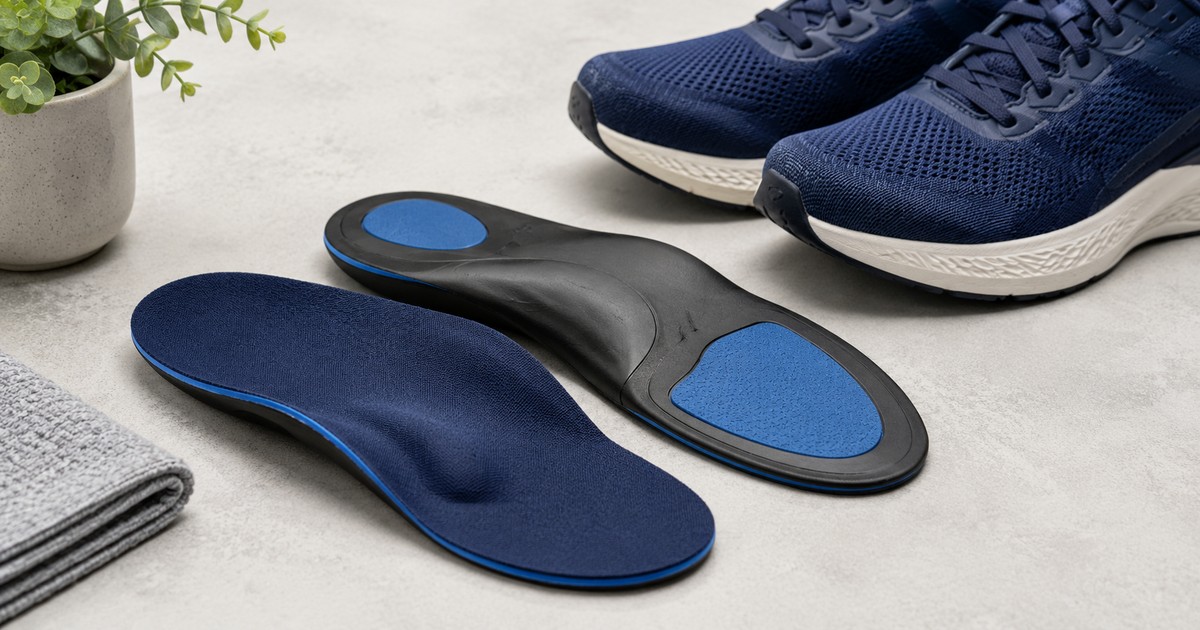
Arch support, whether built into a shoe or added as an insole or orthotic, is designed to cradle the arch of your foot. The goal is to distribute pressure more evenly, help control excessive inward rolling of the foot known as overpronation, and reduce strain on tissues like the plantar fascia. In theory, this can ease or prevent certain types of foot pain. The key question is whether, and for whom, it genuinely delivers on that promise.
The Case For Arch Support
Let us start with the evidence in its favor, because there is real support for it in specific situations. For certain conditions, arch support can genuinely help. This is where it tends to shine.
Research suggests arch support is most valuable for people with particular painful conditions, rather than for everyone. For plantar fasciitis and heel pain, studies indicate that supportive footwear with proper arch support and cushioning may reduce symptoms, which is why it features in our guide on shoes for plantar fasciitis and heel pain. For people with painful, symptomatic flat feet, insoles can also help, especially when the flatness contributes to tendon overload. The benefits are clearest when there is an actual problem to address.
And the Injury Prevention Angle
Arch support and orthotics are also widely used to try to prevent overuse injuries, particularly in sport and military settings. The evidence here is real but more qualified. Context matters a great deal.
A systematic review in the British Journal of Sports Medicine found that foot orthoses and shock-absorbing insoles can help prevent musculoskeletal injury, but that the benefits are present in some contexts and not uniform across all groups. In practice, they appear most useful when training loads ramp up quickly or when someone has known risk factors. For most active people, the takeaway is that orthoses are one tool among many, best used alongside sensible training and strength work rather than as a standalone fix.
The Case Against, or at Least the Caveats
Now for the other side of the debate, which is just as important. For many people, arch support may be unnecessary, and possibly even counterproductive. This is the part the marketing rarely mentions.
For healthy feet with no pain, there is limited evidence that you actually need arch support at all. Your feet have their own sophisticated support system of muscles, tendons, and ligaments. Some experts argue that for people with healthy arches, over-relying on arch support can weaken the foot muscles over time, much as a muscle you never use grows weak. This is part of the appeal of minimalist footwear, which we explore in our guide on whether barefoot shoes are good for you.
What the Research Really Shows
So how do we make sense of these competing claims? When you look at the body of evidence as a whole, a few honest conclusions emerge. Nuance is the name of the game.
First, the overall quality of evidence is mixed, with many studies being small or lacking strong controls. Benefits are real for some people and conditions, but they are not universal. Reviews of orthotics for overuse injuries have often found no clear difference between custom and over-the-counter devices, and sometimes limited evidence overall. The honest summary is that arch support is neither a miracle nor a myth. It is a tool that helps certain people in certain situations, not a universal necessity.
The Wet Test Myth
If you have ever been told to pick shoes based on your arch height or a wet footprint, here is something important. That popular method is not actually supported by science. It is worth setting straight.
The so-called wet test, where you look at the shape of your damp footprint to choose a shoe, has been debunked in many studies, and your arch height is not the best guide to what shoe you should wear. Research increasingly suggests the smartest approach is far simpler. Choose shoes based on what feels genuinely comfortable to you, a principle at the heart of our guide on how to choose healthy shoes. Comfort, it turns out, is a better guide than any footprint.
So, Do You Need Arch Support?
After weighing both sides, here is a practical way to think about it for your own feet. The answer really does come down to your individual situation. There is no one-size-fits-all rule.
A reasonable, evidence-informed framework looks like this:
- If you have foot pain or a diagnosed condition like plantar fasciitis or symptomatic flat feet, arch support may genuinely help, and it is worth getting properly assessed.
- If your feet are healthy and pain-free, you probably do not need added arch support, and choosing comfortable shoes is enough.
- If you are very active or ramping up training, support can be one useful tool among several for reducing injury risk.
The key is that arch support should be matched to your needs, not applied to everyone by default.
If You Use Arch Support, Do It Right
For those who do benefit from it, getting the most out of arch support comes down to a few sensible principles. Doing it thoughtfully matters more than doing it expensively. Quality and fit beat hype.
Ideally, support for a genuine problem should be guided by a podiatrist or specialist who can assess your specific feet, rather than chosen from a marketing display or a wet test. For mild or general use, quality over-the-counter insoles are often perfectly adequate, while custom orthotics make more sense for specific diagnosed issues. Crucially, experts stress that arch support works best when combined with exercises that strengthen your feet, a theme we cover in our guide on strength training and why it matters, rather than as a substitute for building strong feet.
Listen to Your Feet
In the end, your own feet are the best evidence you have. How they feel day to day tells you more than any general rule. That is the thread running through this whole debate.
If a supportive shoe or insole makes your feet feel better and more comfortable, that is meaningful. If added support feels awkward or causes new aches, that matters too. Remember that ill-fitting or unsuitable footwear can affect far more than your feet, a chain reaction we explain in our guide on how the wrong shoes affect your whole body. For people who spend long hours standing, comfort and support take on extra importance, as we discuss in our guide on the best shoes for standing all day. And if you have ongoing foot pain, whether or not you use arch support, it is always worth seeing a podiatrist for personalized advice.
The Bottom Line
So, do you really need arch support? For most healthy, pain-free feet, the honest answer is probably not, and choosing comfortable shoes matters more than chasing support. But for people with specific painful conditions like plantar fasciitis or symptomatic flat feet, arch support can genuinely help as part of a broader plan.
The research points away from one-size-fits-all rules and toward personalization. Skip the wet test, choose shoes by comfort, strengthen your feet, and reserve targeted arch support for when you actually need it. And if foot pain persists, let a podiatrist guide you rather than the marketing. Your feet, and the best available evidence, both clearly favor a thoughtful, individual approach.