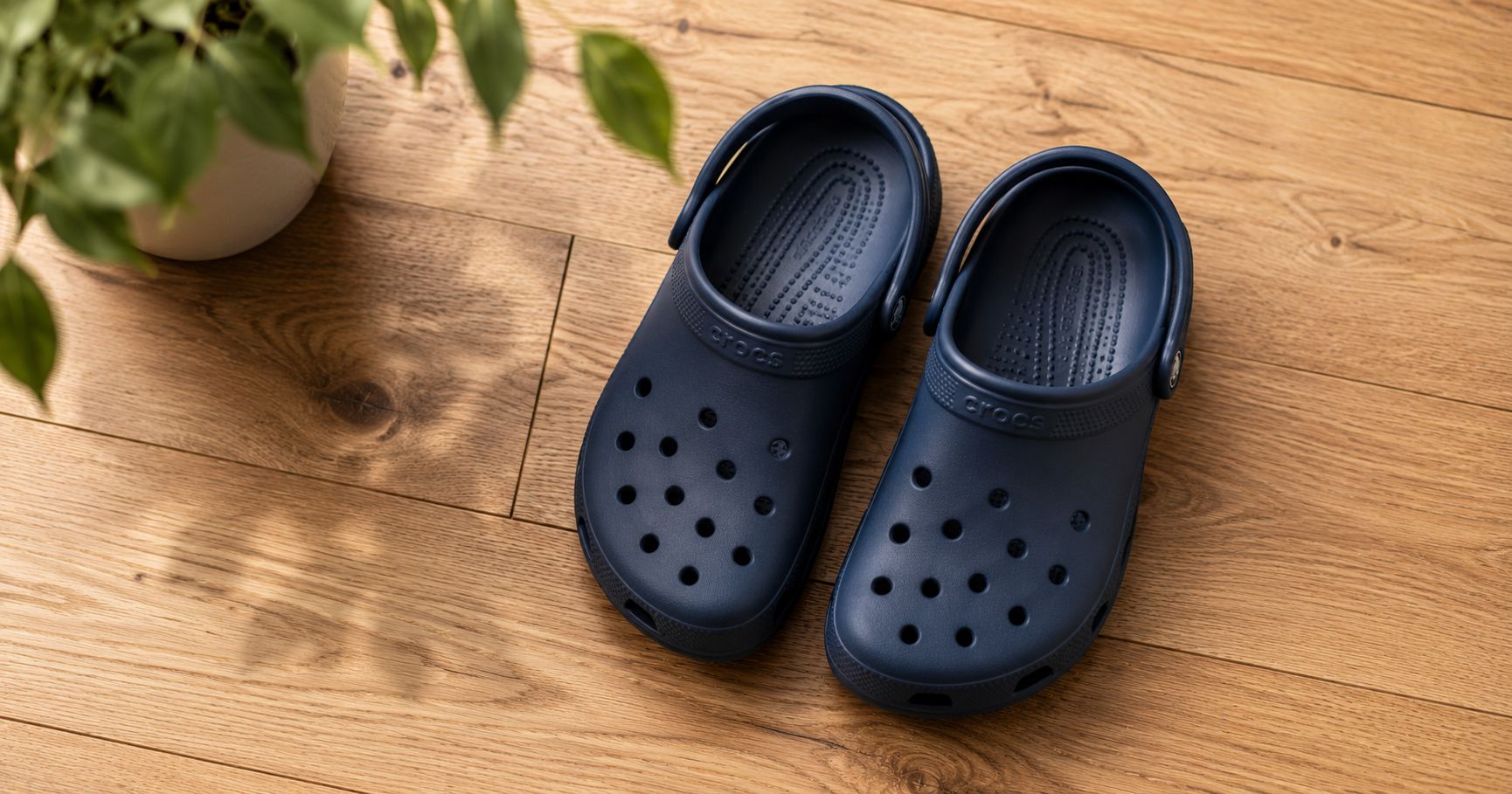
The Question Everyone Is Asking
Few shoes divide people quite like Crocs. You either own several colorful pairs and defend them passionately, or you cannot understand the appeal at all. Either way, they have become impossible to ignore.
And that popularity has fueled one of the most-searched footwear questions anywhere on the internet today. Are Crocs bad for your feet? It is a fair and reasonable thing to wonder about a shoe so many of us now live in. The honest answer from podiatrists is not a simple yes or no. It depends on how you wear them, how long, and who you are. Here is the balanced expert view, covering both the real risks and the genuine benefits.
The Short Answer
Let us start with the verdict, then unpack it. Crocs are not inherently terrible, but they are not the all-day everyday shoe many people treat them as.
Podiatrists generally agree that worn occasionally, for short periods, Crocs are perfectly fine. The problem is wearing them all day, every day. The classic clog lacks three things foot experts consider essential for daily footwear, namely a firm heel counter, meaningful arch support, and a secure fit that does not force your toes to do extra work. Understanding that distinction, between occasional use and full-time wear, is really the key to this entire debate.
First, the Good News
Before the criticism, it is only fair to acknowledge that Crocs do offer real benefits. They are not popular by accident, and podiatrists recognize several genuine advantages. In fact, for certain short-term situations, foot doctors actively recommend them over less practical alternatives.
Here is where Crocs earn their fans:
- A roomy toe box that does not compress the toes, which can actually be kinder than many narrow shoes, a benefit we explore in our guide on why toe box width matters
- Cushioning from their foam resin that absorbs shock and can offer short-term relief for some foot conditions
- A lightweight, breathable design that makes them great for the pool, beach, gym, or public showers, where they help protect against fungal infections
- Easy cleaning and slip-on convenience, useful after foot surgery, during pregnancy, or for anyone with swelling or limited mobility
These are the very reasons Crocs are so popular among healthcare workers, a phenomenon we explore in our guide on why medical staff love wearing Crocs.
Now, the Concerns Podiatrists Raise
So where do Crocs fall short? When worn as a regular, all-day shoe, several design features become genuine problems. This is the heart of the podiatrist’s caution.
Not enough arch support
The most common concern is the lack of arch support. As one podiatrist explains, this can put extra strain on the plantar fascia, and over time, wearing shoes that lack arch support may lead to plantar fasciitis, a painful condition affecting the heel and arch. For this reason, podiatrists often advise people with flat feet to avoid Crocs for regular wear.
No firm heel counter
Crocs also lack a rigid heel counter, the firm cup that holds your heel in place. Without it, your foot slides around with every step. To stop the shoe slipping off, your toes instinctively grip, and this constant gripping can lead to toe pain, blisters, and worsening hammertoes over time.
A flat sole that alters your gait
The flat, flexible sole does not encourage the natural heel-to-toe roll of a healthy stride. Over time, this altered gait can ripple upward through the body. Podiatrists note it can potentially contribute to problems extending beyond the feet, including knee, hip, and lower back pain. We explain this chain reaction in our guide on how the wrong shoes affect your whole body.
Instability and sweaty feet
Two more issues round out the list. The loose, unsecured fit makes Crocs a fall risk, especially for older adults or fast walkers, and it can increase the chance of ankle sprains. Meanwhile, the rubber-like material does not breathe well when worn without socks. As foot specialists warn, this can trap moisture against your feet and increase the risk of athlete’s foot, a topic we cover in our guide on why your shoes make your feet smell.
The Sport Mode Myth
Many people assume that flipping the strap behind the heel, known as sport mode, solves the stability problem. It helps, but it is not a complete fix. This is worth understanding clearly.
The flexible rubber strap does not truly replicate what a structured heel counter does. Your heel still shifts, and your ankle still compensates. Research on how the strap position affects walking found that wearing Crocs in comfort mode, with the strap flipped forward, significantly altered ankle mechanics compared to securing the strap behind the heel. So while sport mode is better than nothing, it does not transform a Croc into a supportive shoe.
Who Should Be Most Careful
While occasional Crocs are fine for most healthy feet, certain people should be especially cautious or avoid them for regular wear. Your individual foot health really matters here.
Podiatrists generally advise extra caution for several groups:
- People with flat feet, plantar fasciitis, or chronic heel pain
- Those with high arches who need more cushioning
- Anyone with ankle instability or balance issues
- Older adults, due to the fall risk
- People with diabetes, who should be careful given the limited support and protection
- Children, whose developing feet need proper support
That last group deserves emphasis. Because children’s feet are still forming, supportive footwear matters even more, a topic we explore in our guide on choosing the right shoes for children’s foot development.
When Crocs Are Actually a Good Choice
After all those caveats, it is important to be balanced. There are plenty of situations where Crocs are genuinely a fine, even smart, choice. Context is everything.
Podiatrists happily endorse Crocs as a house shoe, a quick-errand shoe, or footwear for the pool, beach, or garden. They are excellent for protecting your feet in public showers and changing rooms, and the roomy fit is handy after a pedicure or minor foot procedure. In these short-term, low-impact roles, they shine. They are also a more protective option than open sandals for casual wear, a comparison we make in our guide on whether flip flops are bad for your feet.
How Crocs Compare to Other Casual Shoes
It also helps to see where Crocs sit among the other easy, slip-on shoes people reach for. They are rarely the worst option, but rarely the best either. Context shapes the comparison.
Compared with flip flops or thin slides, Crocs actually come out ahead. They offer more coverage, more cushioning, and a closed toe that protects against stubs and spills, which is why they make a safer casual pick. Compared with a structured, supportive slip-on sneaker, however, Crocs fall behind, since a proper sneaker delivers the arch support and secure heel that a foam clog cannot. The takeaway is simple. If you want effortless slip-on convenience and you will only be on your feet briefly, Crocs are a reasonable choice. If you will be walking or standing for hours, a supportive sneaker is the smarter pick.
How to Wear Crocs Without Hurting Your Feet
If you love your Crocs and have no intention of giving them up, you do not have to. A few simple habits let you enjoy them while protecting your feet. Moderation is the magic word.
Keep these tips in mind:
- Wear them in sport mode, with the strap secured behind your heel, not flipped forward
- Limit continuous wear to a few hours rather than the whole day
- Add an arch-support insole to partly compensate for the flat footbed
- Alternate with supportive shoes so your feet are not always in soft, flat clogs
- Never use them for running, hiking, long walks, or all-day standing
- Listen to your feet, and stop if you notice pain
For anything involving serious walking or standing, reach for a shoe with real structure instead, using the principles in our guide on how to choose healthy shoes.
The Bottom Line
So, are Crocs bad for your feet? Not exactly. The fair, podiatrist-backed answer is that they are perfectly fine for short, casual, low-impact wear, but they fall short as an all-day everyday shoe because they lack arch support, a firm heel, and a secure fit.
Enjoy your Crocs for the pool, the garden, quick errands, or relaxing at home. Just do not ask them to carry you through a full day of walking or standing, especially if you have a foot condition. Wear them in sport mode, alternate with supportive shoes, and listen to your feet. Used in the right way, Crocs can absolutely have a happy place in your shoe collection. Like most footwear, they are neither hero nor villain, just a tool that works best when matched to the right job.