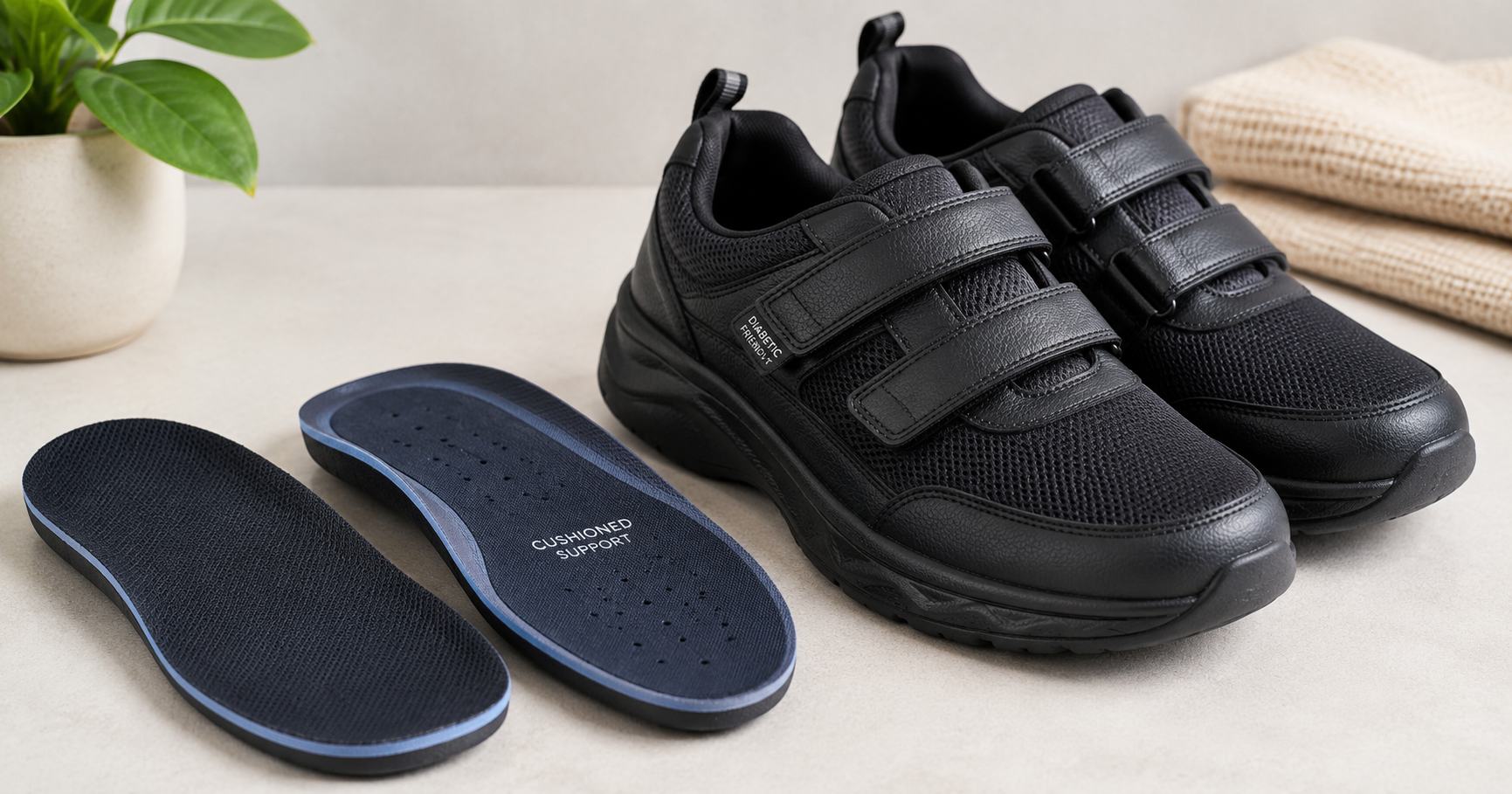
A Simple Tool That Protects Feet
For the millions of Americans living with diabetes, foot care is not an optional extra. It is an essential part of staying healthy. And one of the most effective, and most overlooked, tools for protecting diabetic feet is the right pair of shoes.
Specially designed diabetic shoes can help prevent the serious foot complications that diabetes can cause. Even better, many people do not realize that Medicare may cover a pair every year for those who qualify. Yet this valuable benefit is dramatically underused. This guide explains exactly what diabetic shoes are, why they matter so much, who qualifies for Medicare coverage, and how the whole process works.
What Are Diabetic Shoes?
Let us start with the basics, because diabetic shoes are more than just comfortable footwear. They are a form of therapeutic, protective equipment. Every feature has a medical purpose.
Also called therapeutic shoes, they are designed to reduce the pressure, friction, and irritation that can harm an at-risk diabetic foot. The most common type is the extra-depth shoe, which offers additional room to fit protective inserts and to accommodate toe deformities without rubbing. For people with more significant foot deformities, custom-molded shoes are shaped to the individual foot. These shoes are typically paired with custom inserts that spread pressure evenly across the sole, rather than concentrating it on vulnerable spots.
Why Diabetic Feet Need Special Protection
To understand why these shoes matter, you need to understand what diabetes can do to the feet. The risk comes from a dangerous combination. Two problems work together.
First, diabetes can cause peripheral neuropathy, which is nerve damage that reduces a person’s ability to feel pressure, pain, or injury in the feet. Second, it can impair circulation, which slows healing. Together, this means a small rub, blister, or pressure point from an ordinary shoe can go completely unnoticed, then develop into an open sore called an ulcer. Because these warning signs are dulled, spotting the everyday signs your shoes are hurting your feet becomes much harder, which is exactly why protective footwear is so important.
The Real Benefit, Preventing Ulcers
This brings us to the single most important benefit of diabetic shoes. They are not about comfort alone. They are about preventing a cascade of serious complications. The stakes are genuinely high.
An unnoticed foot ulcer can become infected, and in severe cases lead to hospitalization or even amputation. Diabetic shoes work by minimizing the pressure and friction that cause these ulcers in the first place. The evidence is compelling. According to podiatric specialists, therapeutic footwear has been shown to reduce diabetic foot ulcer recurrence by 52 to 70 percent in controlled trials. That makes them one of the most cost-effective preventive tools in all of diabetes care.
Key Features That Make Them Different
So what actually sets a diabetic shoe apart from a regular one? Several specific design features are built in for protection. Each addresses a particular risk.
Here is what to look for in a quality diabetic shoe:
- Extra depth to make room for protective inserts and toe deformities
- A wide, rounded toe box that eliminates the squeezing that drives ulcers
- A seamless interior that removes seams which could rub sensitive skin
- A firm heel counter for stability and motion control
- Breathable, non-abrasive materials that reduce irritation
- Removable, custom inserts that distribute pressure evenly
That roomy toe box is especially important, a feature we explore in our guide on why toe box width matters for foot health. Many of these principles also appear in our broader guide on how to choose healthy shoes.
Medicare Coverage, the Therapeutic Shoe Bill
Now for the part that surprises many people. If you have diabetes and Medicare, you may be able to get these shoes largely covered. This benefit has existed for decades. It is worth understanding.
Through a benefit often called the Therapeutic Shoe Bill, established in 1993, Medicare Part B helps pay for therapeutic footwear for qualifying diabetic patients. According to Medicare, the benefit covers, per calendar year, one pair of extra-depth shoes plus three pairs of inserts, or one pair of custom-molded shoes with two additional pairs of inserts for those with qualifying deformities. In some cases, shoe modifications such as a rocker sole can substitute for a pair of inserts. The benefit resets each calendar year, which matters because footwear and inserts wear out over time.
Who Qualifies for Coverage
Not everyone with diabetes automatically qualifies, so it helps to know the specific criteria. Medicare requires three things to be in place. All must be met.
To be eligible, you generally must meet these requirements:
- You have Medicare Part B and a documented diagnosis of diabetes
- You are under a comprehensive diabetes care plan managed by your treating doctor
- You have at least one qualifying foot condition, such as peripheral neuropathy with callus, a history of foot ulcers, foot deformity, poor circulation, or a previous amputation
Your treating physician, the doctor managing your diabetes, must certify that you meet these conditions. This certification is the foundation of the entire claim, so it is worth making sure it is properly documented in your medical records.
How the Process Works
The path to getting your covered shoes involves a few different professionals, each with a specific role. Understanding who does what helps avoid delays. The steps are fairly clear.
First, the doctor who treats your diabetes certifies your need for therapeutic shoes based on an in-person visit. Then a podiatrist or other qualified doctor writes the prescription. Finally, a Medicare-enrolled supplier, such as a pedorthist or podiatrist, fits and dispenses the shoes. Timing matters here. Medicare notes that both your doctors and your supplier must be enrolled in Medicare, or the claim will be denied. The certifying visit generally must occur within six months before delivery, and the shoes should be delivered within three months of certification.
What It Costs
Naturally, one of the biggest questions is how much you will actually pay. The good news is that for most qualifying patients, the out-of-pocket cost is modest. Here is how it breaks down.
Therapeutic shoes fall under Medicare Part B. After you meet your annual Part B deductible, which is around $283 in 2026, Medicare pays 80 percent of the approved amount and you pay the remaining 20 percent. In practical terms, the approved amount for a pair of extra-depth shoes is roughly $181, with inserts around $74 per pair, so your share often lands in the range of a small copay. Many people with Medicare Advantage or Medigap supplemental plans have that 20 percent covered too, sometimes bringing their cost to zero. Always confirm current amounts and your specific coverage with Medicare.
Do Not Get Tripped Up by Paperwork
Here is a practical warning that can save you a lot of frustration. The most common reason diabetic shoe claims are denied has nothing to do with the shoes themselves. It comes down to documentation. A little diligence prevents most problems.
Federal data shows that the vast majority of improper payments for diabetic shoes trace back to insufficient documentation. To protect yourself, ask your physician’s office to confirm that your qualifying foot condition is recorded in your chart, not just on a form. Verify that your supplier is enrolled in Medicare before your fitting, and make sure your shoes are delivered within the required window. It is also worth knowing that the benefit is not brand-specific, and that regular shoes or over-the-counter insoles are not covered under it.
Beyond the Shoes, Everyday Diabetic Foot Care
As valuable as diabetic shoes are, they are one part of a bigger foot-care picture. Protecting diabetic feet is a daily habit, not a single purchase. Good routines make all the difference.
Alongside proper footwear, experts recommend checking your feet every day for redness, blisters, or sores, keeping your feet clean and dry, and never walking barefoot, where injuries can occur unnoticed. Open, unsupportive footwear is especially risky, a point we cover in our guide on whether flip flops are bad for your feet. Wearing well-fitted shoes matters because poor footwear affects far more than the feet, as explained in our guide on how the wrong shoes affect your whole body. Of course, managing blood sugar well is the foundation, and understanding your risk early, as covered in our guide on prediabetes explained, helps too.
The Bottom Line
Diabetic shoes are a simple but powerful tool for protecting at-risk feet from the serious complications that diabetes can cause. By reducing pressure and friction, they help prevent the foot ulcers that can lead to infection and amputation, backed by strong evidence.
If you have diabetes and Medicare, the Therapeutic Shoe Bill may cover a pair of these shoes plus inserts every year, often at little or no out-of-pocket cost. Given how underused this benefit is, it is well worth asking your doctor whether you qualify. Combined with daily foot care and good blood sugar control, the right shoes can help keep you on your feet, safely, for years to come.