You may have seen claims that your blood type decides whether you’re destined for high cholesterol, diabetes, or a stroke. It’s a tidy idea, you can’t change your blood type, so it feels like a fixed verdict written into your biology. But when you look at what the research actually says, the picture is far more modest, and far more reassuring.
The claim usually traces back to a single, often-cited study. The reality is that the things genuinely driving your cholesterol are mostly within your control: your genes set the starting point, but what you eat, how you move, and habits like smoking do most of the heavy lifting.
What the Research Really Says
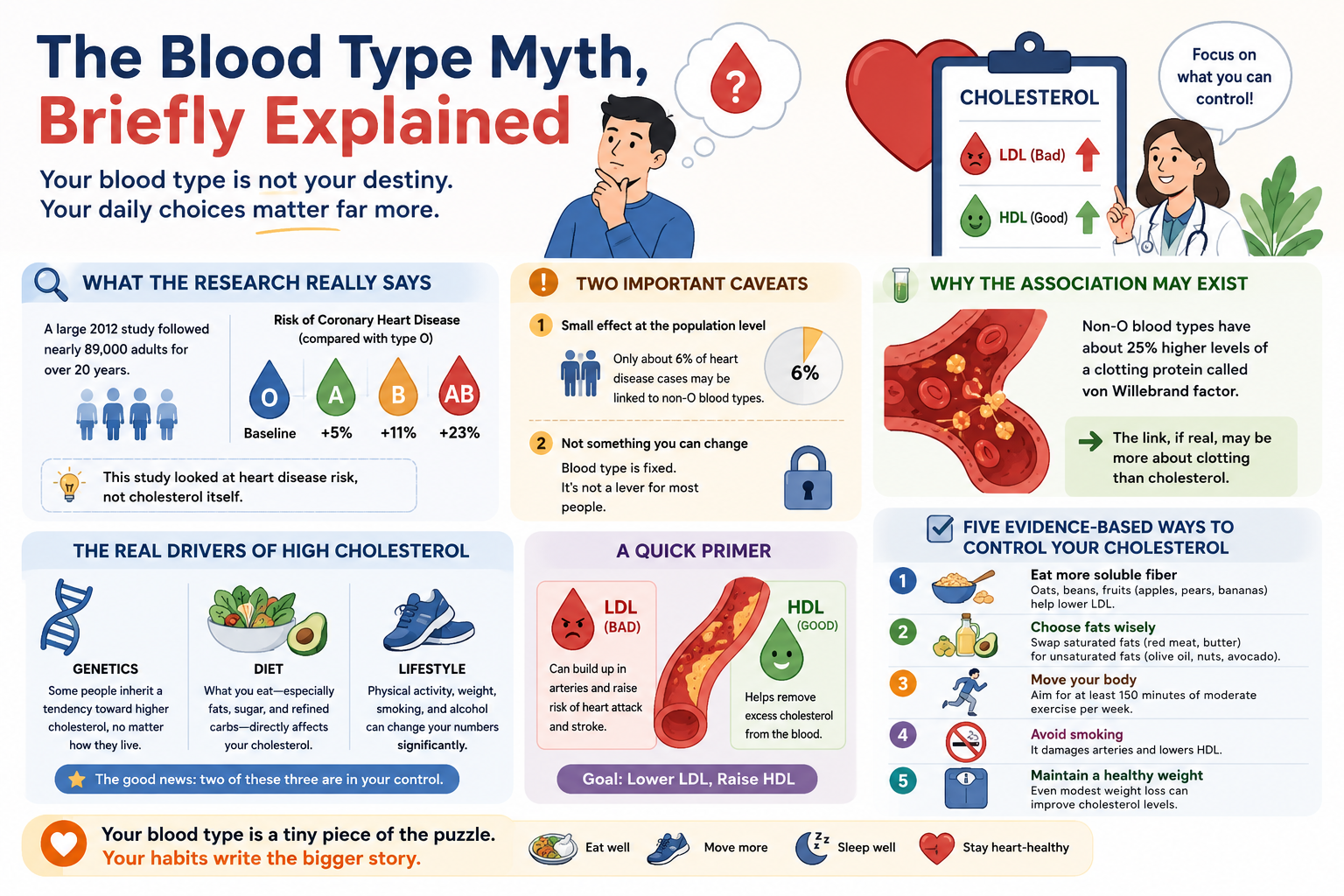
The most quoted source is a 2012 study published in Arteriosclerosis, Thrombosis, and Vascular Biology, a journal of the American Heart Association. Drawing on more than 20 years of follow-up across two large groups, the Nurses’ Health Study (about 62,000 women) and the Health Professionals Follow-up Study (about 27,000 men) researchers found that, compared with blood type O, people with type AB had roughly a 23% higher risk of coronary heart disease, type B about 11%, and type A about 5%.
Second, the effect is small at the population level. The same researchers estimated that only about 6% of coronary heart disease cases could be attributed to having a non-O blood group. As the study’s senior author noted, the findings might help doctors flag who could be at slightly elevated risk, but blood type is something you cannot change, so it isn’t a useful lever for the average person.
The bottom line from the experts is consistent: there is no clear, proven mechanism that makes one blood type “cause” high cholesterol. Your blood type is, at most, a faint background signal.
The Real Drivers of High Cholesterol
If blood type isn’t the story, what is? Three factors do the real work:
Genetics. Some people inherit a tendency toward higher cholesterol regardless of how they live. In its most pronounced form familial hypercholesterolemia, this can push LDL very high from a young age.
Diet. What lands on your plate, especially the type of fat and the amount of refined sugar and processed carbohydrate, has a direct and measurable effect.
Lifestyle. Physical activity, body weight, smoking, and alcohol all shift your numbers, often more than people expect.
The encouraging part: two of these three are things you can act on starting today.
A Quick Primer: “Good” vs “Bad” Cholesterol
Cholesterol travels through your blood packaged in two main carriers. LDL (low-density lipoprotein) is the one to keep in check, when it runs high, it can build up and narrow your arteries, raising the risk of heart attack and stroke. HDL (high-density lipoprotein) is protective; it helps clear excess cholesterol from the bloodstream. The goal of most lifestyle changes is simple: push LDL down, nudge HDL up.
Five Evidence-Based Ways to Control Your Cholesterol
1. Eat more soluble fiber
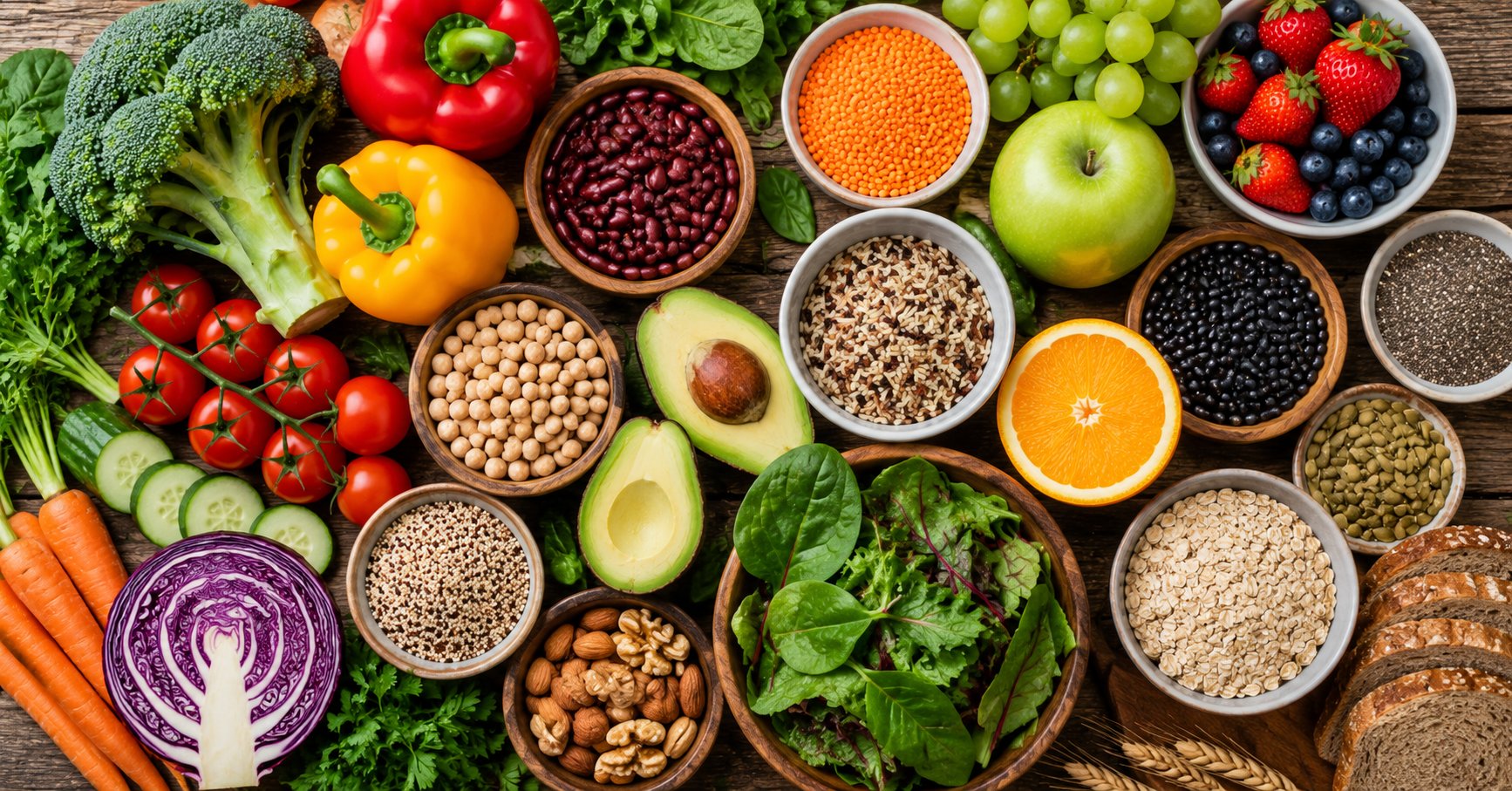
Soluble fiber binds cholesterol in the gut and limits how much your body absorbs. Good sources include oats, beans and legumes, and fruits such as apples, pears, and bananas. Increase your intake gradually rather than all at once a sudden jump can cause bloating, gas, or changes in digestion. Adding one fiber-rich food to each meal is an easy, sustainable place to start.
2. Choose fats wisely, don’t fear all of them
Not all fat is the enemy. The smarter move is to swap saturated fats (found in red meat and butter) for unsaturated ones from olive oil, nuts, and avocado. This single substitution is one of the most reliable dietary changes for lowering LDL, and it doesn’t require eating less fat overall, just better fat.
3. Move your body regularly
Physical activity raises protective HDL and helps keep LDL in line. It doesn’t have to be intense: a brisk 30-minute walk several times a week is enough to make a difference. For people with mild-to-moderate cholesterol elevations, exercise and other lifestyle changes are typically recommended as the first line of treatment, before medication is considered.
4. Rein in sugar and refined carbohydrates
Sugary snacks and refined carbs can drive cholesterol in the wrong direction. Shifting toward whole grains and lower-sugar options helps. As a practical guardrail, the American Heart Association suggests keeping added sugar to no more than about 25 grams per day for women and 36 grams per day for men.
5. Stop smoking
Quitting is one of the fastest wins for your lipid profile. Smoking lowers protective HDL and raises harmful LDL at the same time a combination that accelerates damage and narrowing in the arteries. The benefits of quitting begin to show up quickly.
When to See a Doctor
Cholesterol has no symptoms, which is why screening matters. A simple blood test (a lipid panel) tells you where you stand. If you have a family history of early heart disease, your doctor may recommend testing sooner and more often. Lifestyle changes are powerful, but they aren’t a substitute for medical advice, especially if your numbers are already high or you have other risk factors like diabetes or high blood pressure.
Frequently Asked Questions
Can I change my cholesterol if it “runs in the family”? Yes. Genetics set your baseline, but diet, exercise, and not smoking can still meaningfully lower your numbers. Some people with strong genetic predisposition also benefit from medication.
Is blood type something I should worry about for heart health? Not really. Any link is small and unproven in mechanism, and there’s nothing you can do about your blood type. Your energy is far better spent on diet, activity, and not smoking.
How quickly can lifestyle changes lower cholesterol? Many people see measurable improvement within a few months of consistent changes, though it varies by individual.
The Bottom Line
Blaming your blood type for high cholesterol is, at best, a distraction. The evidence linking blood type to heart disease is modest, the mechanism is uncertain, and crucially, it’s nothing you can change. What you can change is your diet, your activity level, and whether you smoke. Those are the levers that actually move your cholesterol, and they’re available to you regardless of which letter is on your blood donor card.