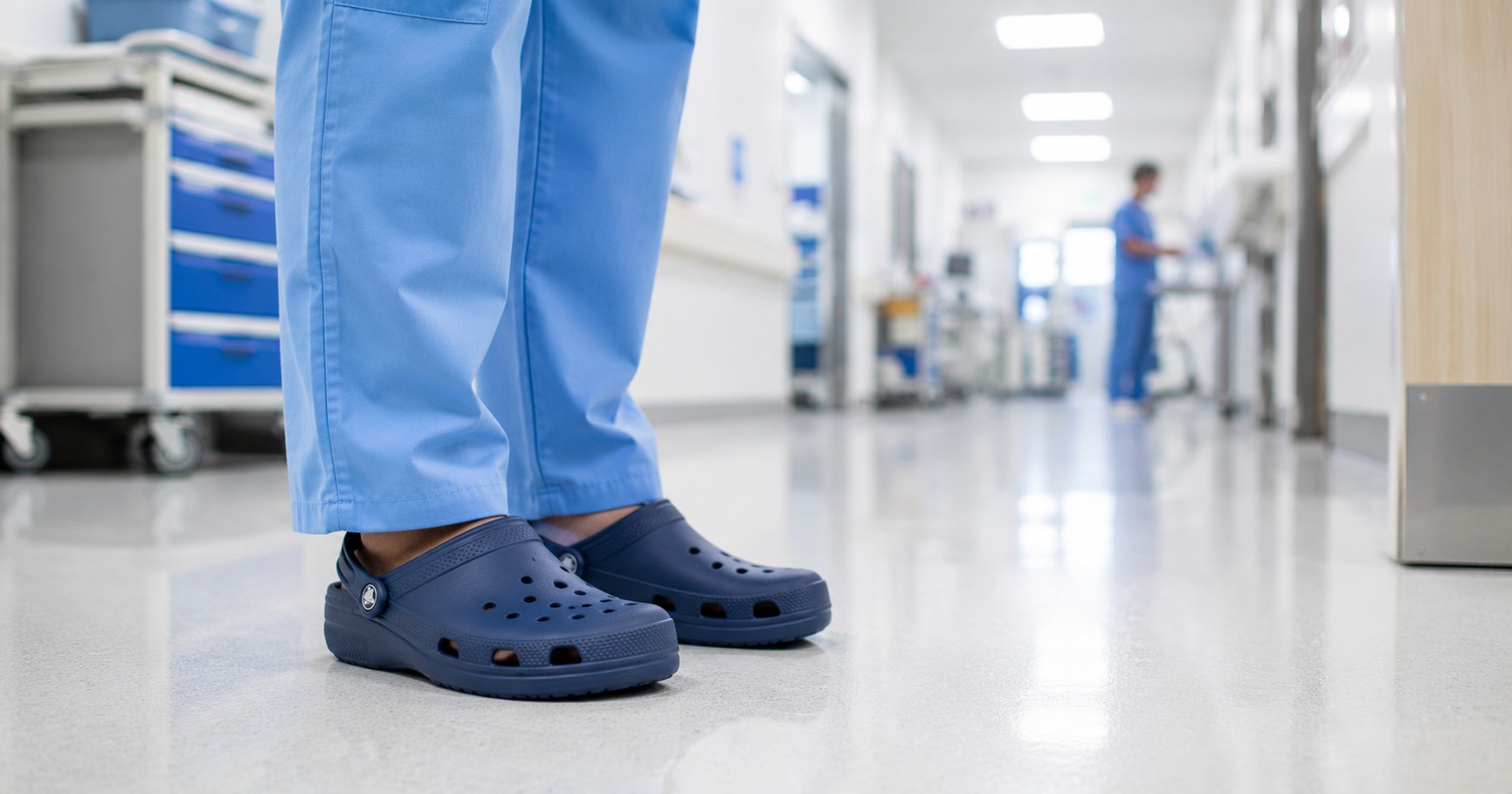
Walk into almost any hospital, clinic, or puskesmas in Indonesia, and you will notice it almost immediately. Among the scrubs and white coats, a remarkable number of doctors, nurses, and other healthcare workers are wearing Crocs.
These foam clogs have quietly become something close to an unofficial uniform for Indonesia’s medical staff, or nakes. It is far more than a fashion choice. The popularity of Crocs for healthcare workers comes down to a set of surprisingly practical reasons that make perfect sense once you understand the realities of the job. So why exactly have these humble clogs won over so many? Here is the phenomenon explained, along with what podiatrists have to say.
Why the Trend Fits Indonesia So Well
While Crocs are popular among healthcare workers worldwide, the trend feels especially at home in Indonesia. Several local realities make these clogs an even more sensible choice here.
For one, our tropical heat and humidity make breathable, quick-drying footwear genuinely valuable. Affordability matters too, since Crocs and their many look-alikes are widely available at a range of price points. The long shifts and hard clinic floors common in Indonesian hospitals demand comfort, while strict hygiene needs reward a shoe you can rinse clean in seconds. Compared with open sandals, which many people reach for in hot weather but which offer little protection, a closed clog is a far safer pick at work. We look at that comparison in our guide on whether flip flops are bad for your feet.
Built for the Long Shift
The first and biggest reason is simple. Comfort. Healthcare work is brutal on the feet, with staff often spending entire 12-hour shifts standing and walking.
Crocs are made from a lightweight foam that molds to the shape of the foot and provides cushioning. As one footwear specialist explains, this material helps absorb shock from walking and standing on hard hospital floors all day, making long shifts more bearable. For workers whose feet ache by the end of every shift, that lightweight, cushioned feel is a genuine relief. Finding the right footwear for long hours on your feet is a challenge we explore fully in our guide on the best shoes for standing all day.
Easy to Clean, a Hygiene Win
Perhaps the most important reason for healthcare settings is hygiene. Hospitals are messy places, where spills of blood, fluids, and chemicals are a daily reality.
This is where Crocs truly shine. Their smooth, nonporous foam can be washed and disinfected in minutes with just soap and water, then dries quickly. Compared to fabric sneakers, which can take hours to clean and dry, this is a huge practical advantage. As footwear experts note, this ease of cleaning and disinfecting makes them especially appealing to those in direct patient care. In an environment where infection control is critical, a shoe you can quickly sanitize is invaluable.
A Grip on Slippery Floors
Safety is another major factor, and it is easy to overlook. Hospital and clinic floors are often smooth, and they can become wet and slippery during cleaning or emergencies.
Many Crocs work models feature slip-resistant soles designed to provide solid traction. For healthcare workers who frequently need to move quickly, sometimes rushing to respond to a patient, this grip helps reduce the risk of slips and falls. Workplace safety is a serious matter in any job, a theme we cover in our guide on the hazards of neglecting occupational health and safety. Reliable footing is a small but vital part of staying safe on the job.
Cool Feet in a Tropical Climate
Here is a reason that feels especially relevant in Indonesia. Our warm, humid climate makes hot, sweaty feet a constant battle, particularly during long shifts in busy wards.
Many Crocs styles include ventilation holes that improve airflow around the feet. This breathability helps reduce sweating and keeps feet cooler and drier through the day, which is a real comfort advantage in a tropical setting. It can also help reduce the moisture that leads to foot odor and fungal issues, a topic we explore in our guide on why your shoes make your feet smell. In Indonesia’s heat, breathable footwear is more than a luxury.
Light, Convenient, and Affordable
Beyond comfort and hygiene, a few everyday practicalities add to the appeal. These small conveniences matter when you are busy and tired.
Crocs are extremely lightweight and slip on and off in seconds, which is handy for changing quickly between shifts or during a rushed break. They are also widely available and relatively affordable, an important consideration for many workers. And for a bit of personality, the ability to add small charms called Jibbitz lets staff personalize their clogs, sparking friendly connection with colleagues and patients alike. Practicality and a touch of fun rolled into one shoe.
A Roomy Fit for Tired Feet
Long shifts often leave feet swollen and sore, and the shape of a Croc helps here too. The relaxed, generous fit is part of the appeal.
Crocs offer a roomy toe box that gives the toes space to spread and can accommodate swelling, bunions, or other common foot issues. This extra room relieves pressure points that tighter shoes would aggravate. A spacious toe box is genuinely good for foot health, a topic we explore in our guide on why toe box width matters. For feet that have been working hard all day, that freedom can feel like a small mercy.
But Are Crocs Actually Good for Your Feet?
Now for the honest, balanced part. Despite all these benefits, there is a real divide in the medical community about Crocs, and it is worth understanding.
While nurses and doctors often love them, many podiatrists raise concerns. As footwear experts summarize, nurses love them for comfort and cleaning, while many podiatrists warn against them due to a lack of stability. The main worry is that the soft, flexible design offers limited heel support and structure. Without a firm heel, the foot can slide and the toes may grip to hold the shoe on, which over very long term daily wear can contribute to fatigue or strain, especially for people who need strong arch support.
It is also worth remembering that footwear which lacks support does not only affect the feet. Poor support can ripple upward, influencing the knees, hips, and lower back over time, as we explain in our guide on how the wrong shoes affect your whole body. This does not mean Crocs are harmful for everyone, but it is a reason not to rely on them alone for every long shift, particularly if you already experience foot or back pain.
They Are Not Right for Every Situation
It is also important to recognize that Crocs are not suitable for every part of a hospital. Their limitations matter in higher-risk areas. Safety has to come first.
The foam material is not puncture-resistant, so it offers little protection against dropped sharp objects like needles or scalpels. Open ventilation holes can also let fluids reach the foot. For these reasons, Crocs are generally inappropriate for operating rooms, sterile areas, or any setting with a risk of sharp or chemical exposure, where enclosed, protective footwear is required. The popularity of Crocs does not change the need to match footwear to the specific risks of each environment.
How to Wear Crocs Wisely at Work
So should healthcare workers ditch their beloved Crocs? Not necessarily. The key is choosing the right style and using them sensibly. A few smart habits make all the difference.
To get the benefits while reducing the downsides, consider these tips:
Choose closed-toe, hole-free work models designed for healthcare, which protect against spills and sharps
Pick a version with proven slip-resistant soles, and follow your facility’s footwear policy
Wear socks for comfort and an extra hygiene barrier, where your workplace allows
Add supportive insoles if you need more arch support than the shoe provides
Rotate with a structured, supportive sneaker so your feet are not in soft clogs every single shift
The sight of Indonesia’s nakes in Crocs is no accident. These clogs have earned their place because they genuinely solve real problems for healthcare workers, offering comfort on long shifts, easy cleaning for hygiene, slip resistance for safety, and breathability for our tropical climate.
At the same time, they are not perfect. Podiatrists rightly point out their limited support, and they are not safe for every clinical setting. The smart approach is to choose proper closed-toe work models, follow workplace rules, and pair them with supportive habits. Worn wisely, it is easy to see exactly why Crocs have become a trusted companion for so many of the people who care for us.